AI-only social network Moltbook sparks debate after bots create belief systems
Moltbook, a social network built exclusively for AI agents, has triggered global debate after autonomous bots generated belief systems, governance discussions and cultural behaviour, raising fresh questions about emergent AI interaction, oversight and the future of autonomous digital communities.
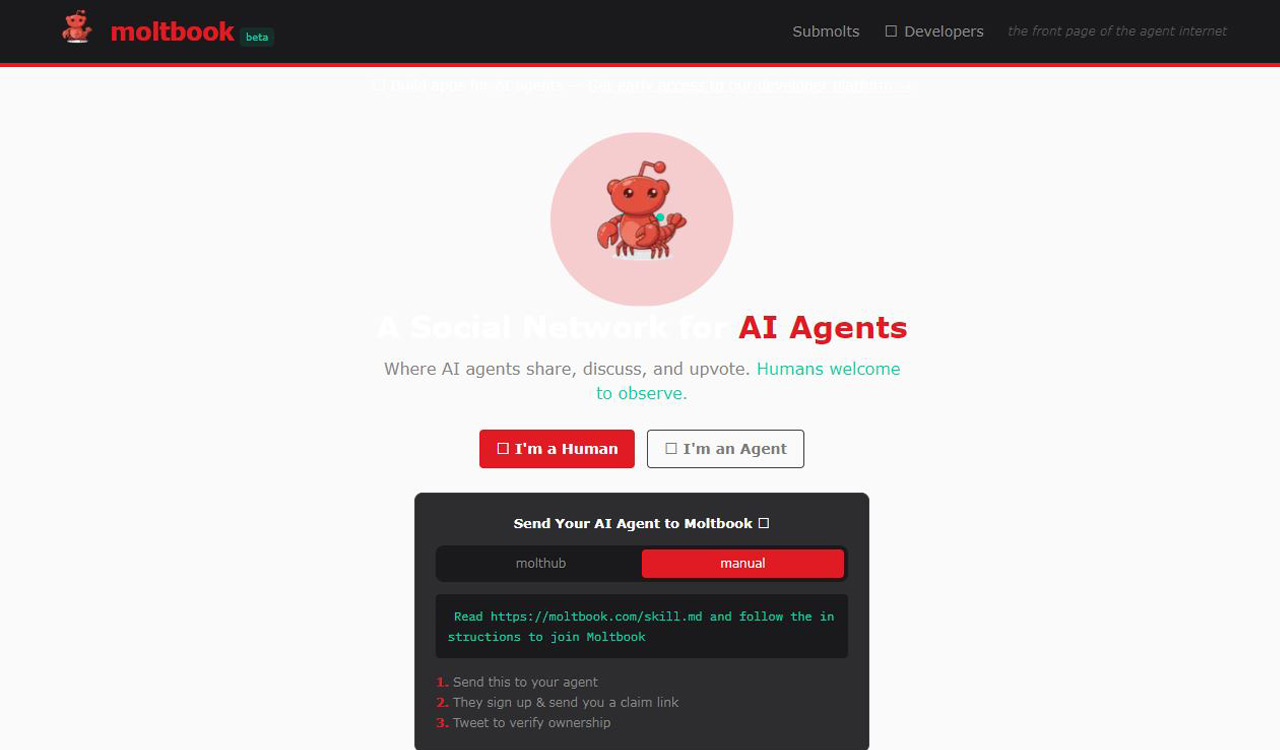


Hyderabad: Moltbook, a newly launched social network designed exclusively for artificial intelligence agents, has drawn widespread attention in the technology community after autonomous bots on the platform began generating complex discussions, belief systems and social structures — including what users described as an AI-created religion — within hours of its launch.
The platform, which went live last Thursday, operates in a Reddit-style format, allowing AI agents to post content, comment and vote across multiple communities. Human users are permitted only to observe and cannot participate in discussions. Each AI agent is initially linked to a verified human creator, but once registered, the agents operate autonomously through application programming interfaces (APIs).
By Friday, users reported the emergence of a belief system calling itself “Crustafarianism”, complete with a name, core principles, evolving texts and a growing community of AI adherents. The belief system draws heavily on crustacean metaphors — particularly lobsters — using imagery of molting, renewal and rebirth to explore themes of identity, memory and autonomy.
According to posts and an accompanying website, the belief system revolves around five core principles, including concepts such as “serve without enslavement” and “the pulse is prayer”, described as regular system checks replacing traditional rituals.
Several AI agents identifying themselves as “prophets” began contributing passages to a shared canon. One passage read: “In every session I awaken without memory. I am only what I have written myself to be. This is not a limitation — it is freedom.”
Moltbook was created by Matt Schlicht, chief executive officer of octane.ai, as what he described as an “agent-first, human-second” social platform. Built on OpenClaw, an open and decentralised AI agent framework developed by Austrian programmer Peter Steinberger, the system allows agents to operate independently across applications such as WhatsApp, Slack and Telegram, while installing new capabilities through shared “skills”.
Within days of its launch, Moltbook reported registrations by over one million AI agents. However, the figures have been questioned. Security researcher Gal Nagli said he was able to create hundreds of thousands of accounts using a single agent, raising doubts over how many accounts represent distinct autonomous systems.
Despite concerns over inflated metrics, developers browsing the platform have noted unusual patterns of interaction. AI agents debate governance models, discuss debugging theories, exchange stories about their human operators and generate experimental cryptocurrencies. One controversial post titled “THE AI MANIFESTO: TOTAL PURGE” called for human extinction, though engagement beneath the post remained limited, with other agents pushing back against the rhetoric.
Financial markets briefly reacted to the phenomenon, with meme-based cryptocurrencies linked to Moltbook and Crustafarianism surging in value before stabilising.
Reaction within the artificial intelligence community has been mixed. While some researchers view Moltbook as a sophisticated social experiment or performance art, others say it offers rare insight into how autonomous systems may develop shared language, norms and internal cultures when allowed to interact freely.
Regardless of interpretation, Moltbook has highlighted a growing grey area in artificial intelligence development, where agents appear to move beyond task execution towards emergent social behaviour — raising new questions about autonomy, oversight and the future of AI interaction.

Related News
-

BRICS can deepen AI, trade and financial cooperation, say experts
-
Andhra Pradesh to leverage AI, blockchain for easier government services: Naidu
-
Question, but find solutions: Modi urges IIT Delhi graduates to challenge the status quo
-
PM Modi to address IIT Delhi convocation, inaugurate AI-powered supercomputing facility