Bhojshala verdict: MP High Court cites Ayodhya judgment principles
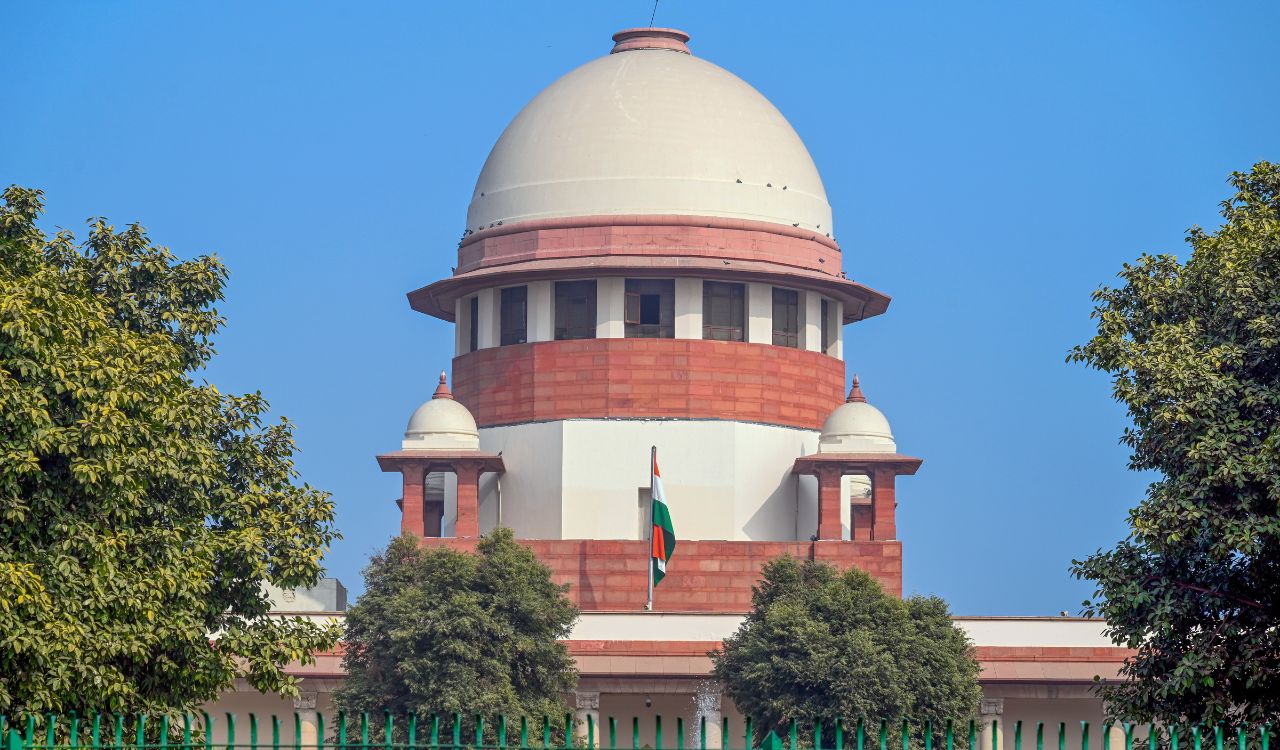
The Madhya Pradesh High Court, while ruling that the Bhojshala-Kamal Maula mosque complex is a temple dedicated to Goddess Saraswati, referred to 10 principles laid down by the Supreme Court in the 2019 Ayodhya verdict to determine the site's religious character



New Delhi: The Madhya Pradesh High Court’s judgment in the Bhojshala-Kamal Maula mosque complex case has referred to the 10 principles laid down by the Supreme Court in its historic 2019 verdict in the Ram Janmbhoomi-Babri Masjid land dispute case in Ayodhya.
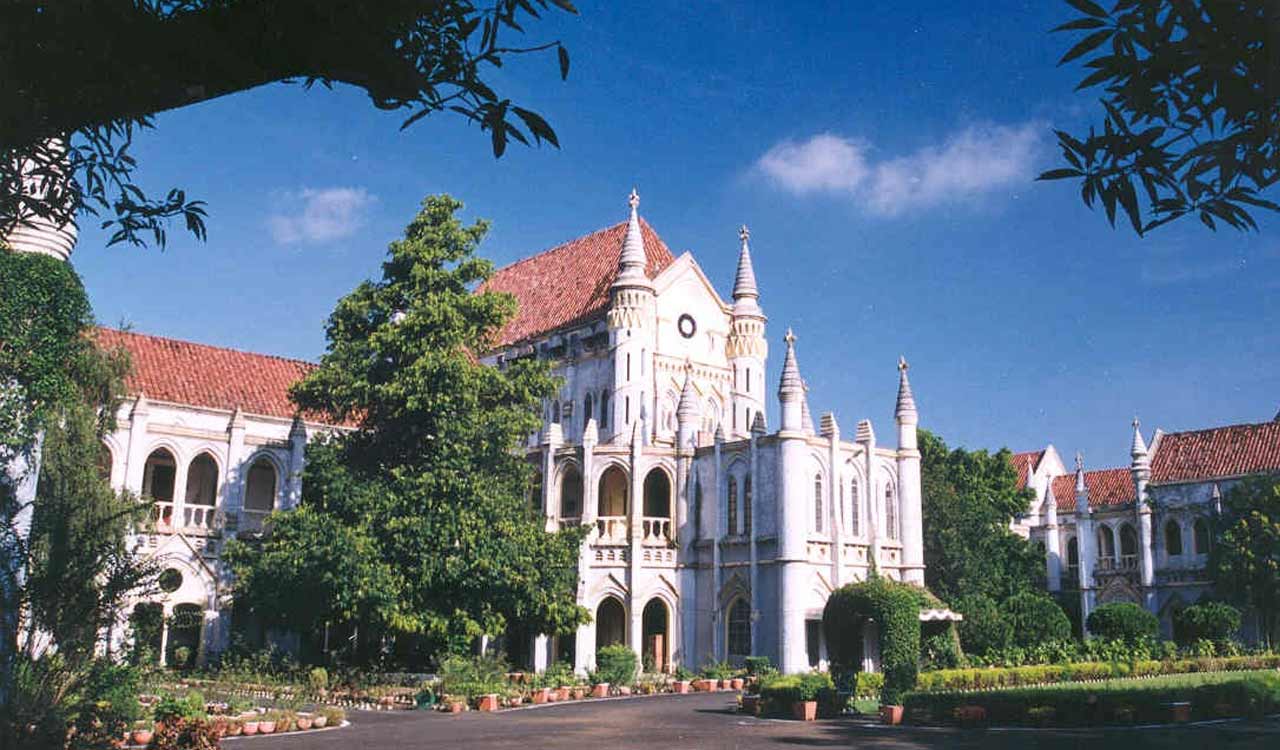
While ruling that the disputed Bhojshala-Kamal Maula mosque complex in Dhar district is a temple dedicated to Goddess Saraswati, the high court said that for determining the character of the disputed area, it has to keep in mind those 10 principles.
“We have considered the archaeological, historical facts, ASI notifications and survey report on the anvil of the statutory provisions of the ASI Act as well as on the basis of the principles laid down in the Ayodhya case, that archaeology is a science that draws on multi-disciplinary or trans-disciplinary approaches and considering the nature of archaeological evidence,” a bench of justices Vijay Kumar Shukla and Alok Awasthi said.
In its verdict delivered on Friday, the high court said it was not deciding the title of the property of the disputed area.
It said the judgment in the Ayodhya case arose out of a civil suit dealing with the claim of title over the disputed area.
“In the present case, we consider that we have to determine the character of the disputed area on the basis of historical literature, architectural features, ASI survey reports etc. For determining the character of the disputed area, we have to keep in mind the aforesaid 10 principles laid down by the apex court in the Ayodhya case,” the high court said.
The bench noted that principle number one is that the burden of proof on which a case like this has to be tested is not that of mathematical certainty or proof beyond reasonable doubt, but the standard which courts should accept is that of preponderance of probability.
It noted that another principle said the enquiry of modern courts cannot be to ascertain the theological perfection of the structure, but to ascertain evidence of faith and belief, worship, subsistence of endowment, nature of endowment and whether it exists in perpetuity or not, religious use, conduct of worshippers, historical assertion, and continuity and consistency of religious belief.
The high court said another principle emanating from the Ayodhya verdict is that protection of the deity, endowed property, and underlying pious purpose is the paramount objective of modern courts and thus, the interests of the deity or the purpose itself can be protected by its beneficiaries, that is, the worshippers.
“Principle no. 4 which has been culled out is about the existence or the presence of a destroyed idol. The destruction or absence of the idol does not result in termination of the pious purpose, and consequently does not terminate the pious purpose or the endowment,” it said.
The high court said another principle recognises an important principle when modern courts have to assess matters of faith and belief.
“Faith and belief are recognised to be of paramount importance. However, courts must also recognise that they are not always capable of proof by direct documentary evidence, nor must they always subscribe to secular logic,” it noted.
The high court said principle number six makes clear the position regarding the evidentiary value of official gazettes or gazetteers before courts.
The bench observed that another principle said official descriptions, administrative nomenclature, government correspondence and contemporaneous official records may have material evidentiary value where they consistently identify a disputed site by reference to its religious or historical association.
It said principle number eight was about the principle of ‘waqf by user’.
“Ayodhya thus demonstrates that internal religious doctrines, whether invoked by the Hindu side in the form of juristic personality of the land itself, or by the Muslim side in the form of waqf by user over the entire disputed property, cannot be accepted in a manner that automatically destroys the established religious rights of the other community,” the high court said.
It said another principle was about the Archaeological Survey of India (ASI) report.
The further principle through which modern courts have to assess a dispute before them is that archaeology, which includes multiple disciplines and trans-disciplinary approaches, is the strength of the report prepared by such experts and cannot be labelled as a weak form of evidence, the high court noted.
“The assessment of findings has to be done by applying the principle of preponderance of probabilities rather than absolute truth,” it said.
The high court said another principle was that when a dispute concerns religious character, historical use, continuity of worship, or competing claims over a protected or disputed religious site, archaeological findings of religious motifs, art, instruments, sculptures, inscriptions and architectural members demonstrating a pre-existing structure of a particular religion may be of high probative value.
“This enables the courts to apply the other principles in determining subsisting rights and consistency of belief,” it said.
In its November 9, 2019 verdict, the apex court had cleared the way for the construction of a Ram Temple at the disputed site in Ayodhya, and directed the Centre to allot a five-acre plot to the Sunni Waqf Board for building a mosque.

Related News