Bombay HC’s Goa bench: Draft electoral roll cannot be basis for deleting voters’ names
The Bombay High Court’s Goa bench held that draft electoral rolls prepared during the Special Intensive Revision (SIR) cannot be used to delete voters’ names. The court questioned the Election Commission over alleged voter deletions through the ERONET system without hearings.


Panaji: The draft roll under the Special Intensive Revision (SIR) cannot be the basis for deletion of names from the voter list, the Bombay High Court has said, holding that administrative software systems cannot supersede statutory laws.
The Goa bench of the HC also questioned the Election Commission of India (ECI) on the provisions empowering it to delete names without a hearing, saying it was “very perturbed by this”.
The division bench of Justice Amit S Jamsandekar and Justice Valmiki Menezes was hearing a petition on Wednesday filed by six members of a family over deletion of their names from the voter list.
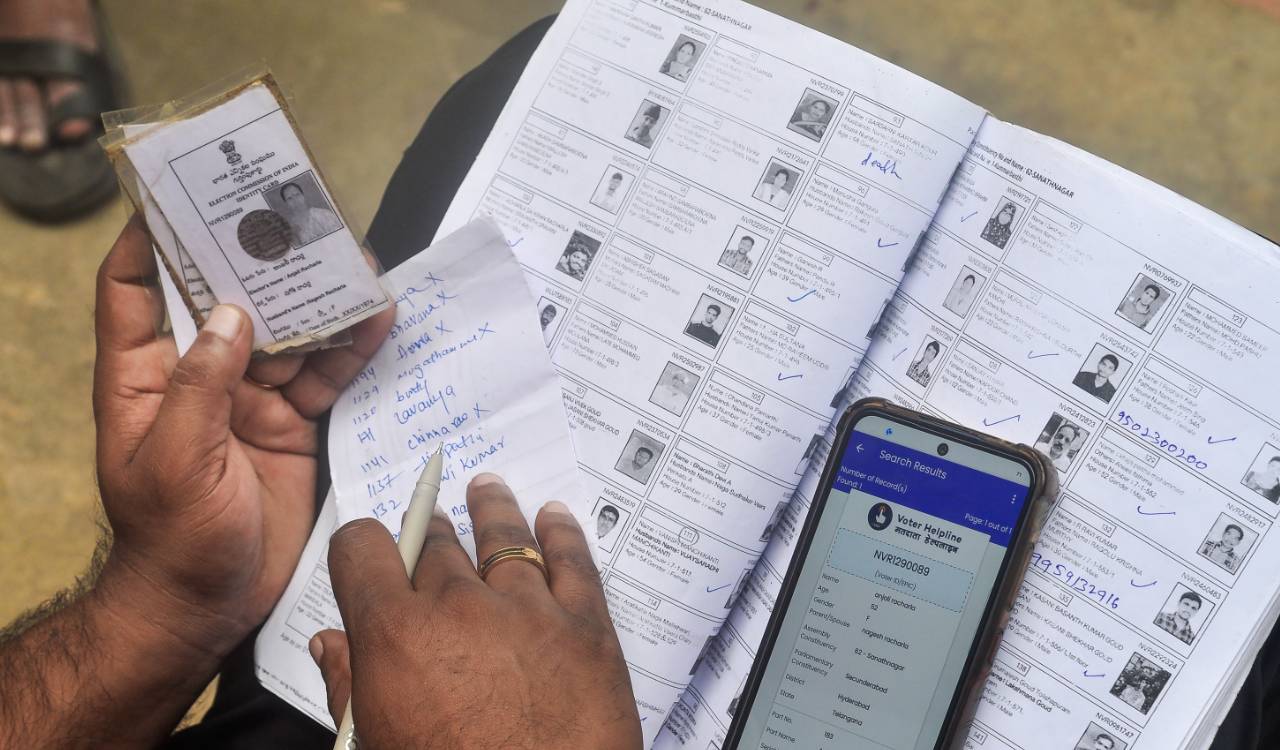
Petitioners Paresh Salgaonkar and his family members told the court that they had moved to a new house in the same Santa Cruz assembly constituency and were instructed by the BLO (Booth Level Officer) to submit Form 8 for change of address.
At the time of processing these forms, they said, errors showed up since no record of their Electors Photo Identity Cards (EPIC) was found, and as such, the only option available in the ERONET software was “reject”.
ERONET (Electoral Registration Officers’ Network) is a web-based form-processing and electoral roll management system developed by the ECI.
Salgaonkar said that the Assistant Electoral Registration Officer informed them that their EPICs had been deleted from the rolls and consequently, their Form 8 applications could not be processed.
“The only recourse available was to submit Form 6 since there was no option in ERONET for reviewing or restoring the deleted EPICS,” the petitioners said, adding that Form 6 was applicable only to first-time electors seeking fresh inclusion of their names in the voter list.
Since they were existing electors, they were required to apply under Form 8 to seek a change of address within the same assembly constituency, the petitioners said.
The court ruled that the draft roll cannot be the basis for deletion of voters’ names.
“Otherwise, Form 6, 7 or 8 have no meaning. Form 6, 7 and 8 are specifically for either a person who is a new voter, a person who has lost the right to vote, or a person who is shifting,” the court said.
The court told the ECI that the software “system did not allow” it to accept Form-8. “He was never a new voter. He was an existing voter. He became new for your system,” the court said.
The bench questioned the ECI on the provisions empowering it to delete names without a hearing.
The judges said, “Show us from the Act…what empowers you to delete without hearing?… Your officers were helpless, and they just decided to throw it on the system. So, they recorded it in the order, saying that the system has rejected. We are very perturbed by this…we are just wondering how many more who have not come to court.”
The bench said that once a Form 8 is received, the authority must “apply its mind and see whether this person has really moved (to a new address)”.
The judges said such actions will take lakhs of citizens off the rolls. “Here there is only one family. Take a situation where there are so many people who have shifted residence,” the bench said.

Related News