BRS alleges India’s biggest ever land scam in Telangana under Revanth Reddy govt
The BRS has accused the Telangana Congress government of orchestrating a Rs 5 lakh crore scam by undervaluing and converting over 9,200 acres of industrial land in Hyderabad. KTR warned all transactions under the HILTP would be cancelled if BRS regains power
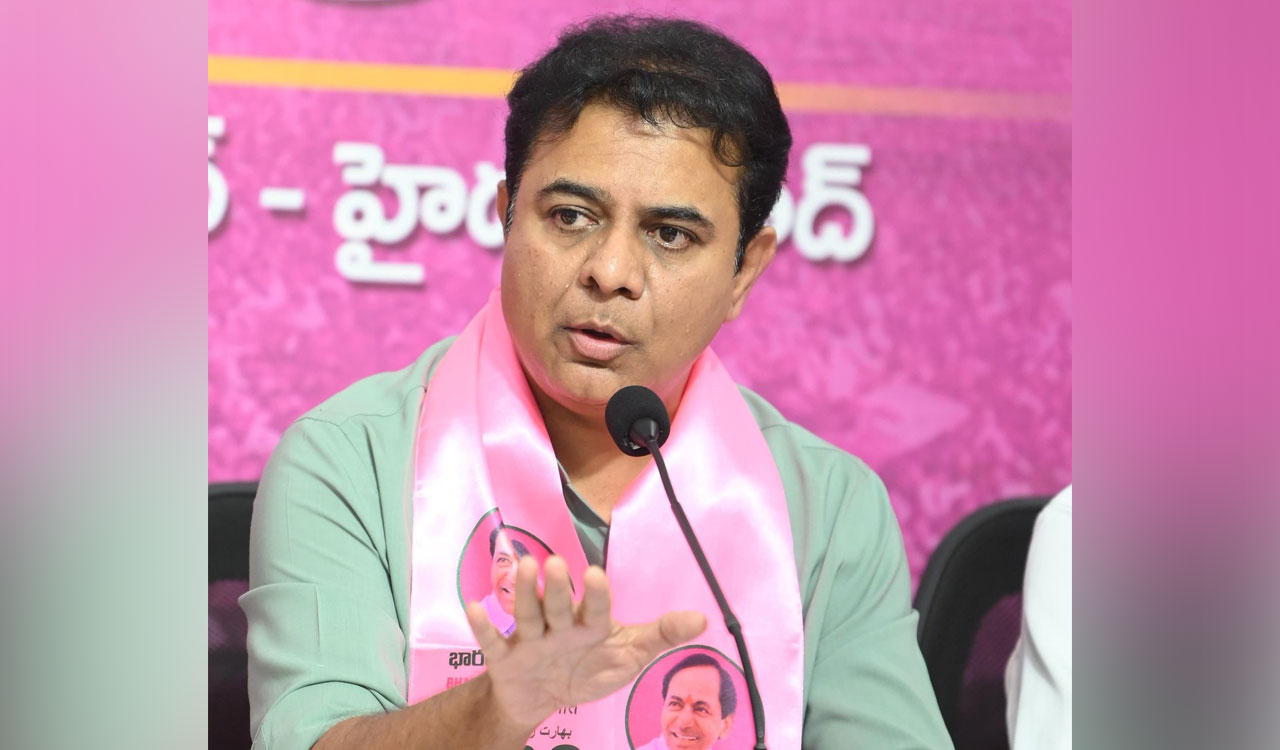


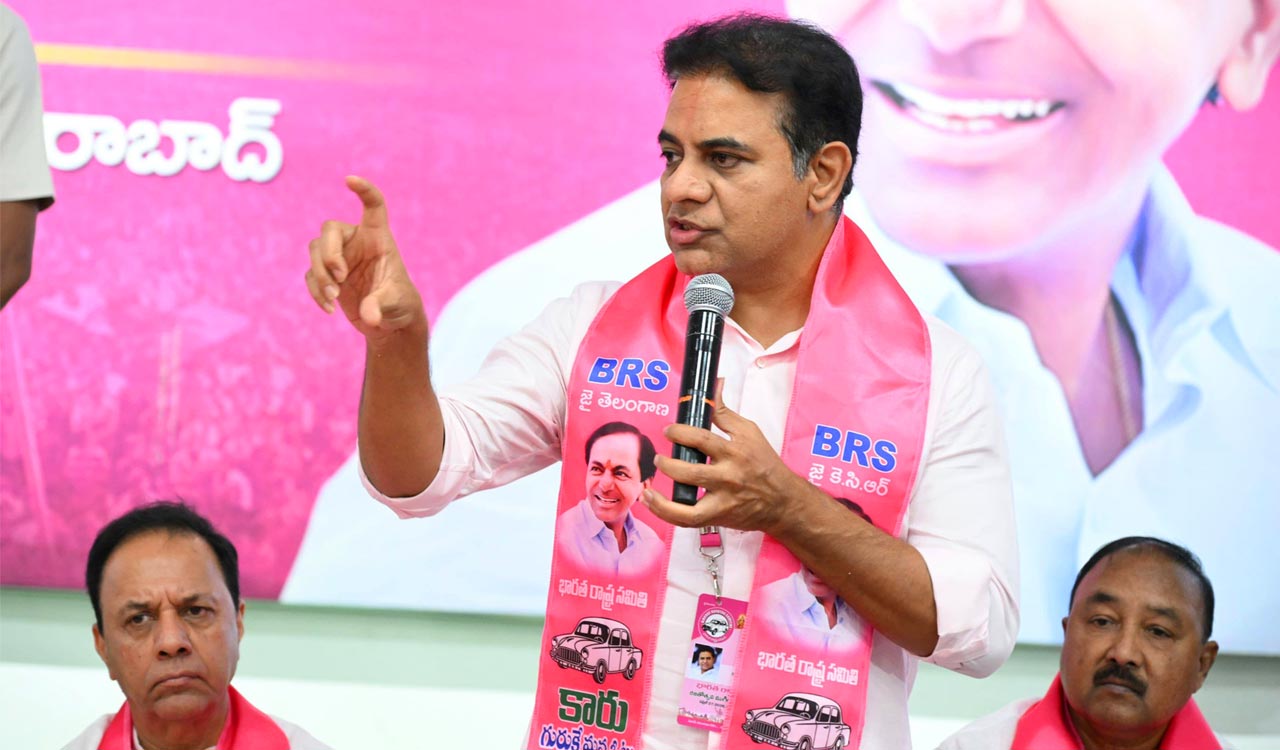
Hyderabad: Main opposition party Bharat Rashtra Samithi has accused the Congress government of setting the stage for ‘India’s biggest ever land loot’ in Telangana under the leadership of Chief Minister A Revanth Reddy. The serious allegation came at a news conference addressed by party working president KT Rama Rao at Telangana Bhavan on Friday. He accused the administration of orchestrating a Rs 5 lakh crore land scam involving illegal conversion, undervaluation and reallocation of approximately 9,292 acres of prime industrial lands across Balanagar, Jeedimetla, Sanathnagar, and Azamabad clusters in Hyderabad and its surrounding areas.
The Revanth Reddy government is out to hand over the industrial lands at throwaway regularisation charges of just 30 per cent of the Sub-Registrar Office (SRO) value. “Revanth Reddy has turned these public industrial assets into his personal ATM and Paytm,” he charged, claiming that the policy is designed to personally benefit the Chief Minister, his family members, in-laws, close friends, loyalists, and a coterie of brokers.
He named several influential individuals – AV Reddy, Krishna Reddy, Kondal Reddy, and Tirupati Reddy — as key players lobbying to grab these lands. “Some agreements have already been signed,” he alleged.
Rama Rao pointed out that in Azamabad industrial area alone, the SRO value is Rs 32,000 per square yard while the actual market value is Rs 1.5 lakh per square yard — nearly five times higher. Under the previous BRS regime, a legislation was made mandating payment of 100 per cent to 200 per cent of SRO rates for any conversion or regularisation required. The Congress government has slashed it to a mere 30 per cent, facilitating windfall gains for select buyers.
Contrast with BRS tenure
The BRS leader reminded that industrial lands were originally allotted at highly concessional rates over the past 50–60 years solely to promote industrial growth. During the 10-year BRS rule, no conversion of industrial land for real estate was permitted, and transparent allotment attracted massive private investment without any favouritism.
He recalled that both the 2013 Congress government (GO Ms No. 20) and later the BRS government had initiated steps to shift polluting industries away from residential areas and the Outer Ring Road. Plans like Pharma City were conceived to relocate industries from Jeedimetla, Mallapur, and Nacharam to dedicated zones.
“We never allowed conversion of industrial land into private real estate. Revanth Reddy has reversed everything and under the new policy he wanted to regularise in just 45 days,” he said.
Issuing a stern warning, he declared, “Any industrialist or developer who purchases land under this policy will face serious legal consequences. These transactions will not stand. When BRS returns to power, we will cancel all such regularisations, take back the land, conduct a thorough inquiry, and initiate criminal action against everyone involved.”
He demanded immediate withdrawal of the Hyderabad Industrial Land Transformation Policy (HILTP).
He said the new policy was devised because of its huge potential for levy of the “Revanth-Rahul Tax (RR Tax)” that could allegedly net the Chief Minister Rs 40,000 crore– Rs 50,000 crore personally.
Rama Rao also claimed that several landowners belong to the BJP and challenged the saffron party leadership to clarify its stand. “If the BJP is not involved, its leaders must respond immediately,” he said. The BRS vowed to take the battle to the streets and courts if the policy is not scrapped forthwith.
He stated that in Maharashtra, the government faced a similar situation with the lands given for promoting textile mills in Mumbai. The government had made the textile industries that had fallen sick to part with 50 per cent of the lands and reuse the rest for their needs. The same policy can be implemented benefitting the State, he asserted.

Related News
-

KTR accuses Revanth Reddy of corruption over alleged 15 per cent commission demand in Radial Road-2 tenders
-
KTR alleges Rs 3,000-crore coal import scam, seeks white paper on power crisis
-
Harish Rao demands Rythu Bheema benefits for families of deceased farmers
-
Telangana power crisis: Harish Rao accuses Revanth of blaming officials