-
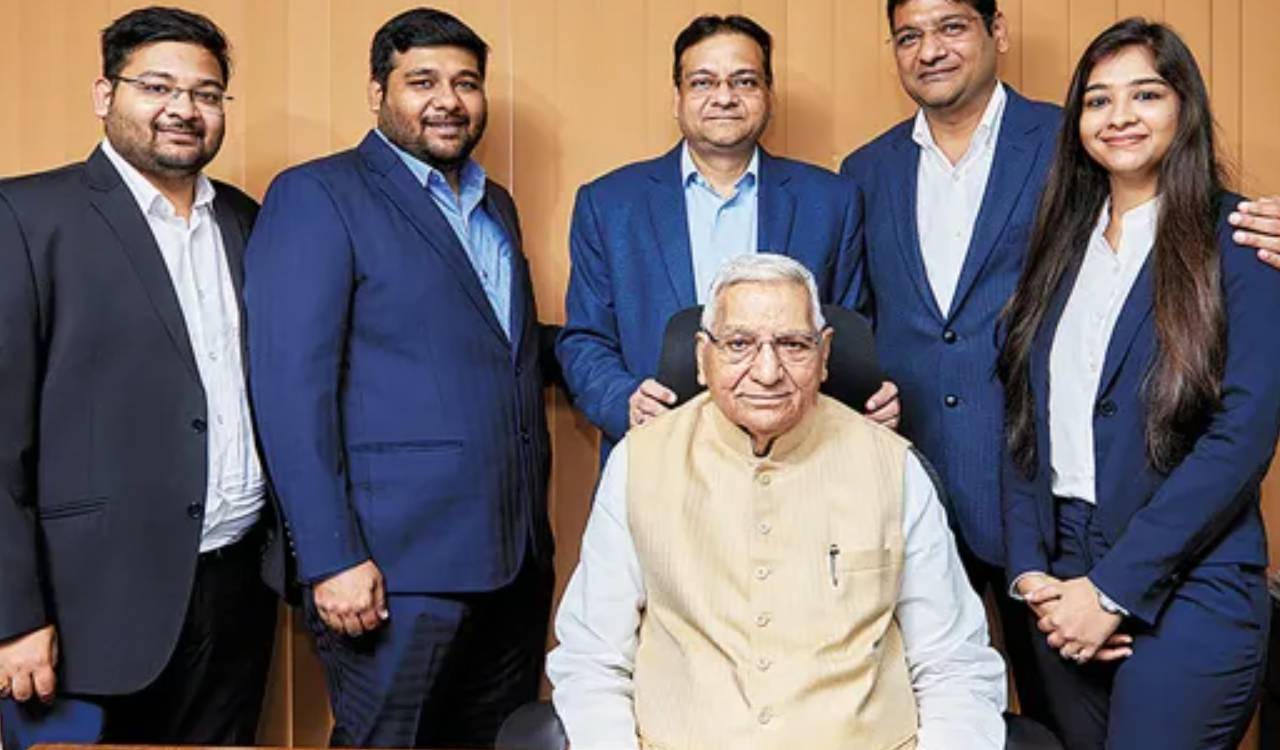
Jain is currently Executive Director at the Reserve Bank of India. He replaces T Rabi Sankar, whose extended tenure ended on May 2
-
Aviation fuel prices for international airlines rose about 5 percentage to dollar 1,511.86 per kl, while domestic carriers were shielded from hikes as authorities adopted a calibrated approach amid global energy volatility linked to geopolitical tensions and rising crude oil prices
-
Adani Group Chairman Gautam Adani said the conglomerate will add Rs 2 lakh crore in new assets this year amid rapid business growth. Addressing employees on Labour Day, he highlighted major infrastructure, airport, energy and redevelopment projects contributing to India’s development journey
-
UAE’s exit signals a gradual shift in global oil governance—from tightly coordinated production regimes to more flexible, nationally driven strategies
-
Government sources indicated petrol and diesel price hikes may be imminent as global crude surges and losses mount for oil firms, despite a four-year retail price freeze, with rising tensions in West Asia and restricted Strait of Hormuz supply driving costs higher
-
Noida International Airport will begin commercial operations from June 15, boosting connectivity in North India, easing congestion in the NCR, with IndiGo set to operate the first flight followed by other carriers
-
India-Tanzania trade rose to $9.02 billion in 2025-26, with both sides reaffirming commitment to deepen economic ties during the Joint Trade Committee meet, focusing on local currency trade, visas, mining, healthcare, education and digital cooperation
-
Piyush Goyal said the India-UAE Comprehensive Economic Partnership Agreement has boosted bilateral trade beyond $100 billion, driving growth across sectors, enhancing services trade, and creating opportunities for Indian businesses, MSMEs and farmers
-
India and the UK discussed enhancing trade and investment ties during a virtual meeting between Piyush Goyal and Peter Kyle, focusing on maximising gains from the India-UK Comprehensive Economic and Trade Agreement
-
Congress on Friday slammed the BJP government over the steep Rs 993 hike in commercial LPG prices, alleging insensitivity to common citizens and small businesses, and criticised the Centre for failing to cushion global energy shock triggered by the West Asia conflict
-
Indian equity benchmarks ended the week lower as foreign investor outflows and surging crude oil prices dampened sentiment. While broader markets showed resilience, analysts expect indices to remain range-bound amid global uncertainties, inflation concerns, and ongoing earnings season volatility.
-
India’s digital payments ecosystem grew 25 per cent year-on-year in April, with transactions reaching 22.35 billion. UPI continues to dominate, expanding globally and recording exponential growth, reinforcing India’s position as a leader in digital public infrastructure and fintech innovation.
-
The price of 19-kg commercial LPG cylinders has been raised by Rs 993, marking the third hike since February, while domestic LPG rates remain unchanged. The government also maintained fuel prices and revised export duties to ensure domestic supply stability.
-
Apple posted record March quarter revenue with strong double-digit growth across emerging markets, including India. CEO Tim Cook highlighted India’s expanding middle class and low market share as key growth opportunities, signalling continued investment and expansion in the country.
-
Aviation turbine fuel prices for international airlines rose over 5% in Delhi, marking a second monthly increase driven by global energy trends. Domestic carriers saw no change, as authorities maintained moderated rates while passing higher costs to foreign airlines
-
UAE’s exit from OPEC opens up strategic opportunities for countries like India amid ongoing regional conflicts
-
Telecom regulator Trai has released a consultation paper on spectrum allocation and pricing norms for Vehicle-to-Everything (V2X) communication, a step towards enabling autonomous and connected cars in India.
-
The Indian rupee ended 4 paise higher at 94.84 against the US dollar, supported by softer crude prices, though pressures from rising oil, FII outflows, and global uncertainties capped gains. Markets remain cautious amid US-Iran tensions and inflation concerns
-
India’s used-car market is expected to nearly double to $70 billion by FY31, driven by rising affordability, shorter replacement cycles, and increasing formalisation, according to a Redseer report. Annual used-car sales are projected to reach 10 million units during the period
-
Indian equity benchmarks Sensex and Nifty closed lower on Thursday as rising crude oil prices and escalating tensions between the United States and Iran weakened investor sentiment. Broader markets also declined, while IT and pharma stocks showed relative resilience amid volatility
-
Adani Ports and Special Economic Zone Limited reported a 16 per cent rise in FY26 net profit to Rs 12,782 crore, driven by record cargo volumes and strong growth in logistics and marine businesses. The company also crossed the 500 MMT cargo handling milestone
-
Gold and silver prices rose on Thursday amid rising crude oil prices and growing tensions in West Asia. Gold crossed Rs 1.50 lakh on MCX during intra-day trade, while silver also gained strongly as investors reacted to global uncertainty and geopolitical developments
-
Infosys will set up a 20-acre campus in Visakhapatnam with capacity for 7,000 employees, expanding its presence in Andhra Pradesh. The move highlights growing tech investment and local talent development in the region
-
India’s iPhone exports reached a record ₹2 lakh crore in FY26 under the PLI scheme, making Apple the top branded export contributor. Strong manufacturing growth boosted smartphone shipments, while Apple also announced leadership change with John Ternus replacing Tim Cook