Editorial: AI fury batters IT stocks
The meltdown was due to worries of AI tools replacing many traditional software and IT outsourcing services
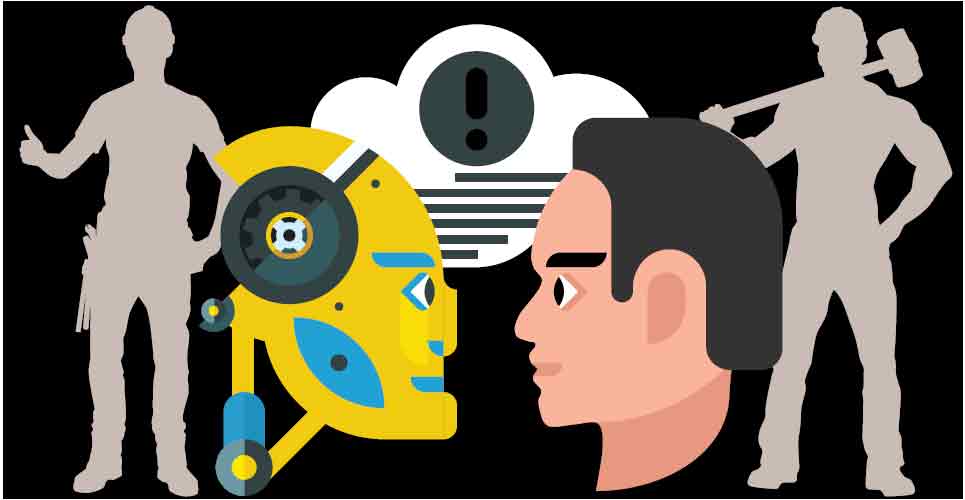


The disruptive power of artificial intelligence technologies is nothing new. But what happened to the global IT stocks around the world last week mirrored far deeper fears of the industry. A set of new AI tools released by Anthropic, a US-based AI company, sent tremors through America, Europe and Asia, wiping billions of dollars off the software and IT services firms’ stock prices as their shares fell sharply. Anthropic, the creator of Claude chatbot, released 11 open-source plugins for its ‘Claude Cowork’ agent aimed at automating tasks across legal, sales, marketing and data analysis functions. The worry is that these automation tools, which can handle a wide range of customer service tasks, could replace many traditional software and IT outsourcing services. The scale of the meltdown was so massive that some analysts described the market reaction as a “SaaSpocalypse,” meaning a severe downturn for software-as-a-service (SaaS) companies. The new plugins will lead to automation of tasks such as legal document review, compliance, sales workflows, marketing support and data analysis. Indian IT stocks too came under sustained pressure with their shares plunging by up to 8% and wiping out roughly Rs 2 lakh crore in market value amid fears that automating coding, legal review, sales workflows and other enterprise functions could erode the high-margin application services revenues that account for 40–70% of Indian IT companies’ business. Analysts estimate that 9%–12% of industry revenues could be at risk over the next four years as clients pivot to AI-led efficiency over traditional service providers.
A key takeaway for the Indian IT sector from Anthropic’s disruption is that it should move from traditional outsourcing to becoming AI implementation partners. As Indian enterprises integrate Claude for critical coding workflows, dependency on large vendor teams may decline, squeezing billable hours and margins. Anthropic’s advanced AI systems also threaten the entry‑level talent pool at Indian IT firms by replacing routine development and testing tasks. However, the doomsday predictions are highly exaggerated. A closer look reveals that the scale of legacy software embedded in global enterprises is of the order of $20–25 trillion across the US and Europe — with annual technology spending of $1.2–1.75 trillion. Such installed bases cannot be replaced or automated away overnight by plugging in a new AI tool. Most global enterprises continue to use AI selectively, particularly in research, discovery and limited productivity use cases. Comprehensive AI-led transformation of core operations remains at an early stage. Tools like Claude may directly apply to roughly 25–30% of total work in application development and related services. While application services form a significant share of revenues for large IT firms, the nature of work within that bucket varies widely. Large-scale system integration, legacy modernisation, database consolidation, testing, governance and compliance layers are not easily automated. The AI represents a powerful productivity accelerator, but not an overnight structural wipe-out.
Also Read

Related News