Cash promises vs governance: Bengal women reconsider choices
In West Bengal, shifting women voter sentiment and higher cash-transfer promises by the Bharatiya Janata Party may have dented All India Trinamool Congress’s support, signalling a move beyond welfare schemes toward governance concerns
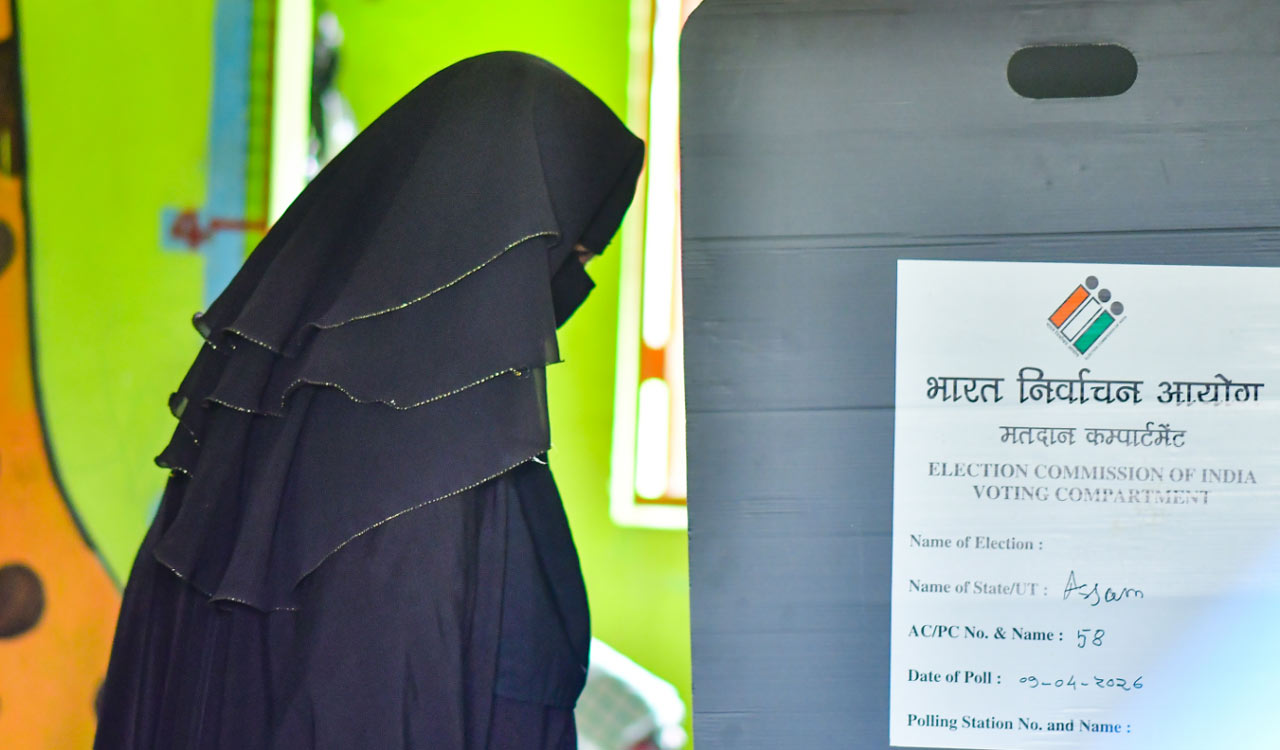


Kolkata: A higher dole promise and shifting voter sentiment may have played a key role in reshaping the electoral choices of women in West Bengal, as the Trinamool Congress (TMC) faced a drubbing by the BJP in the assembly election.
Women voters constitute nearly half of the state’s electorate, and they have long been considered a strong force behind the Mamata Banerjee-led party.
The TMC government increased the financial assistance ahead of the election in the ‘Lakshmir Bhandar’ scheme, widely regarded as the ruling party’s most politically potent welfare programme for women, to Rs 1,500 per month for the general category and Rs 1,700 for those in the reserved bloc. In its manifesto, the BJP promised monthly assistance of Rs 3,000 under its proposed ‘Annapurna’ scheme, and this could have made notable inroads into the TMC’s women voter segment.
The TMC has, since 2011, highlighted higher participation of women voters in elections, except during the 2014 Lok Sabha polls, the official said. In the first phase of polling this year, women’s turnout stood at 92.69 per cent, higher than men’s 90.92 per cent across 152 constituencies, according to an Election Commission official.
However, this data is not yet available for the second phase when 142 seats went to polls. “We are collating data from across regions. A clearer picture will emerge after detailed post-poll analysis,” the official said on condition of anonymity.
However, the election results declared on Monday suggested a shift in that trend, a TMC leader said.
Post-poll analyses of the 2021 elections had indicated that nearly two crore women benefited directly from the ‘Lakshmir Bhandar’ scheme, which then provided between Rs 500 and Rs 1,000 per month.
“About 55-58 per cent of women voters had backed the TMC in 2021. This time, the equation appears to have changed. Financial incentives remain relevant, but may not be the sole determinant anymore,” he said. “There is evidence of a broader churn. Welfare schemes are increasingly viewed as entitlements rather than electoral incentives,” he added.
The leader also cited factors such as public anger over crimes against women, unresolved high-profile cases, allegations of corruption in recruitment, and perceived arrogance at the local leadership level as reasons for the erosion of support. “The belief that financial aid alone can secure electoral loyalty seems to have weakened. Women voters appear to be placing greater emphasis on governance and accountability,” he said.

Related News
-

17 dead, 25 others injured in stampede at Kolkata Durga puja pandal
-
‘Forgive your enemies once, friends twice, but never traitors’: Kiren Rijiju on ‘regime change’ remark
-
BJP to launch nationwide campaign to counter Cong claims on SIR, ECI
-
BJP leader robbed of Rs 50 lakh at Kanpur farmhouse hours after taking charge of new party responsibility