CJP and the unfinished struggle for educational justice
Real victory will come only when the system itself becomes more transparent, inclusive, and accountable


By Akhilesh Kumar
In democratic societies, political expressions often emerge in unexpected forms. Sometimes they come through traditional parties, sometimes through social movements, and sometimes through unconventional platforms that use humour, satire, and public performance to express frustration. The emergence of the Cockroach Janta Party (CJP) represents one such moment where satire transformed into a vehicle for questioning institutional failures and raising concerns about the future of young people.
Also Read
What began as a creative political expression gradually became associated with a larger public conversation around the NEET examination controversy, student anxiety, and questions regarding accountability in India’s education system. Behind the humour and unconventional identity was a serious message: young citizens were demanding transparency, fairness, and a system that respects their aspirations. The significance of the CJP movement lies not merely in its political vocabulary but in the issues it brought into public discussion. It reflected the frustration of a generation that spends years preparing for competitive examinations but often finds itself facing uncertainty, institutional failures, and a lack of confidence in systems that determine their future.
The protest became a reminder that democratic participation does not always emerge through traditional political structures. Sometimes it emerges from citizens who feel ignored and decide to create their own platforms of resistance.
NEET and the Larger Crisis of Trust
The controversy surrounding NEET is not only about one examination. It represents a deeper crisis of trust between students and educational institutions. For millions of young Indians, competitive examinations are gateways to professional careers and social mobility. A failure in such a system is therefore experienced not merely as an administrative mistake but as a threat to their future. Students invest years of preparation, families spend their savings, and many young people postpone other opportunities in the hope of securing admission into professional institutions. When questions arise regarding transparency, fairness, or accountability, the consequences are deeply personal. The CJP protest captured this emotional dimension of the issue. Students were not speaking only about examination procedures; they were speaking about dreams, sacrifices, and the fear that their hard work might not receive a fair evaluation.
The debate also raised fundamental questions about the meaning of merit. Can an examination truly be considered equal when students come from vastly different educational backgrounds? Can students studying in government schools and rural areas compete equally with those who have access to expensive coaching institutions and advanced learning resources? These questions have existed for years, but the protest brought them back into national focus. Any discussion on NEET remains incomplete without remembering Anitha, the young student from Tamil Nadu whose death in 2017 became a symbol of opposition to the examination system. Anitha came from a modest background and studied under the Tamil Nadu State Board system. She performed exceptionally well academically and dreamed of becoming a doctor. For her and many students like her, education represented the possibility of transforming their social and economic circumstances. However, the introduction of NEET created concerns among sections of students and policymakers who argued that a centralised examination could disadvantage those educated in different state systems, particularly students without access to coaching facilities.
The significance of the CJP movement lies not merely in the slogans raised on the streets or the immediate political responses it generated
Anitha’s story became significant because it represented a larger social question: whether educational policies can be considered fair without addressing unequal conditions of preparation. Years later, her name continues to appear whenever the debate over NEET and educational equality returns. Her story reminds India that examinations are not simply technical processes; they shape human lives.
One of the major debates surrounding NEET has been the relationship between national uniformity and India’s educational diversity. Supporters of centralised examinations argue that a common examination creates transparency, standardisation, and a uniform method of assessment. They believe that a single national framework can reduce irregularities and ensure consistency. However, critics argue that India’s educational reality is too diverse for a one-size-fits-all approach. Students across states study different curricula, languages, and educational environments. The availability of resources also varies significantly between urban and rural regions. The opposition from several states, particularly Tamil Nadu, has been based on the argument that education policies must consider local realities. According to critics, excessive centralisation risks ignoring the social and economic inequalities that influence educational outcomes. The CJP movement brought this debate into the public sphere by questioning whether equality means treating everyone identically or ensuring that everyone receives a fair opportunity to compete.
The Human Face of the Protest: Voices from the Ground
The most powerful aspect of the CJP protest was not only the political argument but the emotions visible among participants. Behind every student standing at the protest site was a personal story of struggle. Many students had spent years preparing for competitive examinations. Some had appeared multiple times, hoping that persistence would eventually lead to success. Many came from families where education represented the only pathway towards a better future. Parents standing alongside students carried their own stories of sacrifice. They spoke of financial burdens, coaching expenses, and the emotional investment made in their children’s dreams. The protest site therefore became more than a place of political demonstration. It became a space where students expressed their fears, frustrations, and hopes. Their message was not against competition or merit. Their demand was that competition should take place within a system that is transparent and trustworthy.
From Digital Mobilisation to Street Protest: The Making of the CJP Movement
Movements do not survive only because of public anger. They require organisation, communication, and individuals willing to work continuously behind the scenes. The role of organisers becomes particularly important in student movements because sustaining public attention over time is challenging. Coordinating protests, communicating demands, engaging with participants, and ensuring continuity requires significant effort. Abhijeet Dipke emerged as one of the prominent figures associated with CJP’s mobilisation. His involvement reflected the importance of grassroots organisation in transforming individual frustrations into collective action. The strength of such movements lies not only in visible leaders but also in hundreds of volunteers and participants whose contributions often remain unnoticed. Every successful movement is built through collective labour. The participation of political leaders often becomes significant when social movements seek to translate public concerns into institutional debate.
Chandrashekhar Azad’s (Bhim Army Chief) support for the protesting students represented an attempt to connect the concerns raised on the streets with political institutions. His presence highlighted the importance of elected representatives engaging directly with citizens during moments of public dissatisfaction.
However, the movement’s identity remained rooted in student concerns rather than political affiliation. The participation of political figures strengthened visibility, but the foundation of the protest remained the experiences of students who felt affected by the examination system. Democracy functions best when social movements and political institutions interact through dialogue and accountability. The manner in which governments respond to protests is an important measure of democratic health.
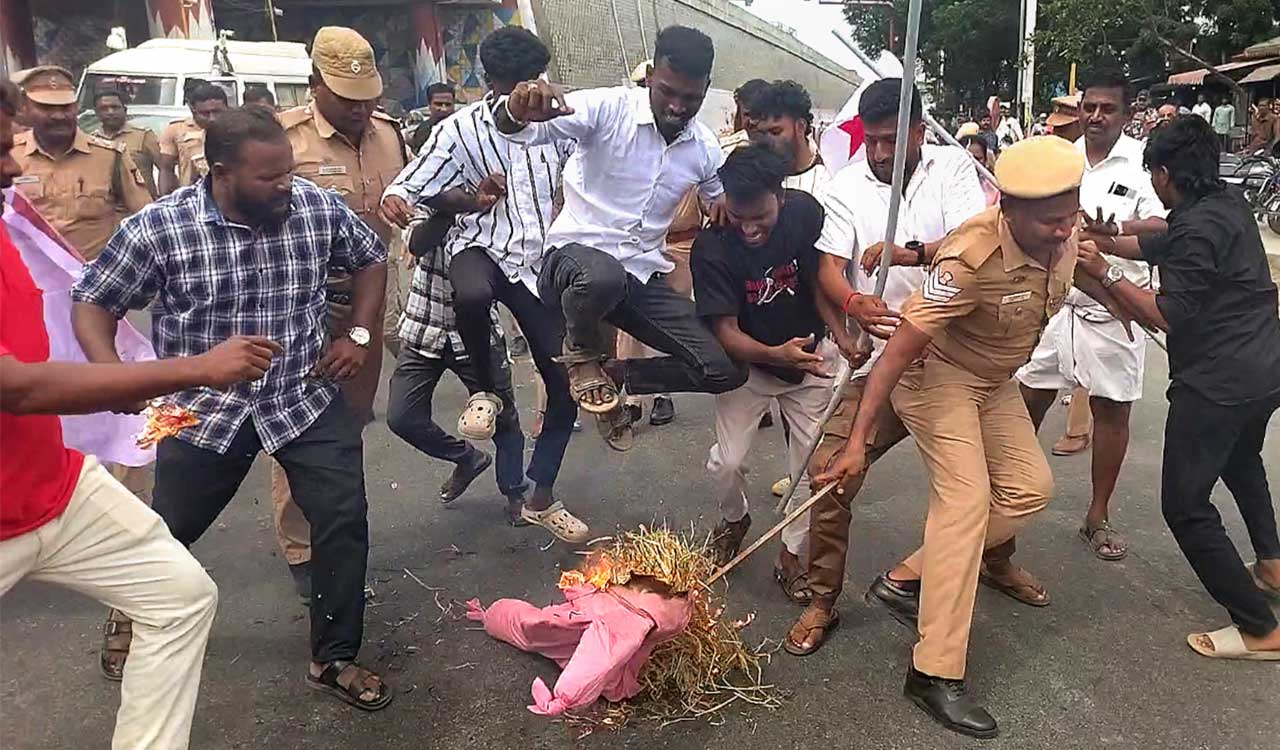
Peaceful protest is not a disturbance to democracy; it is one of democracy’s essential expressions. Concerns raised by protesters regarding police action brought attention to the broader question of how the state responds to dissent. While maintaining public order is a legitimate responsibility, democratic governance requires that citizens’ rights to peaceful assembly and expression are respected. Young people protesting for educational justice should be viewed as participants in democracy, not merely as a challenge to administrative authority.
The strength of democratic institutions lies not in preventing criticism but in responding to criticism through dialogue and reform.
Beyond Resignation: The Need for Systemic Reform
A resignation, even when it represents accountability, cannot by itself resolve deeper institutional problems. The larger issue is whether India’s examination system can be made more transparent, inclusive, and reliable. Reform requires stronger examination safeguards, independent oversight, effective grievance mechanisms, and greater consultation with states and educational stakeholders. It also requires addressing the inequality that exists before students even enter examination halls. Without improving public education and reducing dependence on expensive coaching systems, the debate over fairness will continue. The ultimate demand of students is not simply a change of individuals. It is a transformation of institutions.
The journey of the CJP from satire to protest reflects a larger story about young citizens searching for ways to express their concerns. The movement demonstrated that humour, anger, and democratic participation can exist together. The CJP protest became significant because it gave voice to questions that many students had been silently carrying: Is the examination system fair? Are institutions accountable? Does every student truly receive an equal opportunity?
The answers to these questions will shape the future of India’s education system.
The significance of the CJP movement lies not merely in the slogans raised on the streets or the immediate political responses it generated. Its deeper importance lies in the questions it forced the nation to confront. Questions about fairness, accountability, equality, and the purpose of education in a democratic society. The memory of Anitha continues to remind India that behind every policy decision are human lives and aspirations. Every examination carries the hopes of countless families who believe that education can become a pathway towards dignity and social mobility. When trust in these institutions weakens, it is not only students who suffer – the democratic promise of equal opportunity is also weakened. The true success of this movement will not be determined by one resignation, one announcement, or one moment of political attention. Real victory will come only when the system itself becomes more transparent, inclusive, and accountable. The objective must not simply be to correct one mistake but to prevent such failures from recurring. The legacy of the CJP movement will depend on whether India chooses to remember the voices that emerged from the ground. If those voices lead to meaningful reform, then this movement will not simply be remembered as a protest against an examination system. It will be remembered as a moment when young citizens demanded that education truly become a pathway to equality, dignity, and justice for all.
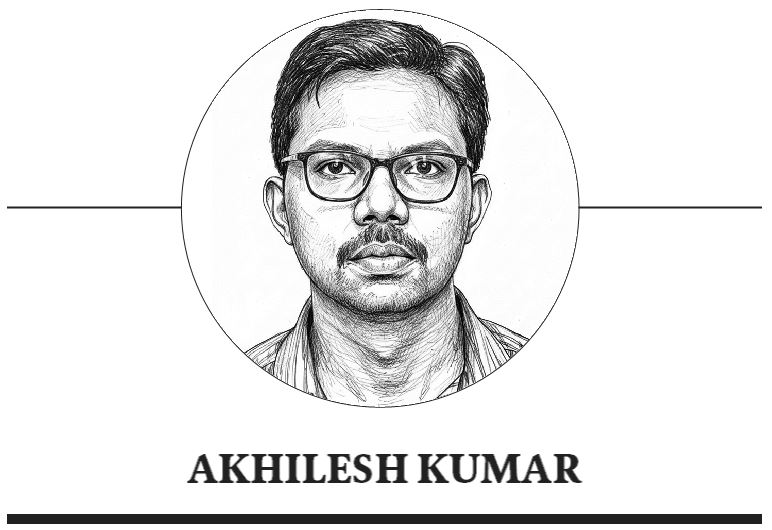
(The author is a research scholar at Jamia Millia Islamia, New Delhi, and an independent writer)

Related News