Coronavirus survives longer on glass, plastic: IIT Bombay study
The research suggests that the virus can survive for four days on glass, and seven days on plastic and stainless steel.


New Delhi: The novel coronavirus may survive for far lesser time on porous surfaces such as paper and clothes than on impermeable surfaces like glass and plastic, a study by researchers from the Indian Institute of Technology (IIT) Bombay suggests.
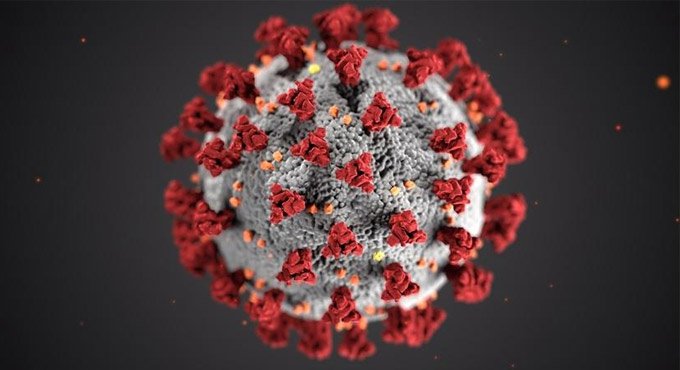
COVID-19, caused by the SARS-CoV-2 virus, is transmitted through respiratory droplets. The virus-laden droplets also form fomite upon falling on a surface, which serves as a source for infection spread.
In the study, published in the journal Physics of Fluids, the researchers analysed the drying of droplets on impermeable and porous surfaces.
They found that a droplet remains liquid for a much shorter time on a porous surface, making it less favourable to the survival of the virus.
The research suggests that the virus can survive for four days on glass, and seven days on plastic and stainless steel.
However, the virus survived for only three hours and two days on paper and cloth, respectively, the researchers said.
“Based on our study, we recommend that furniture in hospitals and offices, made of impermeable material, such as glass, stainless steel, or laminated wood, be covered with porous material, such as cloth, to reduce the risk of infection upon touch,” said study author Sanghamitro Chatterjee from IIT Bombay.
The study also suggests that seats in public places, such as parks, shopping malls, restaurants, and railway or airport waiting halls, could be covered with cloth to reduce the risk of disease spread.
According to the researchers, 99.9 per cent of the droplet’s liquid content for both impermeable and porous surfaces is evaporated within the first few minutes.
They noted that after this initial state, a microscopic thin residual liquid film remains on the exposed solid parts, where the virus can still survive.
The team, including Janani Srree Murallidharan, Amit Agrawal and Rajneesh Bhardwaj, also from IIT Bombay, discovered the evaporation of this remnant thin film is much faster in the case of porous surfaces as compared to impermeable surfaces.
The droplets spread due to capillary action between the liquid near the contact line and the horizontally oriented fibres on the porous surface and the void spaces in porous materials, which accelerates evaporation, the researchers said.
“The fact that just the geometric features rather than the chemical details of the porous material make the thin-film lifetime significantly less was surprising,” Bhardwaj explained.
The researchers said that the study findings, such as the droplet’s liquid phase lifetime of approximately six hours on paper, will be particularly relevant in certain contexts, like schools.
While this timescale is shorter than that of any permeable material, such as glass with a liquid phase lifetime of around four days, it would impact the exchange of notebooks, they said.
For example, the researchers said, it could come handy when policymakers evaluate safe measures for reopening schools or the exchange of currency note transactions in retail banks.
Similarly, they said the cardboard boxes, used commonly by e-commerce companies around the world, could be deemed relatively safe, since they would inhibit the virus survival.

Related News
-

IIT-Bombay students seek director’s resignation, independent probe into Wakode’s death
-
Opinion: Caste and merit – who gets to belong in India’s elite institutions?
-
IIT Bombay student death: Dipke questions treatment of marginalised students
-
Harish asks BRSV to highlight govt’s failure to release fee reimbursement funds