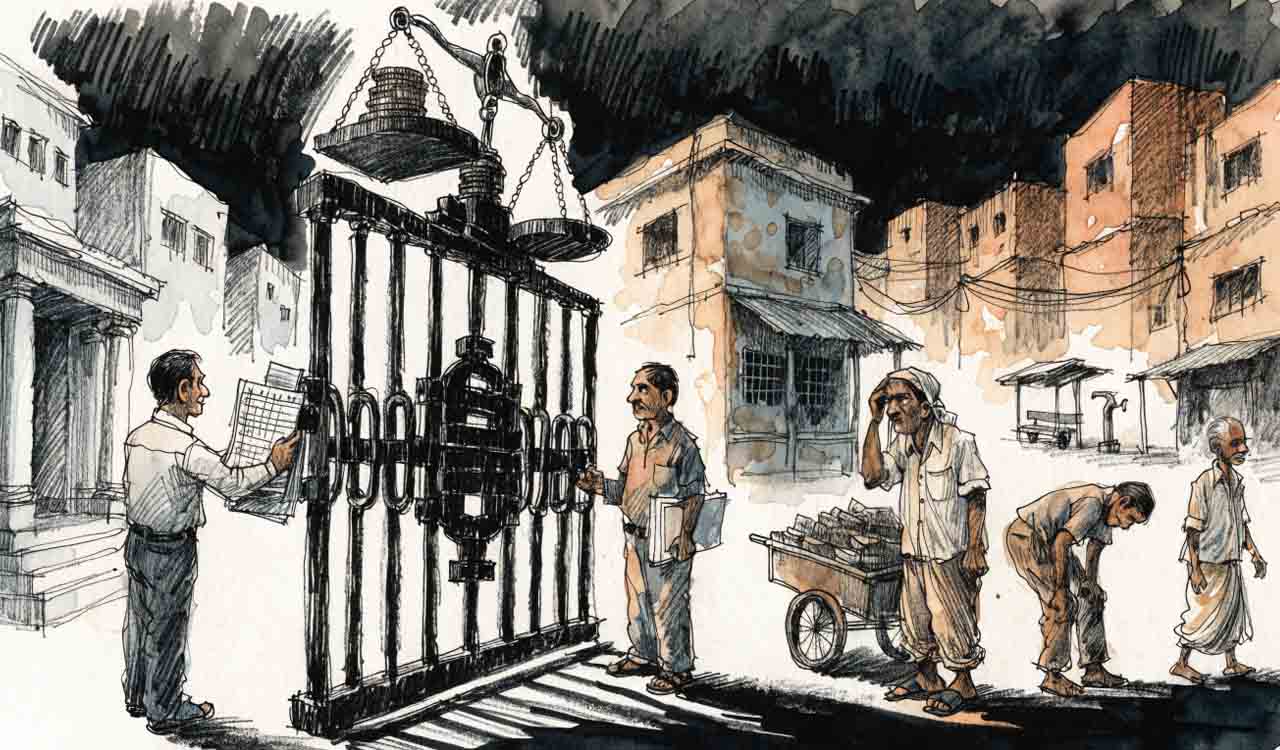
Opinion: Caste and merit – who gets to belong in India’s elite institutions?
Inclusion cannot end with admission. Dignity, recognition and belonging determine whether marginalised students are truly accepted inside


By Akhilesh Kumar
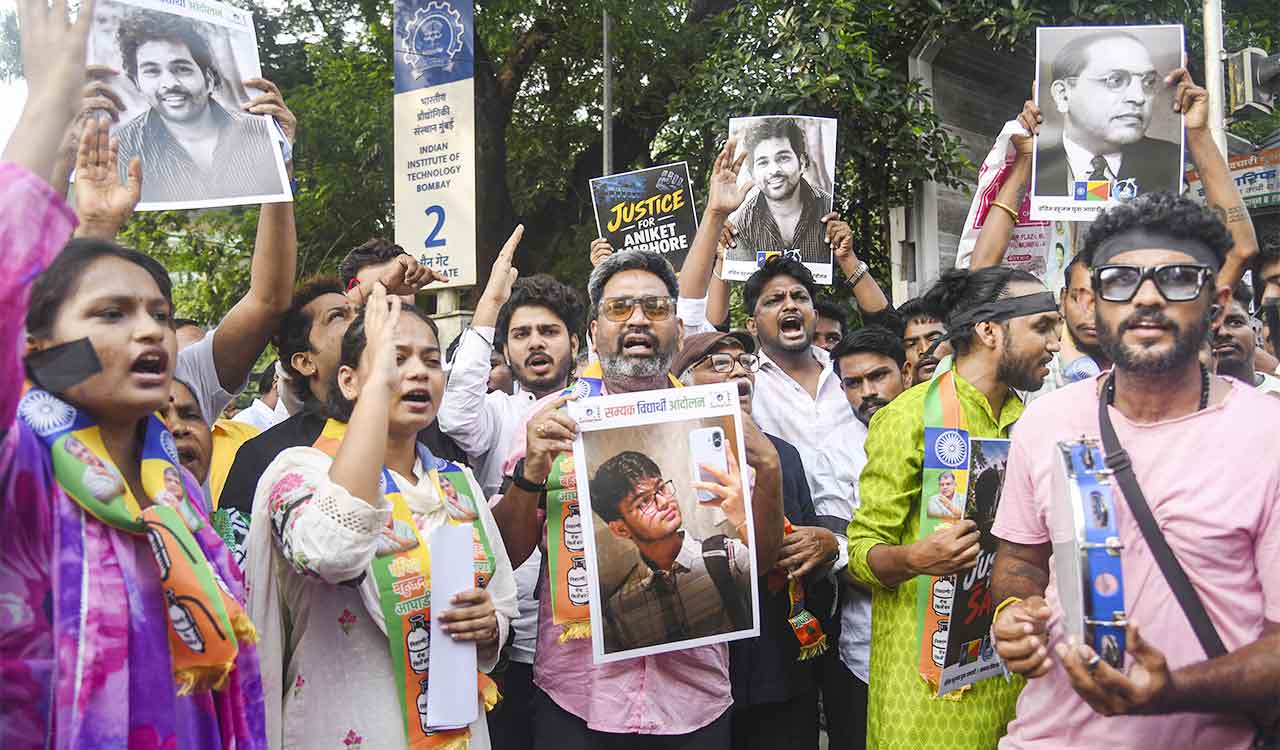
The death of Sahil Wakode, a second-year student at the Indian Institute of Technology Bombay, has once again forced a difficult question upon India’s most celebrated institutions: what happens to students from historically marginalised communities after they cross the barriers that once kept them outside?
Also Read
Sahil’s family has alleged that he faced caste-based humiliation and harassment for months, raising questions about caste within elite institutions. For a marginalised student, entering an IIT can represent years of struggle and family sacrifice. For first-generation learners, it can transform an entire family’s future. Yet admission does not automatically dismantle social hierarchies. Access can change without changing whether students feel they truly belong.
A student can enter an elite institution and still be questioned about whether they belong. Caste does not disappear when a student enters an elite institution; it can change its language. It may reappear through assumptions about intelligence, competence, and merit, including terms such as “quota student”, jokes about reservation, and the expectation that reserved-category students must prove they deserve to be there.
Institutional discrimination is often difficult to identify because it does not always take the form of an explicit rule or direct declaration of prejudice. It can operate through ordinary interactions, informal hierarchies, and repeated questioning of legitimacy. An accent can be read as a lack of sophistication; unfamiliarity with institutional culture as a lack of ability; and academic difficulty as evidence that a student never belonged.
The Tyranny of Merit
Michael Sandel’s The Tyranny of Merit offers an important way of understanding this problem. Sandel questions the assumption that success is entirely the result of talent and effort. He argues that meritocracy can produce “meritocratic hubris” among the successful and humiliation among those regarded as unsuccessful.
The problem arises when merit becomes a moral judgement about worth. Once that happens, admission through reservation can be treated not as a constitutional mechanism addressing historical exclusion but as evidence that someone is less deserving.
A marginalised student may have worked exceptionally hard to reach an IIT. Yet once inside, reservation can become a stigma. Their success can be attributed to reservation, while their failure is attributed to a lack of merit. Either way, their individual achievement is denied independent recognition. They are denied the ordinary status of being a student.
Caste does not disappear when a student enters an elite institution; it can change its language, and reappear through assumptions about intelligence, competence, and merit—from ‘quota student’ slurs to jokes about reservation
In India, caste intensifies the problem because merit does not operate on an empty social field. Historical privileges can become invisible while achievement is presented as purely individual. Socially privileged students can appear simply “meritorious”, while students entering through reservation can be treated as exceptions to merit.
Unequal starting points disappear, while outcomes are presented as neutral measurements of ability. Merit can thus become a language of misrecognition, shifting the question from “How well is this student performing?” to “Does this student deserve to be here?”
Institutional discrimination can emerge through accumulation: dismissive remarks, jokes about reservation, questioning of competence, unequal mentorship, social isolation, or the feeling that complaints will not be believed. These experiences can cumulatively shape belonging. Humiliation tells a person they are being seen through a social category that diminishes them. Formal equality can coexist with being admitted but not fully recognised, present but made to feel peripheral.
Struggle For Dignity
Institutions can also individualise structural problems. When a marginalised student struggles, attention turns towards performance or resilience. The institution becomes the background rather than the object of inquiry. Caste cannot be removed from the analysis simply because an institution considers itself meritocratic. Academic stress, social isolation, discrimination, and family pressure can intersect.
Another dimension emerges when the marginalised student becomes the problem the institution seeks to manage. Complaining can make a student seem difficult; challenging authority, confrontational; speaking about caste, overly identified with caste. Success may be attributed to reservation; struggle to lack of merit; complaints to inability to adjust.
Institutional murder does not necessarily begin with death. It begins when an institution communicates that a person’s presence is conditional, achievement questionable, and identity burdensome. It develops when structural inequalities become individual shortcomings and humiliation is normalised. “Institutional murder” here refers to the destruction of dignity and belonging alongside life. An institution may not directly cause a death, but it can create conditions in which a marginalised person struggles to sustain life with dignity.
Beyond Admission, Towards Belonging
Reservation was part of a constitutional project to democratise institutions shaped by historical exclusion. The question is what kind of life awaits marginalised students after entry. An inclusive university must ensure equal intellectual participation, safe avenues for concerns, respect for identity and freedom from caste stereotypes.
The university must reconsider merit. Talent, opportunity, family circumstances, social networks and education all shape success. Recognising this does not diminish achievement; it places achievement within its social context. Marginalised students should not have to prove that reservation made them less deserving or repeatedly demonstrate their worth because an institution struggles to see merit without caste. The real test of an elite institution is not only whether a marginalised student can enter it, but also whether they belong to it.
An institution must do more than open its doors; it must transform the culture inside them. Dignity is not a benefit granted after merit is established. It is a condition under which merit can be meaningfully exercised. The challenge is to move from access to recognition, from recognition to dignity, and from dignity to belonging.
This requires institutions to look beyond representation and ask what their students actually experience. Inclusion cannot end at the admission office. It must extend into classrooms, hostels, laboratories, faculty interactions, and everyday campus life. Students should not have to suppress their identities, remain silent about discrimination, or develop extraordinary resilience simply to survive in a space that is constitutionally meant to be equal.
Elite institutions are often celebrated for producing excellence. But excellence cannot be separated from the conditions in which students are allowed to learn, participate, and flourish. Institutional commitment to equality is ultimately measured not only by who enters its gates, but by whether those who enter are treated with dignity once they are inside.
The deepest failure is when a student enters, succeeds against enormous odds, and still feels they do not belong.
(The author is a PhD Scholar at Jamia Millia Islamia, New Delhi, and an independent writer)

Related News