Dismissal from service should be reserved for grave misconduct: SC
The Supreme Court ruled that dismissal from service should be imposed only in cases of grave misconduct, stressing its severe impact on employees and their families. The court set aside a woman's dismissal as disproportionate and directed authorities to consider a lesser penalty



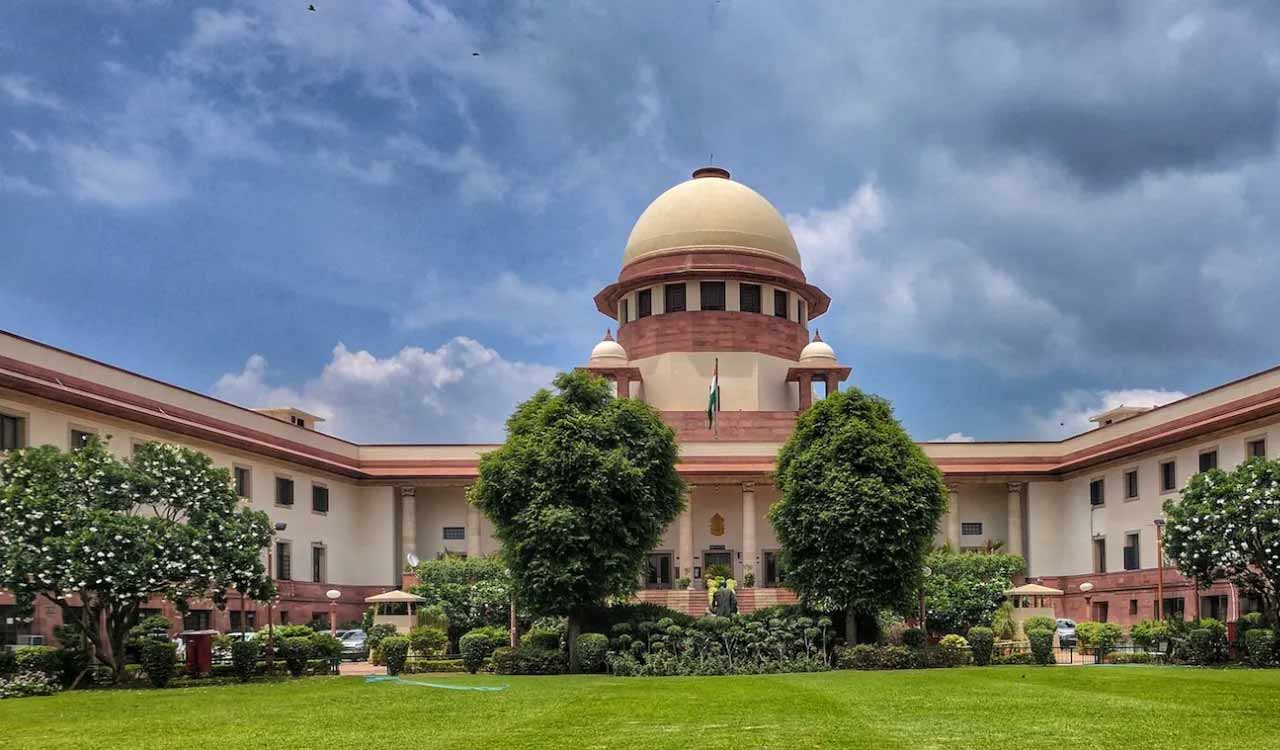
New Delhi: The Supreme Court on Thursday said a disciplinary authority must be very careful before imposing the severest form of punishment of dismissal from service as it has a devastating effect not only on the dismissed employee but also on their dependant family members.
The apex court said dismissal from service must remain reserved for cases where the misconduct is of the most serious nature where elements of synthetic consideration would be undesirable and inappropriate.
The observations came from a bench of justices Sanjay Karol and N Kotiswar Singh which delivered its verdict on an appeal filed by a woman, who was employed with the Maharashtra State Electricity Distribution Company Limited and was dismissed from service.
“Dismissal is ordinarily justified where the misconduct is of such gravity that continuance of the employee would be wholly incompatible with discipline, trust or institutional functioning,” the bench said.
The top court said cases involving corruption, illegal gratification, moral turpitude, misappropriation, acts causing substantial loss to the employer or conduct showing complete unfitness for continued service stand on a different footing.
It observed where the misconduct does not involve corruption, moral turpitude, financial misappropriation or proved loss to the employer, and where there is long service without much blemish, the disciplinary authority must carefully examine whether any lesser punishment would meet the ends of justice.
Dealing with the case, it said, “With respect to the punishment of dismissal which we consider wholly disproportionate to the charges proved, the competent authority shall consider any punishment other than the ultimate penalty of dismissal from service, after considering the appellant’s long service, past record, age, nature of misconduct, absence or presence of financial loss, and other relevant circumstances”.
The apex court set aside the dismissal order of July 2017 as “wholly disproportionate”, while leaving the finding of misconduct undisturbed.
It noted that the appellant had joined the service in April 1985 and in September 2006, she was placed under suspension pending enquiry.
It further noted that the suspension order alleged acts of indiscipline, insubordination, disobedience of superior officers, tampering with official documents and negligence.
The bench said period of suspension continued for nearly 11 years and the authority passed the order in July 2017 dismissing her from service.
The top court was dealing with her appeal challenging an April 2024 verdict of the Bombay High Court’s Nagpur bench which had upheld the order of dismissal.
“Dismissal from service is the severest form of penalty which can be inflicted on a delinquent employee in service jurisprudence. It brings the relationship of employer and employee to an end permanently, and ordinarily deprives the employee of the incidents of past service, including retiral benefits,” the bench said.
It said dismissal from service does not lead merely to the loss of existing source of income for the employee but also for the dependent family members.
“Thus, it will have a devastating effect not only on the dismissed employee but also on all those who are dependant on the employee,” the bench said.
“Because of the severity of its impact not only on the employee but also to his dependents, the disciplinary authority must be very careful in seeking to impose the severest form of punishment of dismissal,” it said.
The bench said it was not minimizing the importance of discipline in an office establishment. It said in this case, the allegations substantially appear to arise out of internal office functioning and service-related conflict and did not play out in the public domain.
While partly allowing the appeal, the bench also held that imposition of the second punishment of treating the suspension undergone as punishment was not permissible.
Besides other directions, it said the competent authority shall decide the service and monetary consequences of the suspension period in accordance with the regulations, including payment of subsistence allowance in terms of the court’s observations.
The bench said the authority shall within four weeks from the date of receipt of its judgment issue a proper show-cause notice to the appellant as regards the penalty proposed to be imposed other than dismissal, having regard to the gravity of the misconduct.
It directed the authority to pass a reasoned order on penalty within eight weeks. The bench noted that since the appellant has already crossed the age of superannuation, no direction for reinstatement can be issued at this stage.
“The monetary and retiral consequences, if any, shall abide by the fresh order to be passed by the competent authority in terms of this judgment and the applicable regulations,” it said.

Related News
-

Supreme Court clarifies legal route for complaints against elected candidates
-
NEET-PG 2026: Plea seeks permanent copies of question papers and response sheets
-
SC issues notice to ECI on Rahul Gandhi-led plea against Special Intensive Revision exercise
-
Internet shutdown during October 10 CJP protest was necessary: Centre to SC