Drought-prone Rayalaseema future mortgaged, says YSRCP leaders
The YSR Congress Party has accused Andhra Pradesh Chief Minister N. Chandrababu Naidu of betraying Rayalaseema by halting the Lift Irrigation Project under pressure from Telangana Chief Minister A. Revanth Reddy. YSRCP leaders warned of mass agitation if the project is not revived, calling his actions a “death warrant” for the drought-prone region.


Amaravati: Day after Telangana Chief Minister A. Revanth Reddy claimed that the pressure he mounted on his Andhra Pradesh counterpart N. Chandrababu Naidu led to the latter stop work on Rayalaseema lift irrigation project, YSR Congress Party on Sunday accused Naidu of “betraying” Rayaseema for personal and political gain.
The leaders of the Opposition party alleged that Chandrababu Naidu colluded with Revanth Reddy to stall the Rayalaseema project.
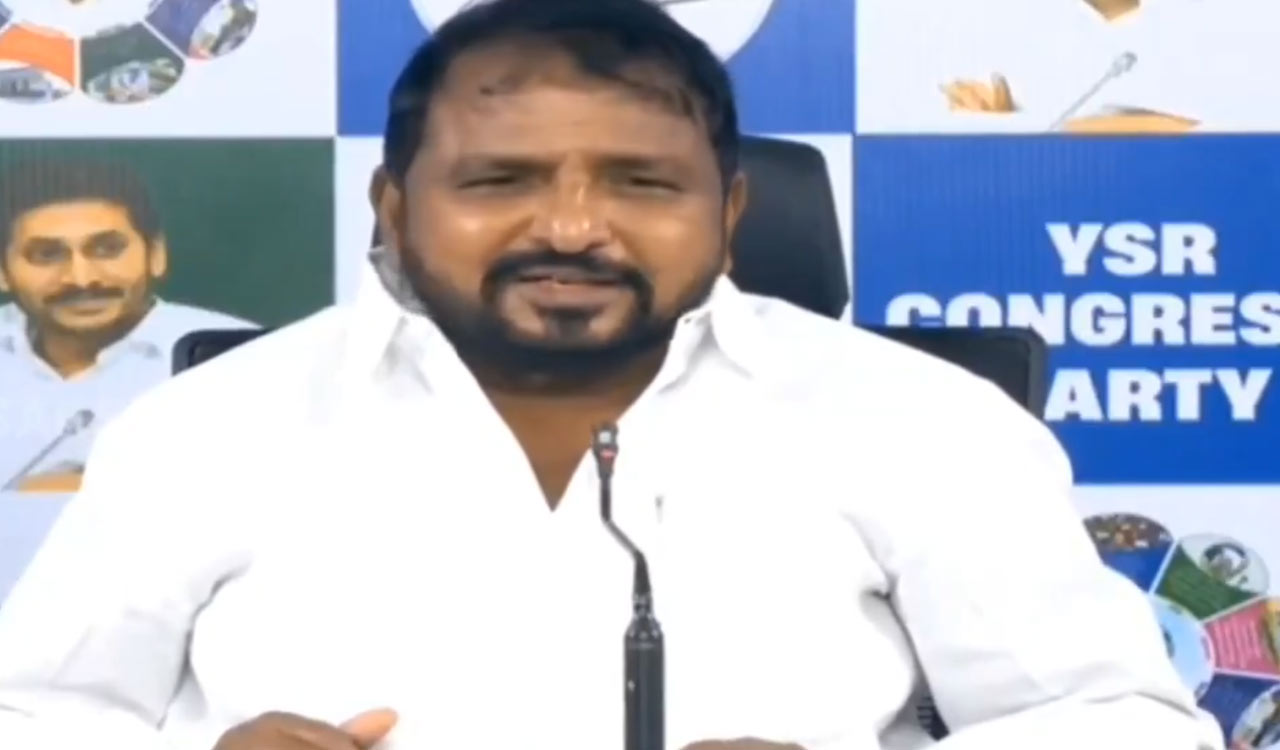
YSR Congress Party (YSRCP) leaders Sake Sailajanath, former MLAs V. Vishweshwar Reddy and SV Mohan Reddy strongly condemned Chandrababu Naidu’s alleged “betrayal” of Rayalaseema.
Reacting to statements made by Telangana Chief Minister Revanth Reddy on the floor of the Telangana Assembly, the YSRCP leaders said Chief Minister Naidu’s “Rayalaseema mask” had completely fallen off.
They said Revanth Reddy’s open assertion, along with his readiness for an all-party verification, exposed an unholy nexus that resulted in the stoppage of a project vital for Rayalaseema’s drinking water and irrigation needs.
Terming the move a “death warrant” for Rayalaseema, Sailajanath and Vishweshwar Reddy demanded that Chandrababu Naidu explain what personal interests compelled him to mortgage the future of a drought-prone region. They questioned why the Chief Minister chose silence on Telangana’s upstream projects and repeated diversions from Srisailam, and why Andhra Pradesh failed to defend its rights before statutory forums.
The leaders recalled that under former Chief Minister YS Jagan Mohan Reddy, the Rayalaseema Lift Irrigation Project was launched with an outlay of about Rs 3,850 crore to fully utilise allocated waters through the Pothireddypadu Head Regulator, primarily for drinking water. Despite initial hurdles before environmental bodies, the project was pursued in the public interest, but was later abandoned by the coalition government, even as Telangana continued with projects like Palamuru-Rangareddy and Dindi despite penalties.
They warned that the renewed height increase of the Almatti dam by Karnataka, combined with Andhra Pradesh’s inaction, would cripple projects such as Handri-Neeva and Galeru-Nagari, pushing Rayalaseema deeper into distress.
They alleged Chandrababu Naidu was prioritising Amaravati commissions over critical drought-mitigation works like Gundrevula reservoir and canal expansions. They said nearly 101 TMC water allocated to Rayalaseema decades ago rarely reached the region due to political compromise.
YSRCP leaders called upon TDP ministers, MPs and MLAs from Rayalaseema to break their silence or resign, warning that people would not forgive those who remained mute while the region’s future was destroyed. They asserted that YSRCP would not tolerate any move harming Rayalaseema and announced that if the Lift Irrigation Project is not immediately revived, the party will launch a mass public agitation with farmers and citizens.
SV Mohan Reddy strongly alleged that the statement made by Revanth Reddy on the floor of the Telangana Assembly had conclusively exposed Chandrababu Naidu’s betrayal of Rayalaseema.
He said that by halting the Lift Irrigation Project, Chandrababu Naidu had mortgaged the future of Rayalaseema’s people and committed an unforgivable betrayal of future generations. Mohan Reddy accused the Chief Minister of remaining silent on Rayalaseema’s interests despite being politically influential at the Centre, and questioned why no special grants were secured for the region.
He also directly challenged Rayalaseema ministers and leaders, asking whether holding positions mattered more to them than protecting the basic rights and future of their own people.

Related News