Editorial: Anger on the Delhi’s streets
The Modi government's response to the protests in India's national capital has been disappointing, following a familiar playbook of denial, callousness, repression and misrepresentation
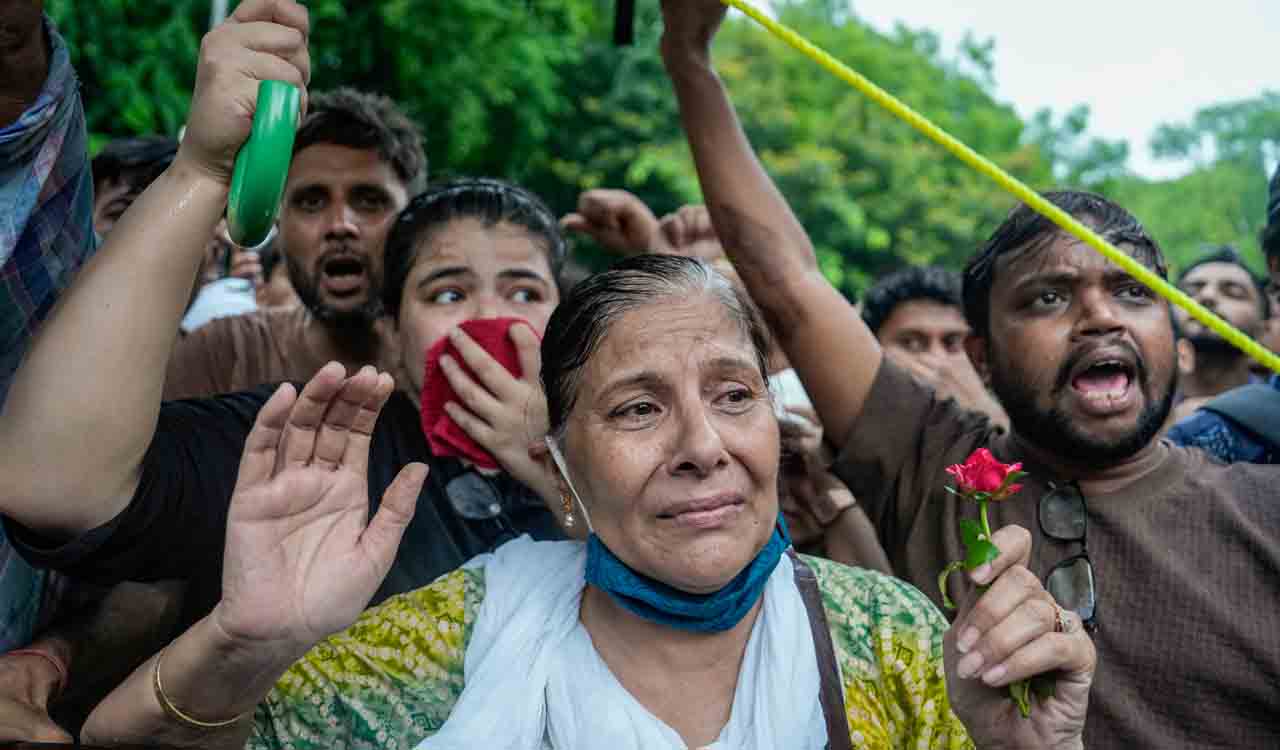


The NDA government’s response to the protests in the national capital has been disappointing, to say the least. It followed a predictable playbook involving denial, callousness, repression, and misrepresentation. When the anger of the youth exploded on the streets of Delhi, and the sit-in protests intensified at Jantar Mantar, the government should have shown empathy and heard their grievances with an open mind, rather than resorting to all the tricks to crush the movement. What began as a satirical online response to certain comments made by Supreme Court Chief Justice Surya Kant has swiftly grown into one of the most unexpected challenges to the Narendra Modi government. The Cockroach Janata Party (CJP), now leading a youth movement seeking education reforms and the resignation of Education Minister Dharmendra Pradhan, was founded in May by Abhijeet Dipke, an Indian national who recently graduated from an American university. Responding to the CJP’s call, tens of thousands of young men and women turned out for the protests and tried to march to Parliament, defying a police ban. The police crackdown has led to injuries to many protestors. The CJP is demanding an overhaul of India’s education system, with greater accountability for alleged exam paper leaks. It made the resignation of Pradhan their main demand after the leak of the National Eligibility cum Entrance Test (NEET) in May this year. Monday’s huge turnout showed that the CJP, though not a registered political party, has evolved into a movement capable of drawing tens of thousands onto the streets.
The protesters, who have been camping for the past month at Jantar Mantar, gained global attention after activist and educationist Sonam Wangchuk joined them on 28 June and began an indefinite hunger strike in support of their demands. He was forcibly removed from the protest site by the police and taken to hospital, where he continues to fast. The movement has broadened into one of the most visible expressions of public dissent against the NDA government in recent years. The continued protests highlight the urgent need to reform a broken education system, beset with exam leaks, delays, and irregularities, which leads, in turn, to swelling the ranks of the unemployed. Nearly 2.28 million candidates sat the medical entrance exam on May 3. It was cancelled days later following reports that the paper had leaked, and a re-test was held weeks later. For a country that prides itself on being a ‘Vishwaguru’, India cannot afford to patronise a system where competitive examinations can be bought, where the question papers become a commodity, and where the agency responsible for conducting the test becomes the subject of criminal investigation. The consequences of such a system are not abstract but are reflected in the real world: they are felt in hospitals understaffed by doctors who did not earn their seats honestly.
Also Read

Related News