Editorial: Big challenges for India’s Quantum leap
A stronger ecosystem, greater investment and strategic global partnerships are vital to overcome quantum computing bottlenecks
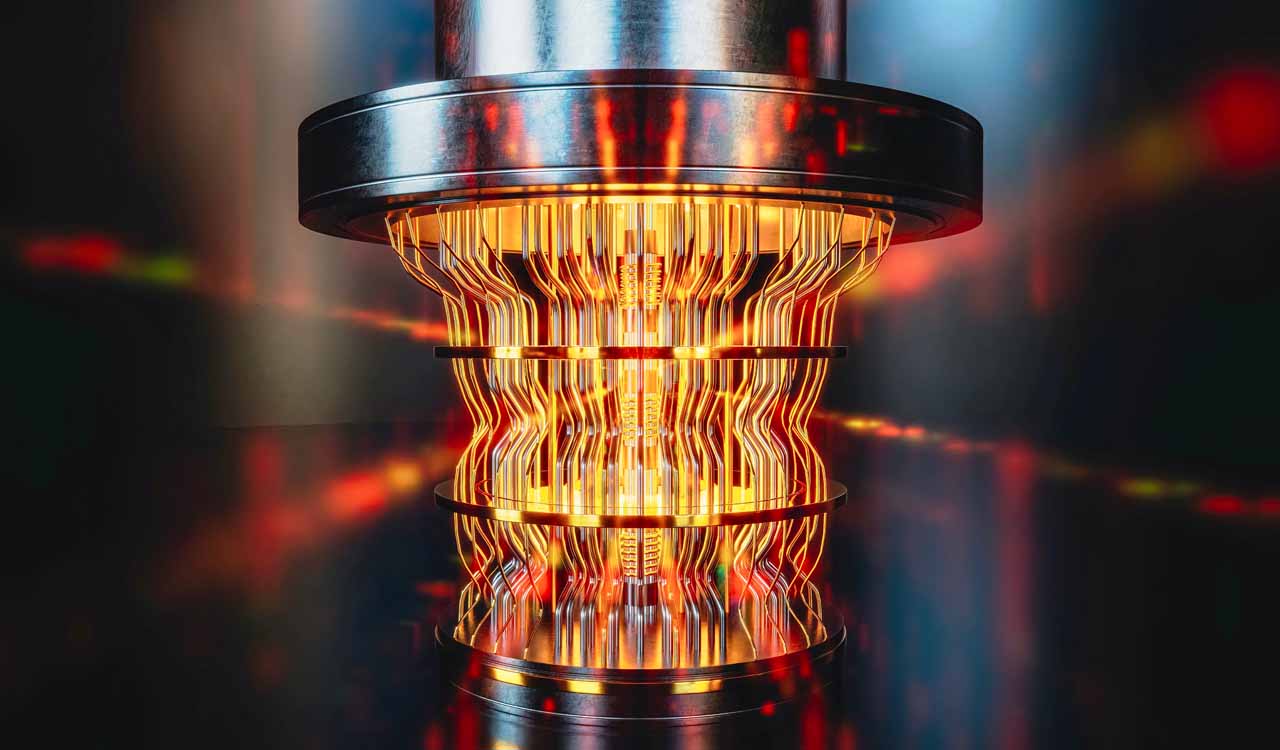


For a nation like India, driven by an ambition to become a global technology leader, quantum computing is not just an opportunity but a necessity. With a history of missed opportunities in capitalising on early trends in technology, India cannot afford to repeat past mistakes. At a time when India has attracted global attention by hosting the AI Impact Summit in New Delhi, an honest assessment is needed to understand where the country stands on cutting-edge frontiers of technology. Lofty announcements and grand government schemes with fancy acronyms will not make any difference on the ground unless tangible measures are taken to build an appropriate ecosystem. Though belated, India had launched the Rs 6,000 crore National Quantum Mission (NQM) in 2023, with the development of homegrown quantum computers as one of its major objectives. Despite acknowledging the power of quantum computers in shaping the course of the 21st-century technology world, the government has not followed it up with adequate focus on R&D spending. Between 2015 and 2020, India filed 339 quantum patents, compared with 23,335 by China and 8,935 by the United States. R&D labs in India import around 90% of the critical subsystems required for quantum computing. This can be particularly challenging at a time when global export controls on quantum components are tightening. India must build its first large-scale quantum computer and increase investments in commercial and industrial applications.
The focus over the next couple of years must be on strengthening the ecosystem to transition from research to commercial applications, particularly in logistics and healthcare. While India’s budget for the National Quantum Mission, spanning 43 institutions across 17 States, is around $670 million over eight years, China’s estimated investment is $15 billion, while Japan has committed $7.4 billion in 2025 alone. Germany, the UK, France and the Netherlands are also far ahead of India in terms of investments in the field. Another major challenge for India is the underutilisation of human capital. While the country churns out over 91,000 graduates annually in fields relevant to quantum technology, an overwhelming majority of them have no jobs, either in academia or industry. Quantum technologies are still in their formative stages globally, offering India a rare opportunity to shape the trajectory of a foundational technology. Quantum computing harnesses the principles of quantum mechanics to deliver a huge leap forward in computation to solve complex problems, with applications in wide-ranging areas like health, education, data security, defence and manufacturing. It also has the potential to enhance the pace of developments in AI and Machine Learning. While India is on the right path to leverage this technology, there is a need to create a robust ecosystem, expand the role of the private sector and strengthen cooperation with friendly nations working to address the critical bottlenecks of quantum computing.
Also Read

Related News