Editorial: Clean energy goal, still a long way to go
Rising power demand, continued coal dependence, grid constraints and the intermittent nature of renewable generation pose formidable challenges
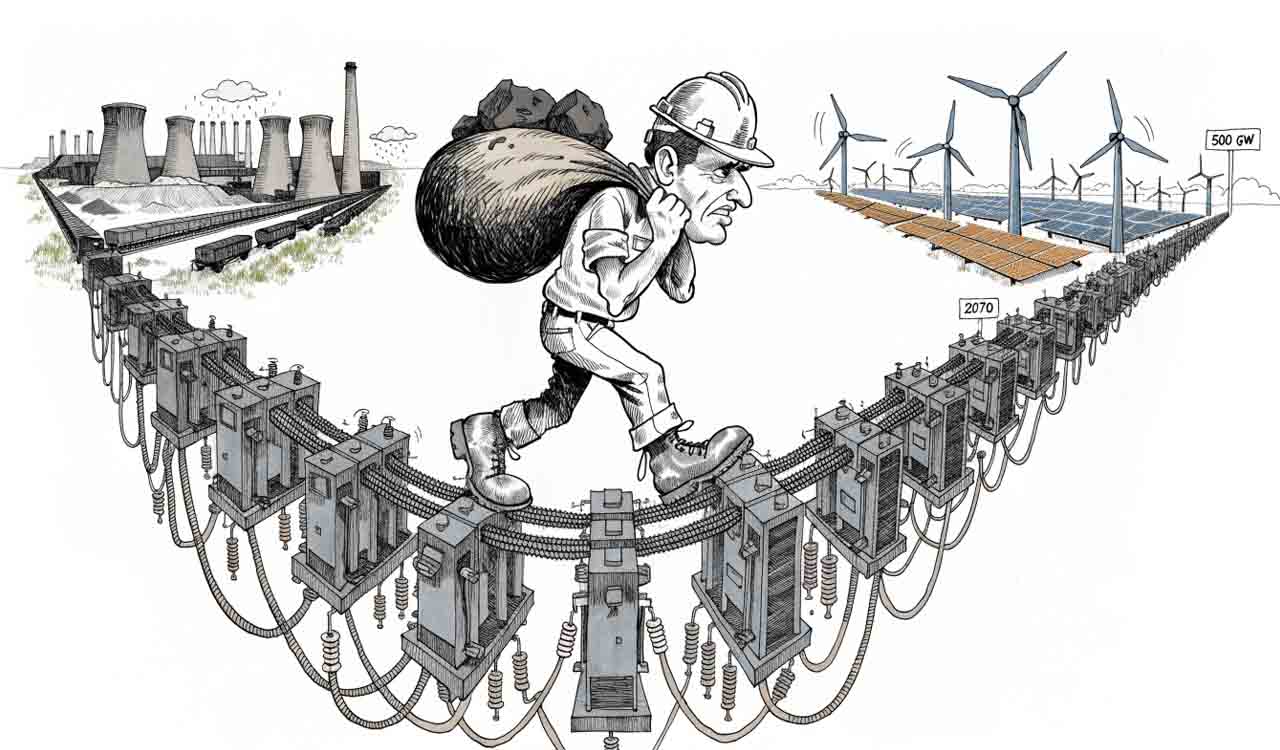


Depleting coal inventories at thermal power plants are a cause for concern, as they highlight the country’s vulnerability and dependence on fossil fuels. They underline the need to speed up the transition to renewable and clean energy sources. The Central Electricity Authority recently observed that 53 thermal power plants were holding 25 per cent or less of their required coal stock. Official data also shows that 74 coal-fired power plants had critically low stocks as of September 19, up from around 60 a week earlier. Transport bottlenecks, logistical inefficiencies, and seasonal disruptions affect the timely supply of coal to power plants. Peak electricity demand has remained between 230 gigawatts and 250 gigawatts (GW), after reaching a record 270.70 GW in May. Erratic monsoon rains disrupted coal shipments, while hotter weather pushed power consumption higher. Power utilities have consequently increased coal imports, which reached a 15-month high in August. Maintaining adequate fuel stocks may be necessary in the short term, but the more durable solution lies in making clean electricity carry a larger share of the country’s growing demand. Renewable capacity must be accompanied by stronger transmission networks, substantially greater energy storage and a more flexible electricity system. India’s energy policy now faces a dual task: ensuring uninterrupted power supply today while building the infrastructure that can reduce dependence on coal tomorrow. Though the new climate targets set by the country signal its commitment to the clean energy pathway, the task of phasing out fossil fuels is quite daunting.
There are many challenges ahead: scaling up renewable energy requires huge investments in grid modernisation, energy storage solutions and grid flexibility to handle intermittent supply. There is also a need to overcome infrastructure gaps and secure affordable clean energy technologies. India’s status as a lower middle-income country limits its financial and technological capacity. Besides, commitments such as infrastructure expansion, industrial growth, and poverty reduction require careful balancing with climate goals. The country has set a target to achieve 500 GW of non-fossil fuel-based energy capacity by 2030 and to reach net-zero greenhouse gas emissions by 2070. It is a tall order, given the reality that coal powers nearly 74 per cent of the country’s electricity generation. Coal-fired thermal plants provide essential baseload and round-the-clock power, especially during non-solar peak demand hours when solar and wind generation drops. Despite the rapid addition of solar panels and wind turbines, India is not phasing out coal anytime soon. Instead, it is planning for a long-term plateau. The Central Electricity Authority (CEA) plans to increase total coal-fired capacity from the current 224 GW to 315 GW by 2035-36. Since solar and wind energy production is intermittent, coal is projected to supply about half of India’s actual electricity generation through 2035-36. Strengthening coal supply chains will continue to play an important role in meeting rising energy demand.

Related News