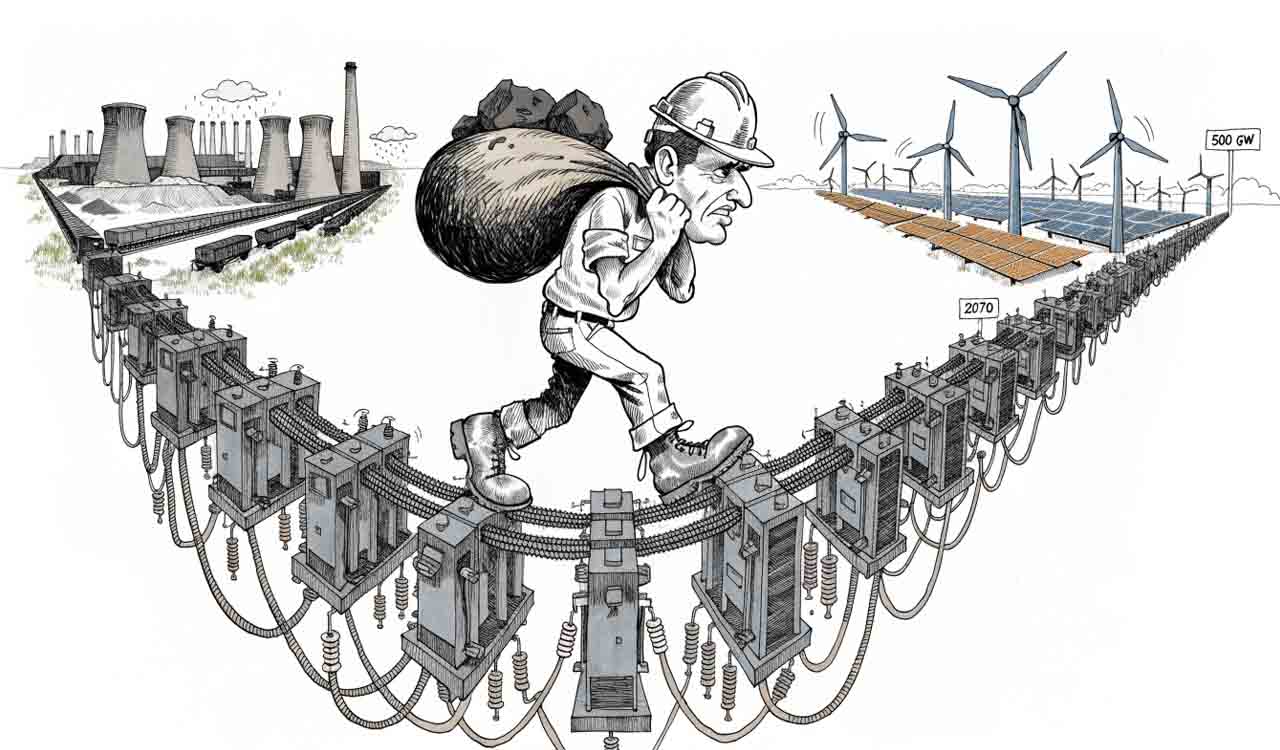
Opinion: Turning coal transitions into reality
Nations can quit coal in a rapid, just and orderly manner, but they need a coordinated mix of policies


By John Wiseman
Coal-dependent countries around the world face two wickedly interlinked challenges: accelerating the phase out of coal to prevent catastrophic global warming, while sustaining economic prosperity and political support.
As UN Secretary General Antonio Gutteres recently said, keeping global warming close to 1.5 degrees requires all new coal investments to stop now with coal phased out in OECD economies by 2030 and everywhere else by 2040.
Also Read
Energy supply and economic impacts of the war in Ukraine have clearly made these tasks even tougher. But the war has also provided a powerful reminder of the huge strategic and environmental risks of fossil fuel addiction.
Quitting coal need not end in economic crisis, nor energy shortages. Not quitting coal will certainly end in climate — and therefore economic — disaster. Researchers have systematically reviewed the policies of nations well down the path of transitioning away from coal, providing guidance on what works.
Proactive, collaborative leadership
Governments quitting coal in a rapid, just and orderly manner have commonly employed a proactive, collaborative and well-coordinated mix of demand and supply-side policies.
Key demand-side policy levers include carbon pricing mechanisms; reducing energy consumption and improving energy efficiency. And providing strong financing and infrastructure support for the rapid expansion of renewable energy.
Supply-side policies such as accelerating coal industry closure through removal of subsidies and through direct regulation, taxation and export licensing are also vital. Regulatory actions to overcome the negative impacts of coal on air quality, health and environmental outcomes often play a key role. So too do mission-oriented industry policies driving economic renewal and job creation.
The European union remains strongly focused on phasing-out coal by 2030. More than €80 billion ($92.9 billion) has been allocated to strengthen skills and job opportunities in coal-dependent regions. These funds will also help leverage billions of dollars in private sector finance for clean energy infrastructure and technology.
German Chancellor Olaf Schulz recently proposed the German coal-phase out date be brought forward to 2030. The German Coal Commission, comprising government, business and union stakeholders, has suggested €40 billion ($46.2 billion) is needed to support coal dependent workers and communities.
Spain has underpinned its ambitious coal phase-out and renewable energy goals with over €250 million ($289 million) for ‘Just Transition’ contracts covering early retirement, re-employment, environmental regeneration and green industry investment and employment goals and strategies.
In Australia, the new Labor government has backed its upgraded greenhouse gas emissions reduction goal with a ‘National Energy Transformation Partnership’ to coordinate and integrate national and state government energy transition investments.
Plan for jobs
The economic and job creation potential of a well-managed transition from fossil fuels to renewables is now well demonstrated.
Employment in renewable energy rose to 12.7 million in 2022, an increase of over 7,00,000 jobs. The International Energy Agency has estimated more than 30 million jobs could be created in clean energy, efficiency and low-emissions technologies by 2030.
Importantly, as ILO Director-General Guy Ryder said “there is a growing focus on the quality of jobs and the conditions of work in renewable energies. The increasing share of female employment suggests that dedicated policies and training can significantly enhance the participation of women in renewable energy occupations and ultimately achieve a just transition for all”.
In Germany, collaborative planning and long-term investment in infrastructure; education; environmental technologies; and cultural and service industries have been an essential foundation for economic diversification and job creation in coal dependent regions such as the Ruhr Valley.
In the United States, investment flowing from President Biden’s Inflation Reduction Act will create over 550,000 new jobs in industries producing renewable energy. And in Australia, renewable energy think tank Beyond Zero Emissions has demonstrated the potential for low-cost renewable energy to create new export earnings of over AUD$300 billion and over one million new jobs.
The challenge is ensuring those national-level economic gains extend to coal-dependent regions, where workers and communities are too often left behind.
Workers and Communities
Broad public support for replacing coal depends crucially on communities and workers being convinced that governments and business are genuinely committed to the creation of secure high-quality jobs. The Paris Climate Agreement asks committed countries to take into account “the imperatives of a Just Transition of the workforce and the creation of decent work and quality jobs in accordance with nationally defined development priorities”.
International Trade union Confederation General Secretary Sharon Burrow reminds us that a “just transition will not happen by itself. It requires plans and policies. Transformation is not only about phasing out polluting sectors, it is also about new jobs, new industries, new skills, new investment and the opportunity to create a more equal and resilient economy”.
Canada strengthened support for closing all coal-fired power stations by 2030 by working closely with coal dependent communities and provided integrated investment, infrastructure, training and employment packages.
In Australia, increasing awareness of the inevitability of the closure of coal-fired power stations has strengthened support in coal dependent communities like the Latrobe Valley in Victoria and Gladstone in central Queensland for a far more proactive approach to creating new economic futures and opportunities.
National, Regional Differences
Successful strategies for accelerating the just and well managed phase-out of coal need to be informed by clear understanding of the diverse economic and social histories of coal dependent countries and regions.
Countries leading the coal exodus such as the US, UK, Germany, Spain and Canada have often had access to relatively cheap alternatives. And they are able to finance new energy infrastructure and support for workers and communities in coal-dependent regions.
Coal-dependent countries such as China, India and Bangladesh also need to manage rapidly growing energy demand. They face budgetary challenges in financing renewable energy and supporting regional communities. That is why developed economies have a strong practical as well as ethical case to help fund developing economies to achieve a rapid and orderly transition.
Coal exporting countries including Australia, Colombia and Indonesia also face tough challenges in generating alternative sources of export income. And overcoming the power of vested interests. There is increasing awareness in these countries, however, of the potential for low-cost renewable energy to underpin new low emissions export industries such as green steel and green hydrogen.
Making it happen
How do nations turn the rhetoric of just transitions into reality while sustaining economic prosperity and maintaining political support? By delivering on the following:
• Strong, proactive and collaborative political leadership
• Respectfully engaging coal communities and workers
• A well coordinated mix of demand and supply-side policies
• Transition governance authorities enabling local engagement and accountability
• Adequately funding re-employment and retraining programmes
• Economic renewal and diversification policies building on regional strengths
• Mobilising investment at the scale required to create high-quality jobs in just and resilient zero-carbon economies

(The author is a Professorial Research Fellow at the Melbourne Sustainable Society Institute, University of Melbourne. 360info)

Related News