Editorial: Course correcting India’s gig economy anomalies
The move to discourage 10-minute delivery branding represents an inflection point in India’s gig economy and a successful course correction of a toxic model that has normalised risk for convenience
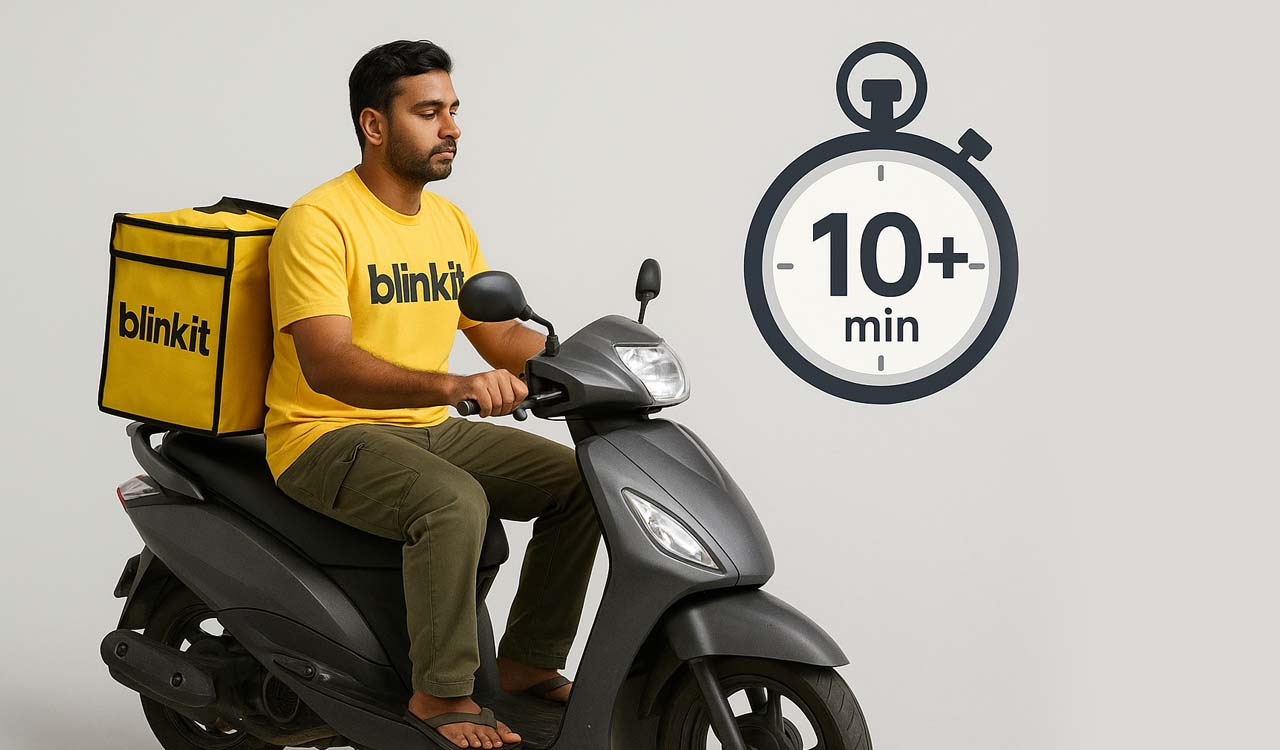


The decision to nudge the quick-commerce platforms to withdraw the promise of ‘10-minute delivery’ is a welcome move that represents an inflection point in India’s gig economy and a successful course correction of a toxic model that has normalised risk for convenience. The regulatory challenge now is to reconcile two truths: quick commerce has created jobs and convenience while, at the same time, compromising on the safety of the delivery workers. The answer lies not in stifling innovation but in civilising it. Following the recent strike call by gig workers’ unions, superfast commerce platforms came under renewed scrutiny. While the strikes caused limited disruption, they brought longstanding concerns — harsh working conditions, stiff targets, and a lack of job or income security — into sharper public focus. The labour ministry’s intervention on the ‘10-minute delivery’ branding was widely seen as an acknowledgement of these issues. The discontinuation of 10-minute delivery promises was among the key demands raised by gig workers’ unions, primarily on safety grounds. The problem with this model is that algorithms reward haste and penalise delay, putting the lives of delivery executives at risk. While velocity is monetised, safety is externalised. India’s gig workforce is expanding rapidly, and for a large section of riders, this is not pocket money but primary income. Tight delivery windows, opaque ratings and income volatility create a constant pressure loop. Even a minor traffic snag becomes a financial threat. In such a system, accidents are not aberrations; they are predictable outcomes.
Quick commerce rests on a single pillar: algorithmic optimisation. Algorithms do not see potholes, traffic signals, sudden rain or broken lifts. They see only distance, time, and conversion rates. Every delay becomes a penalty. Every red light becomes a financial risk. Every pause becomes a potential downgrade in ratings. Gig workers repeatedly report that even minor delays reduce incentives, throttle future order allocation, or trigger account suspensions. Many delivery workers put in 10 to 12 hours a day and earn Rs 15,000–20,000 a month. And they operate in the most hazardous workplace imaginable: Indian roads. They navigate traffic chaos, pollution, heat, and rain — often without adequate safety gear or insurance coverage. With the government’s intervention, the quick commerce sector will now, hopefully, enter an era where reliability, not reckless speed, becomes the benchmark. Where safety standards matter more than stopwatch theatrics. This shift also punctures a larger myth in the startup ecosystem: that growth absolves ethical responsibility. Several Indian States have begun legislating for gig worker welfare. Implementation, however, remains weak. The central labour codes offer a framework — but enforcement will decide whether this moment becomes reform or mere optics. India’s gig workers occupy a legal grey zone. They are not classified as employees. As a result, minimum wage laws, provident fund contributions, paid leave, medical insurance, and accident compensation largely do not apply.
Also Read

Related News