Editorial: Death blow to Aravalli
The 100-metre benchmark and the use of local profile would result in a significant part of the Aravalli range vulnerable to mining and construction


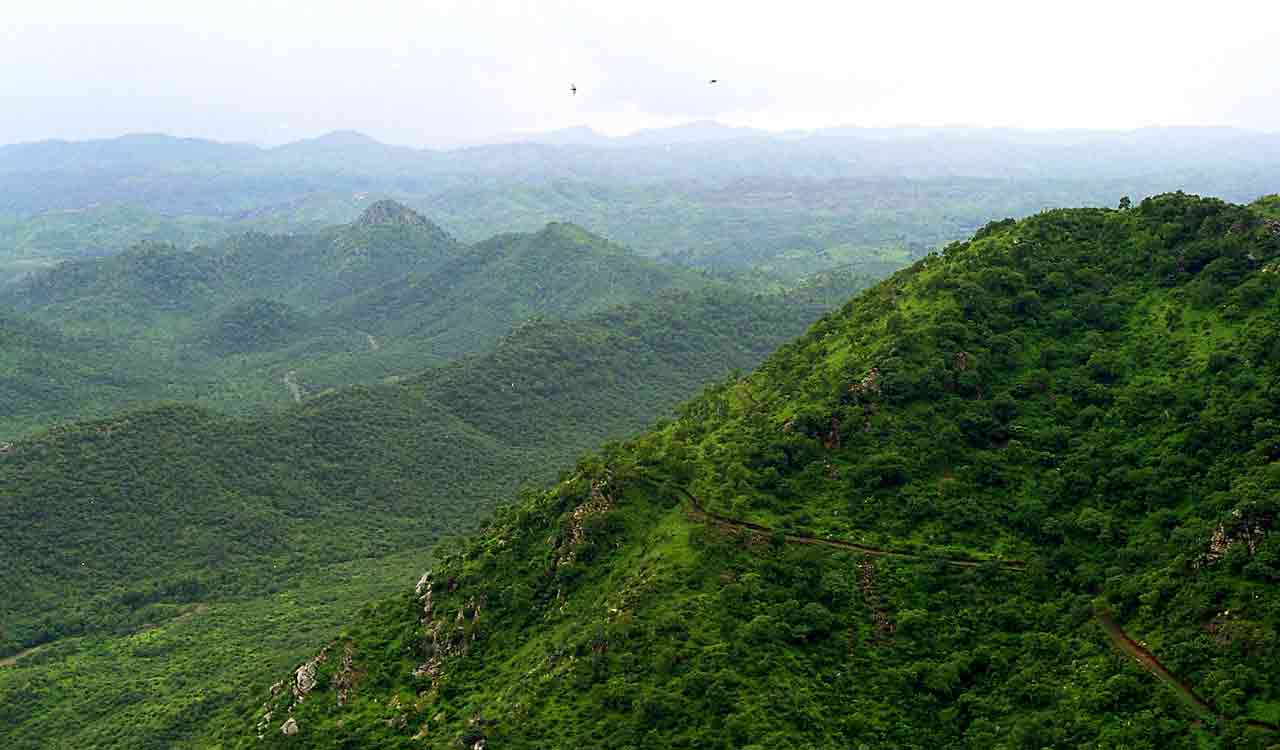
The environmental degradation of Aravallis, India’s oldest mountain range, has been a saga of bureaucratic apathy and human greed coming together to plunder the country’s unique treasure. Over the decades, several hillocks of the range have vanished due to illegal mining and deforestation, leading to a loss of an ecosystem that is most crucial for the survival of not just mankind but also for wildlife. Once a thriving ecosystem of hills, forests, fauna, aquifers and natural drainage, the Aravallis, which straddles the States of Rajasthan, Haryana, Delhi and Gujarat, now carries the dubious distinction of being the country’s most degraded forest range. Dealing a further blow to the mountain range is the new definition proposed by the Ministry of Environment and Forests for it. As per the new definition, proposed by a committee under the Environment Secretary, any landform that is at an elevation of 100 metres or more above the local profile will be considered as part of the Aravalli Hills, along with its slopes and adjacent land. This elevation-based definition could potentially leave more than 90% of the forest range vulnerable to mining and construction. What is more shocking is the Supreme Court’s approval of the proposal. The 100-metre benchmark and the use of local profile — the immediate surroundings of a hill — as the measuring base, rather than a standardised baseline such as the State’s lowest elevation, would result in a very significant part of the Aravalli range not being counted as Aravalli anymore.
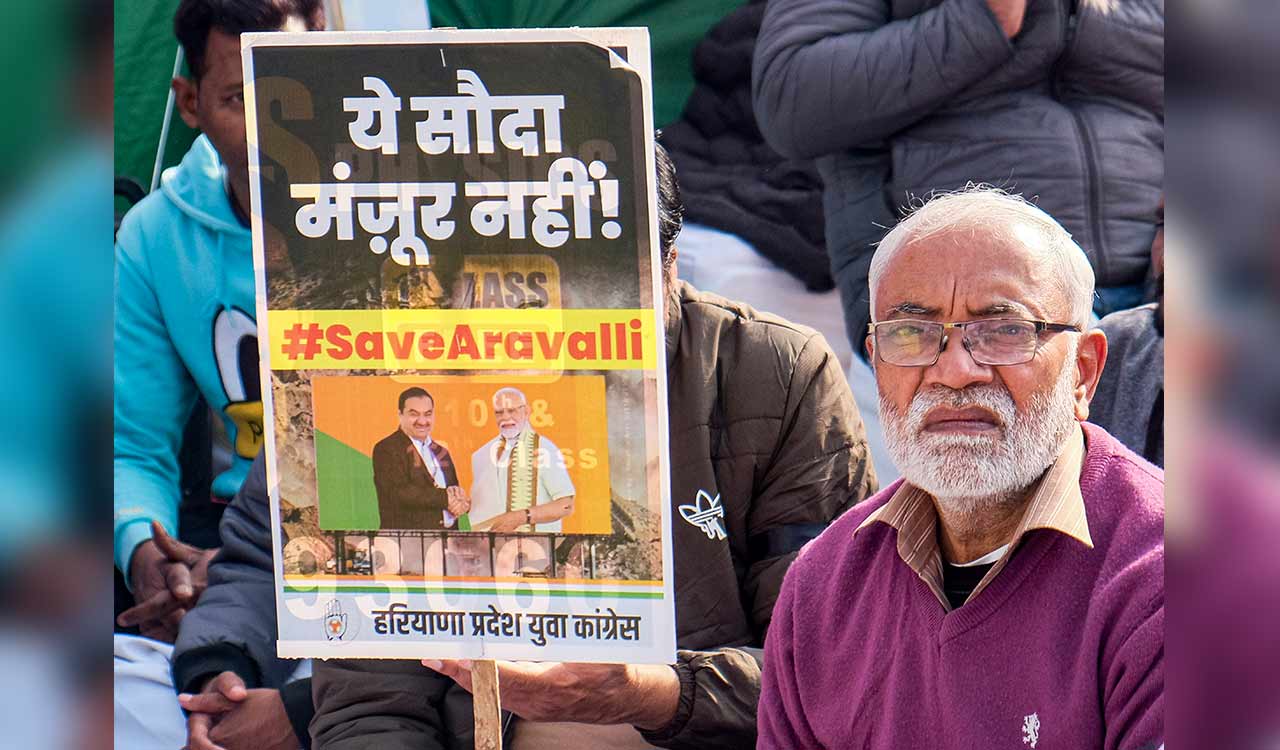
With 550 km of the range lying in Rajasthan, the Supreme Court’s approval of the new definition, recommended by a Centre-led panel, has triggered widespread protests across the State, joined by the opposition parties, environmental activists and social media influencers. Union Environment Minister Bhupender Yadav has promised that no new mining leases would be granted until a detailed study is undertaken. But questions remain over the extent of illegal mining, the future scope of mining in the areas excluded under the 100-metre definition, and the impact of every mining block on the surrounding landscape. And there are activities besides mining that can lead to environmental harm. The 100-metre definition will derecognise most hilly tracts as Aravalli in Delhi NCR, where the end ranges significantly lose their height. This could unlock large areas to be developed as prime real estate. The Aravallis are India’s unique treasure and must be preserved with utmost care. The mountain range has an impact on the climate of northwest India and beyond. During monsoons, it gently guides the monsoon clouds eastwards towards Shimla and Nainital, thus helping nurture the sub-Himalayan rivers and feeding the north Indian plains. In the winter months, it protects the fertile alluvial river valleys from the assault of cold westerly winds from Central Asia. Unfortunately, relentless urban expansion has replaced verdant landscapes with concrete jungles, disrupting the ecological balance.
Also Read

Related News
-

Ex-MP Ratan Singh’s son dies under suspicious circumstances; wife, grandson named in murder complaint
-
Rajasthani labourer electrocuted while installing railings at Khammam school
-
Supreme Court orders probe into illegal factories along Rajasthan rivers
-
Aravalli Conservation: Supreme Court panel to inspect mining and forest areas in Dungarpur, Banswara