Editorial: Delhi gasping for breath
The routine playbook: halting construction, limiting vehicles, and experimenting with temporary fixes will not address the structural roots of the crisis
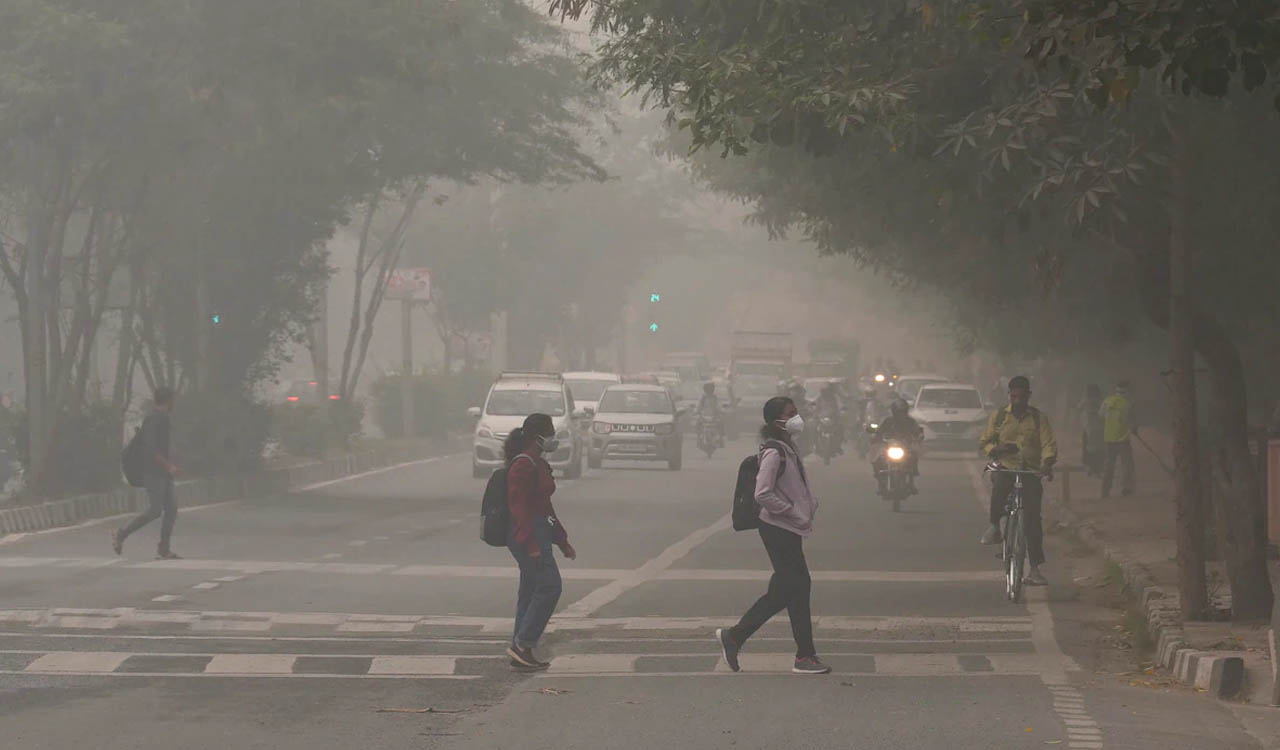


The boastful talk of India emerging as a rising global power sounds hollow when confronted with questions on why the national capital remains an unlivable, toxic gas chamber, carrying a dubious distinction of being the world’s worst-polluted capital city. Come winter, New Delhi and its surrounding areas are enveloped by an apocalyptic haze of pollutants that are severe and life-threatening. One wonders why the authorities have consistently failed to check pollution that has long crossed dangerous levels, even while other once-polluted capitals, like Beijing, have succeeded in cleaning their skies. There is a widespread outrage over ineffective anti-pollution measures and the constant blame game between the Centre and the Delhi State government, even as people struggle to deal with the rising pollution levels, with the average air quality index (AQI) breaching the 300-mark. There is a sense of déjà vu as governments come up with a familiar playbook every year: halting construction, restricting certain vehicles, or experimenting with temporary engineering fixes. These ad-hoc measures do not address the structural roots of the crisis. The recent attempt by the Delhi government to reduce pollution by inducing artificial rains came to nought. It is not surprising, because the global experience shows that cloud seeding only produces conditional, short-term relief but is largely ineffective in checking pollution. The major constraint in Delhi is the lack of rain-bearing clouds during the pollution-prone season from October to December, when monsoon clouds retreat, and atmospheric moisture is low. The capital’s pollution challenge is complex and deeply entrenched, requiring a multi-pronged effort.
Experts have made many recommendations, including setting time-bound electrification targets for all vehicle segments to achieve zero tailpipe emissions; phasing out and replacing older vehicles; and expanding integrated public transport with reliable last-mile connectivity. They also called for stronger measures to curb dependence on private vehicles, such as rationalised parking prices and congestion taxes. Crop-burning persists, industrial emissions remain difficult to regulate, and the city’s dependence on private vehicles continues to grow. For common citizens of the national capital, it is a life in a gas chamber. Parents are scared to send their children outdoors. There is enough research data linking air pollution to pulmonary disorders. More recently, research has also established links to other health issues that cause longer-term mortality – heart diseases and strokes, autoimmune disorders, as well as neurological issues. The fact that one in every three children in Delhi is battling asthma or airflow obstruction due to air pollution should ring alarm bells in the government corridors. Pollution kills more people in Delhi than obesity or diabetes. Paediatricians have been sounding the alarm for years, but the surge in respiratory illnesses this season feels especially grim. Prolonged exposure to fine particulate matter not only triggers short-term infections but also alters developmental pathways. Studies increasingly point to long-term risks, from reduced lung capacity to chronic respiratory diseases in adulthood.

Related News