Editorial: Great Nicobar project — strategic hub or environmental disaster?
The $10 billion Great Nicobar Island Development Project sits at the crossroads of national security, economic growth and ecological responsibility
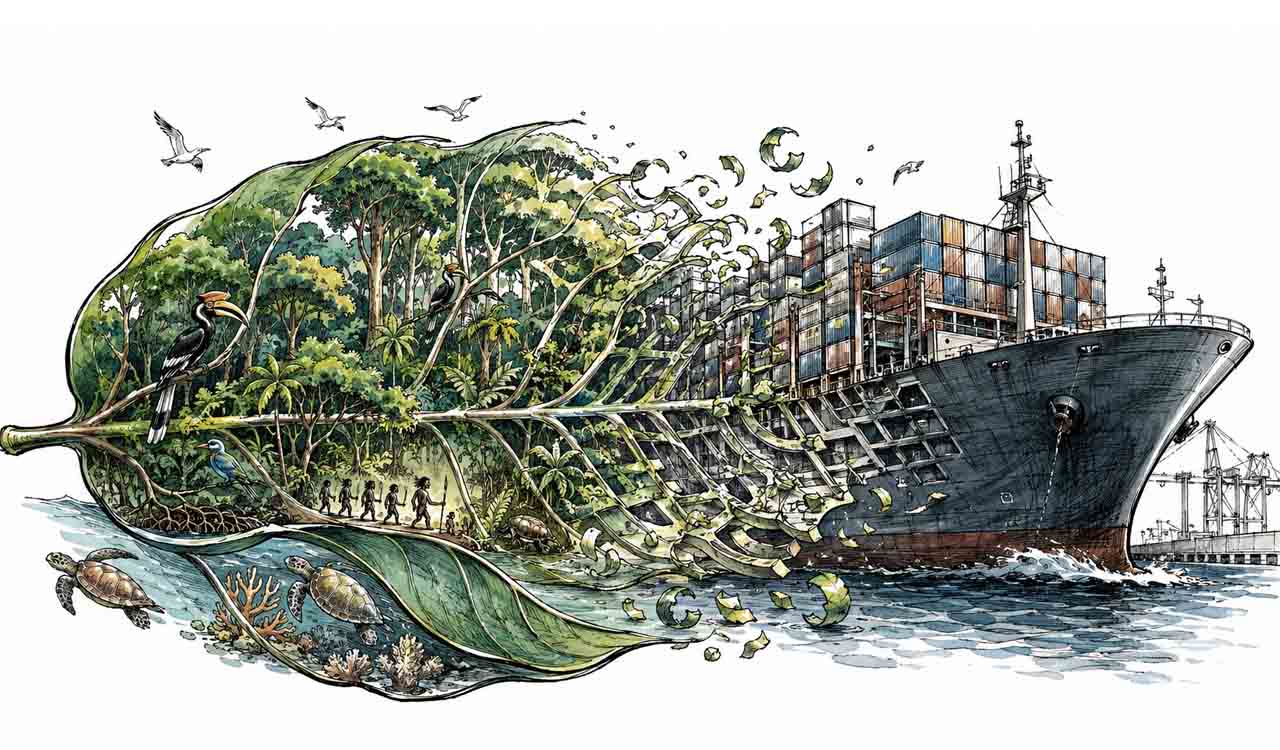


Like several other development projects in India, the debate over the ambitious $10 billion Great Nicobar Island Development Project (GNIDP) has slipped into a familiar binary frame: Development versus environment; Strategy versus sustainability. While the government insists that it is essential for strategic connectivity in the Indian Ocean Region and national security, critics dub it an ecological disaster, a major threat to indigenous tribal communities, forest cover, and biodiversity. The gigantic project, aimed at building an international container transhipment terminal, a dual-use civil-and-military airport, a power plant, and a township, sits at the intersection of national ambition and ecological responsibility. Without oversimplifying the issues involved, there is a need to balance various interests and address environmental concerns before proceeding with implementation. There is no denying that the project holds enormous strategic importance for India, but a more nuanced approach is needed to incorporate environmental and social considerations from the outset, rather than treating them as afterthoughts, especially given the island’s fragile ecosystem and indigenous populations. The project’s proximity to the Strait of Malacca places it at the heart of global trade flows and emerging Indo-Pacific competition. For India, investing in infrastructure here is about both leveraging economic opportunity and reducing reliance on foreign transhipment hubs, strengthening its presence in the eastern Indian Ocean, and positioning itself within a rapidly evolving maritime order. The project draws inspiration from global models like Singapore and Hong Kong, and aims to transform the island into a major hub for maritime and air connectivity.
By integrating maritime, transport, and economic infrastructure, the project underpins India’s long-term strategic vision for the Andaman and Nicobar Islands as a hub for security, trade, and regional influence. However, environmental groups and opposition parties, particularly the Congress, have contended that the mega project was cleared using incomplete, inaccurate data, grossly underestimating its environmental and biodiversity impacts. It faces major risks from seismic instability, forest loss, cyclones, and ecological damage. The proposed mega infrastructure would be located in one of the world’s most seismically active and climatically hazardous zones, making it fundamentally untenable. The project requires the clearing of vast swathes of pristine rainforest and potentially displaces indigenous communities. For its part, the government has emphasised limited forest diversion, phased development, and the absence of displacement of indigenous communities. It frames the project as an example of growth that reconciles strategic ambition with environmental and social responsibility. In a fragile island ecosystem, impact cannot be measured solely in official numbers. Even limited forest diversion can have significant consequences depending on its location and how it alters interconnected ecological systems, especially in biodiversity hotspots or coastal breeding grounds. If India is serious about reconciling strategic ambition with ecological and social responsibility, safeguards must be embedded at the design stage.
Also Read

Related News