Editorial: India caught in middle-income trap
If India has to emerge as a high-income nation — the much-touted ‘Viksit Bharat’ status —, per capita income should touch $14,000



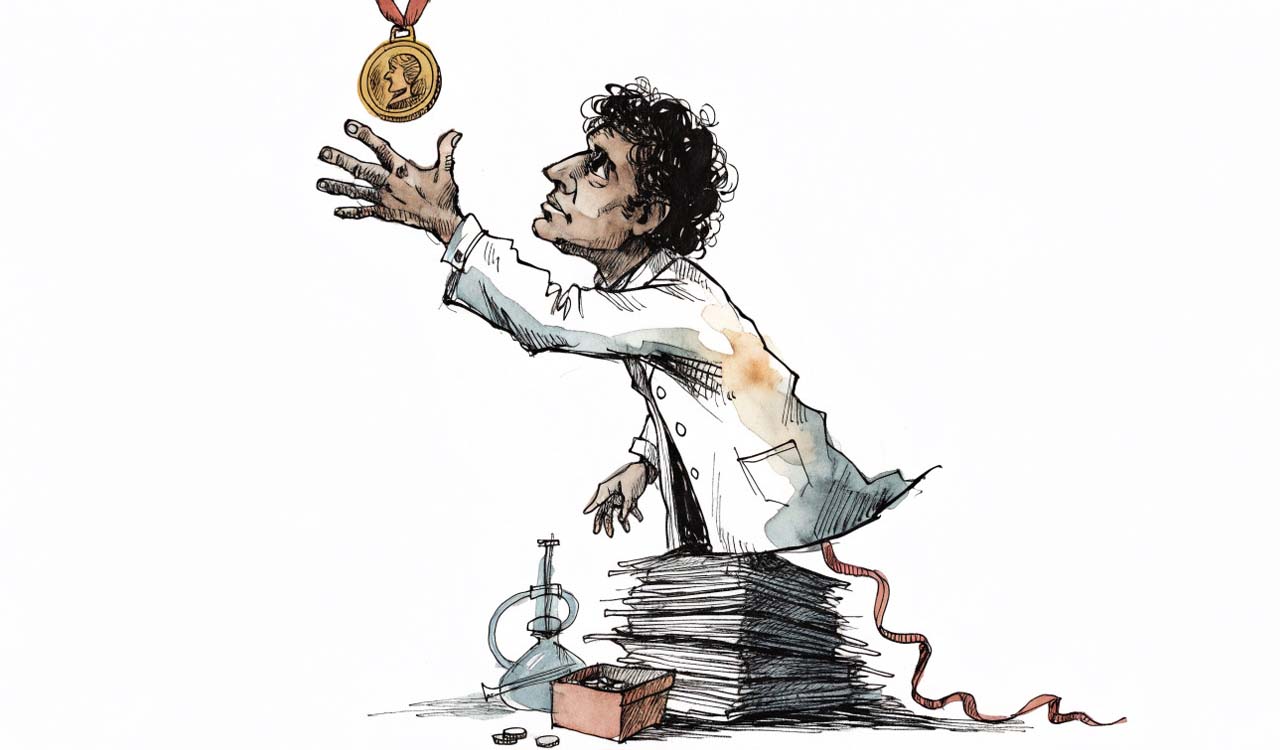
Despite the initial burst of progress following the 1991 economic reforms, delivering prosperity for a significant chunk of the population, India has been caught in a low-middle income trap for many years now. The absence of broad structural reforms, stagnation in productivity levels, low innovation, inadequate infrastructure and skill gaps are among the stumbling blocks in the way of the country’s transition to high-income status. With a per-capita income of $2,700, India has been categorised as a ‘low middle income’ country. If it has to emerge as a high-income nation — the much-touted ‘Viksit Bharat’ status —, the per capita income should touch $14,000, a tall order given the conservative growth trend. The per capita income required to transition to the next level — upper middle-income status — has been pegged at $4,516 by the World Bank. India is unlikely to enter this category until the end of the decade. According to the World Bank’s recent World Development Report, if India continues on its current trajectory, it could take them 75 years to reach even a quarter of the per capita income of the United States. It is estimated that India would need to grow at 7.8% over the coming decades to become a high-income country by 2047. The fact is that the country grew at 6.7% over the two decades prior to the Covid pandemic. It means that the present pace will not suffice to deliver such high growth consistently over such a long period. India’s post-liberalisation growth story has already reached its limits.
As a consequence, there has been a sharp increase in inequality in terms of income levels, consumption, wealth, gender and inheritance. The inability to create mass employment in high-productivity sectors restricts the potential for rapid increases in per capita income, a crucial factor in evading the middle-income trap. The World Bank’s latest report has rightly emphasised the need for urgent policy action to address inequality and structural deficiencies to ensure inclusive growth and avoid stagnation. It has recommended appropriate policies to promote structural transformation, increasing investments, creation of more productive jobs, technology adoption and enabling States to grow faster. The accelerated reforms should lead to increasing the investment-to-GDP ratio to 40% by 2035, the female labour force participation rate to 55% by 2050, and stepping up productivity. The investment-to-GDP ratio is currently around 33%, with subdued private investments. Female labour force participation stands at 41.7%. Putting India on a sustained higher growth trajectory will require deeper and wide-ranging reforms by both central and State governments. Over the last several decades, only a few countries such as South Korea, the Czech Republic and Romania have been able to transition from middle-income to high-income status. Several others like Brazil, South Africa and Malaysia, have been unable to make this transition and are caught in the middle-income trap.
Also Read

Related News