Editorial: Self-reliance arms defence
India's annual defence production reached an all-time high of Rs 1.78 lakh crore in 2025-26–a 15.6% jump over the previous year
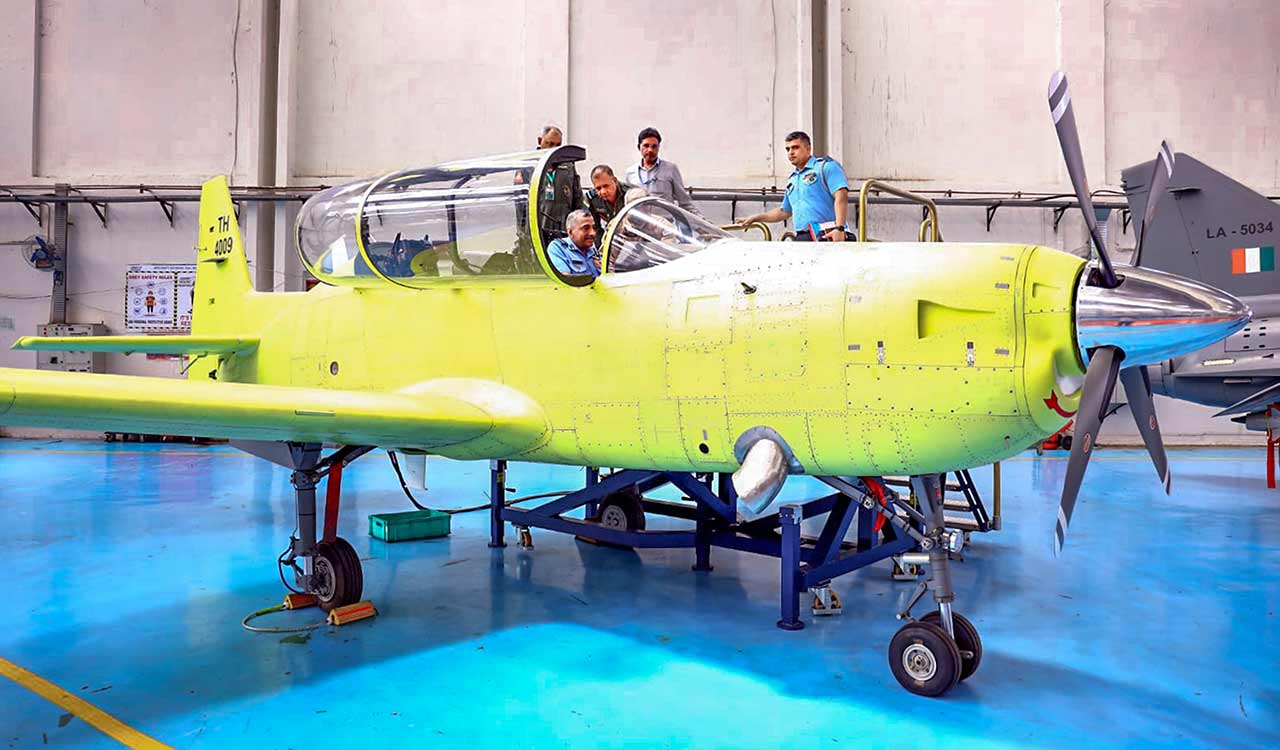


Self-reliance in the defence sector is an important mission for India, particularly because it figures among the world’s largest arms importers. Traditionally, India has been among the global top five arms importers. However, following a major focus on the policy of self-reliance to deal with an increasingly uncertain world, the situation is changing now. The push for self-reliance in defence manufacturing under the Aatmanirbhar Bharat programme is yielding the desired results. India’s annual defence production reached an all-time high of Rs 1.78 lakh crore in 2025-26–a 15.6% jump over the previous year–registering robust growth driven by rising indigenous manufacturing, greater private sector participation and expanding export capabilities. This also represents a 110% jump from Rs 84,643 crore recorded in 2020-21, underscoring the rapid expansion of the country’s defence industrial base. While there is a strong case for augmenting indigenous defence manufacturing, India, at the same time, cannot afford to compromise on defence preparedness because it is wedged between two hostile neighbours—Pakistan and China. In such a situation, a fine balancing is needed involving a push to the indigenisation initiatives and simultaneously seeking advanced weaponry from abroad to avoid glaring asymmetry on the twin battle fronts. One of the encouraging features is that the role of the private sector in defence production has increased significantly in recent times. Defence public sector undertakings (DPSUs) and other public sector units accounted for around 76% of the total production during 2025-26, while the private sector contributed the remaining 24%, up from 22% in the previous fiscal year.
The rise in domestic production has also contributed significantly to the country’s defence export performance. India recorded defence exports worth Rs 38,424 crore in 2025-26, registering a 62.66% surge in a single year, with Indian-made equipment now reaching more than 80 countries. The trend reflects growing international demand for Indian-made military equipment and systems. Export growth has given India a diplomatic leverage it did not previously have. Since the launch of the ‘Make in India’ initiative in 2014 and its sharper successor, Atmanirbhar Bharat, in 2020, the government has consistently pursued indigenisation across budget cycles. The Defence Acquisition Procedure of 2020 and the newer Defence Procurement Manual of 2025 simplified procurement rules, raised indigenous content thresholds, and gave domestic manufacturers — including private firms and MSMEs — a real shot at large contracts that were once reserved, in practice, for foreign original equipment manufacturers. Defence industrial corridors in Uttar Pradesh and Tamil Nadu, liberalised FDI norms allowing up to 74% under the automatic route, and innovation platforms such as iDEX (Innovation for Defence Excellence) have attracted startups and established industrial houses into a sector once dominated entirely by ordnance factories and defence PSUs. The ‘Operation Sindoor’ in May last year had validated India’s decades-long push for self-reliance by demonstrating its arsenal’s superiority over imported Chinese equipment used by Pakistan.
Also Read

Related News