Editorial: Boost for maritime self-reliance
The induction of INS Aridhaman and INS Taragiri sends a strong message to the global community that India is no longer just a buyer of arms but an architect of its own security
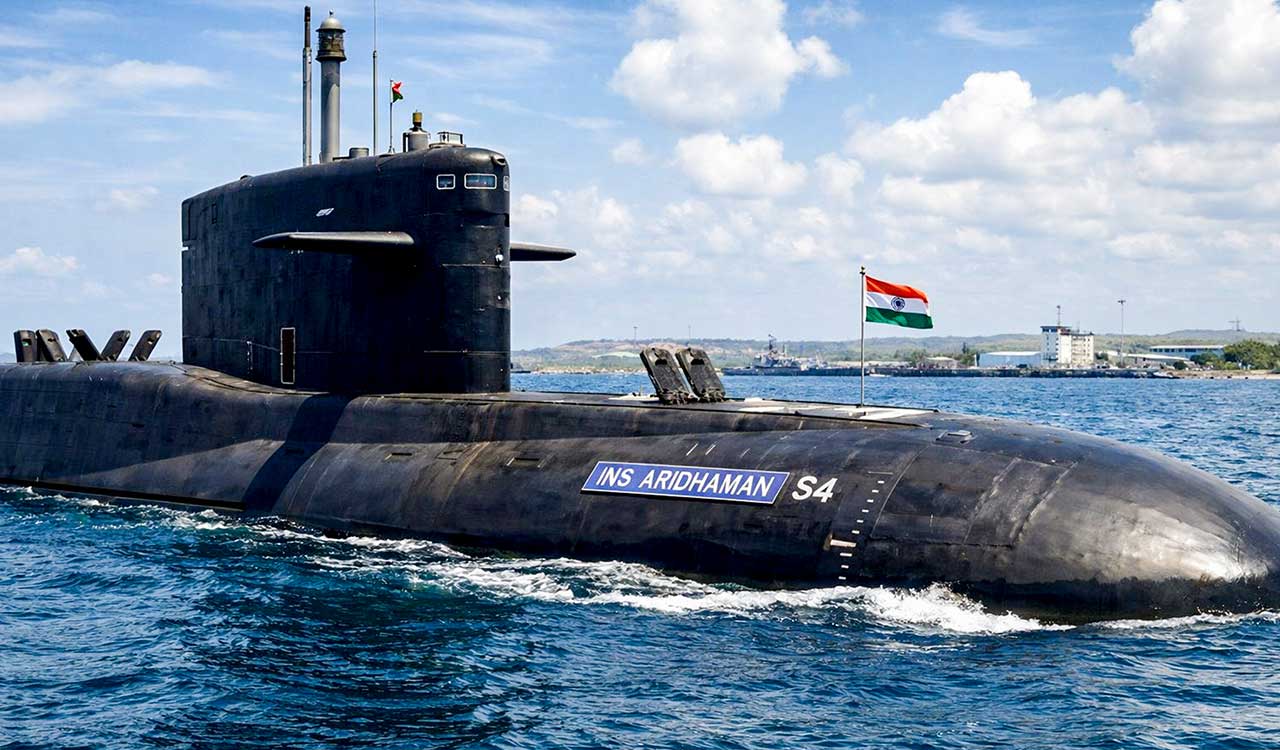


At a time when global waters are being dragged into the theatres of conflict, India has made major progress in achieving maritime self-reliance. The commissioning of INS Aridhaman, the third indigenous nuclear-powered ballistic missile submarine, and INS Taragiri, a guided missile frigate, underscores India’s emergence as a self-reliant naval power. Built with nearly 60% indigenous technology, these platforms are not just instruments of war, but symbols of a nation reclaiming control over its defence destiny. INS Aridhaman, which represents a major leap in the country’s SSBN (Ship, Submersible, Ballistic, Nuclear-powered) fleet, contributes to the country’s nuclear triad. A fourth submarine in the programme, INS Arisudan, is under construction and has begun sea trials. Unlike its predecessors, INS Arihant and INS Arighaat, with a displacement of around 6,000 tonnes and four missile launchers, INS Aridhaman displaces nearly 7,000 tonnes and is equipped with eight vertical launch systems. It is capable of launching multiple ballistic missile types, ranging up to 8,000 km. INS Taragiri, on the other hand, is a Nilgiri-class guided missile frigate and represents a generational shift toward high-end naval warfare in a contested Indo-Pacific. The combat power of the Taragiri centres on its Integrated Combat Management System, and this system fuses data from many different sensors. The commissioning of Taragiri, with over 75% indigenous content, is a direct response to rising geopolitical friction. Specifically, it addresses tensions in the Strait of Hormuz and the broader Indo-Pacific.
The induction of these two vessels sends a strong message to the global community that India is no longer just a buyer of arms but an architect of its own security. The involvement of over 200 MSMEs in the construction of Talagiri highlights a thriving domestic industrial ecosystem that supports thousands of Indian jobs. India’s indigenous shipbuilding capabilities have matured remarkably. Once plagued by delays and technological gaps, Indian shipyards are now delivering complex platforms with increasing efficiency and sophistication. By ensuring at least one nuclear submarine at sea at all times, India ensures a credible minimum deterrence. While Taragiri enhances India’s surface combat capability with stealth features that make it harder to detect and more lethal in engagement, INS Aridhaman strengthens India’s nuclear triad, providing a credible second-strike capability that is central to deterrence. This expansion comes at a critical juncture. The Indo-Pacific is witnessing an unprecedented militarisation, with China aggressively expanding its naval footprint. From the South China Sea to the Indian Ocean, Beijing’s hegemonic intentions are clear. In such a scenario, India’s naval preparedness is not a matter of prestige—it is a strategic necessity. Nuclear submarines and stealth frigates are force multipliers that enhance deterrence without escalating conflict, allowing India to maintain a balance of power in a volatile region. As regional dynamics in the Indo-Pacific shift, the latest dual induction ensures that the country’s eastern seaboard remains impenetrable.
Also Read

Related News