Editorial: Profits remain elusive for India’s e-commerce sector
High logistics costs, reliance on cash on delivery, low order values, and weak unit economics continue to weigh on the sector
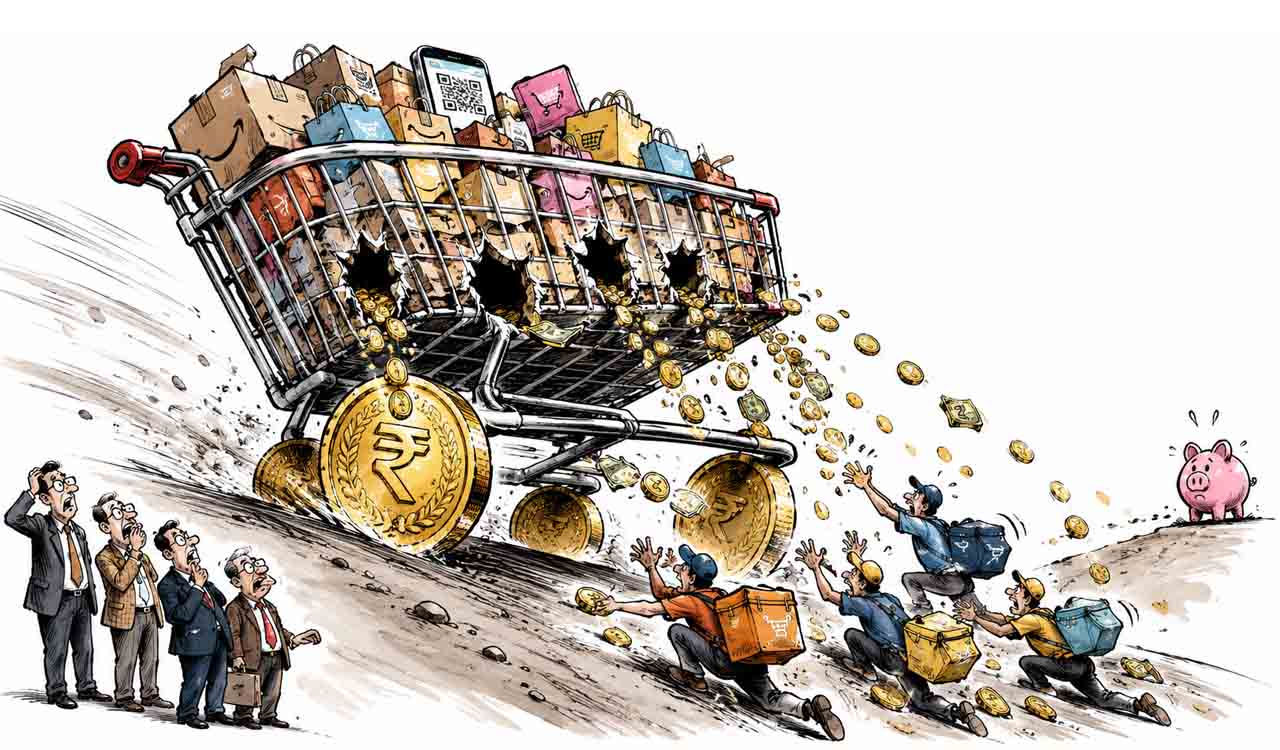


India’s e-commerce industry presents a paradox: On the one hand, it is one of the world’s fastest-growing markets, while on the other, it remains unprofitable despite years of rapid expansion. While the sector is not short of growth, capital or ambition, what it has struggled to build, cycle after cycle, is a business model in which growth and profit move in the same direction at the same time. The tough and increasingly transactional global trade environment, coupled with a still-unresolved domestic cash-burn habit, is forcing the industry’s hand. The platforms most likely to emerge as durable winners will probably not be the ones that deliver the fastest or offer the deepest discount, but the ones that quietly figure out how to make each order, each return, and each customer relationship pay for itself. The latest ‘India E-Commerce Report 2026’ by Delhi-based policy think tank, Centre for Social and Economic Progress (CSEP), argues that policy around India’s online retail sector has focused excessively on tackling market concentration—a few dominant players controlling too much of the market— while overlooking the structural reasons why most e-commerce firms remain unprofitable despite years of rapid expansion. India’s merchandise e-commerce market expanded from about $14 billion in 2014 to $120-130 billion in 2024, and is expected to reach $300-350 billion by 2030, growing at an annual rate of 20-25%. However, despite exponential growth in the sector, profitability remains elusive. The challenge is less about market concentration and more about cost economics. In many ways, the country’s e-commerce industry is at an inflection point.
The era of rapid expansion fuelled by abundant capital, discounts, and customer acquisition is giving way to a phase where profitability, efficiency, and innovation will determine success. While the long-term fundamentals remain robust—supported by digital payments, rising internet penetration, and a vast consumer base—the winners are likely to be companies that excel in AI-driven operations, logistics, export capabilities, and sustainable unit economics, rather than those that rely solely on aggressive growth strategies. At present, the average revenue per user is only $107, far below $1,330 in China, $514 in Mexico, and $350 in Brazil. Indian consumers also spend less per order, particularly in Tier-2 and Tier-3 cities where average order values range from Rs 500 to Rs 700, compared with around Rs 900 or more in Tier-1 cities. Moreover, nearly half of all online orders in India are still paid through cash on delivery, which increases costs for e-commerce firms. Logistics and warehousing remain the biggest expenses for e-commerce companies, with last-mile delivery accounting for around 60% of delivery costs. Data collection, strengthening export logistics for cross-border e-commerce, expanding digital commerce into rural markets, supporting MSMEs through digital platforms, and addressing the welfare of gig workers are other areas that need attention. Going forward, policymakers should avoid excessive intervention that could discourage investment while simultaneously strengthening enforcement against anti-competitive practices.
Also Read

Related News