First phase of Musi rejuvenation project to cost Rs 7,500 crore
Farmers’ groups and political parties in erstwhile Khammam district have alleged inconsistencies in Telangana’s drought-hit mandals list and sought the inclusion of more mandals. They have also demanded crop-loss surveys and compensation for farmers affected by drought.
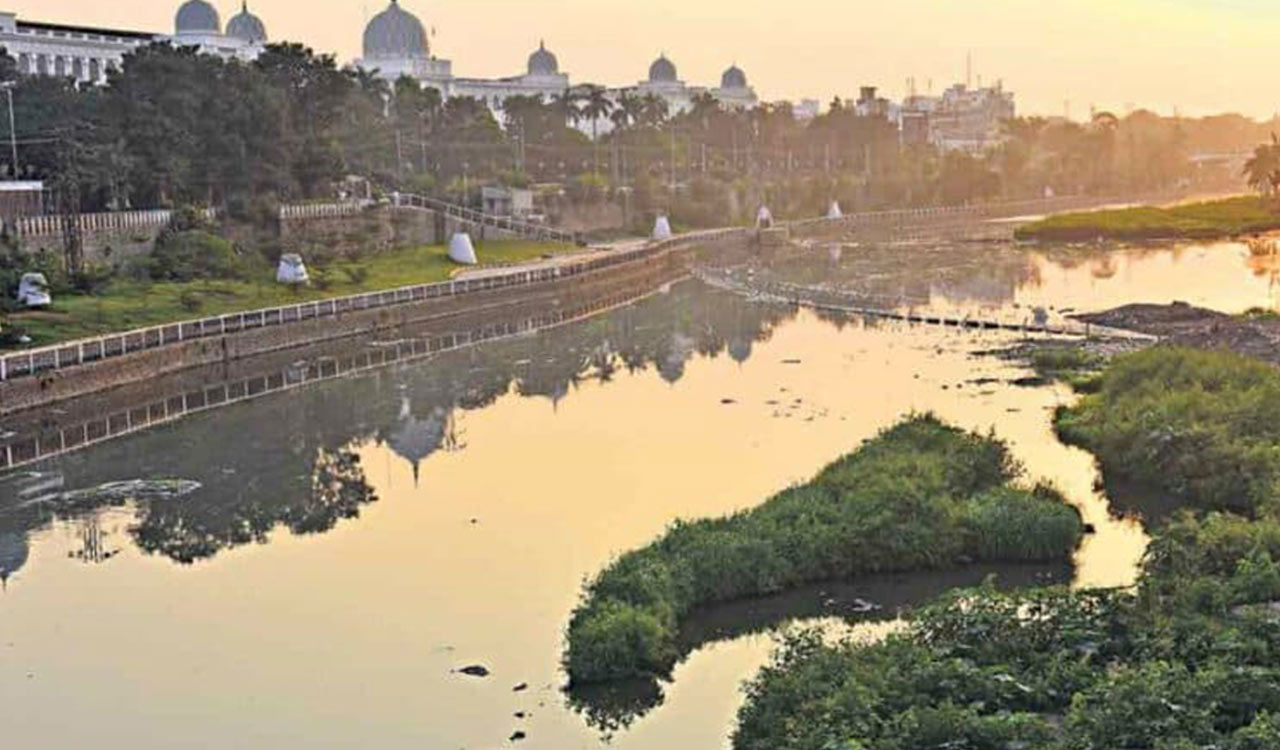


Hyderabad: Amid the El Niño crisis and drought conditions across Telangana, the State government is preparing to launch the first phase of the Musi rejuvenation project at an estimated cost of Rs 7,500 crore. Deputy Chief Minister Bhatti Vikramarka announced that the works would be taken up as part of the government’s comprehensive action plan, involving an outlay of Rs 84,790 crore for the development of Hyderabad and its surrounding areas.
“Designs and tendering processes have been initiated for works worth nearly Rs 55,000 crore, with projects covering urban infrastructure, water supply, roads, Metro Rail and civic amenities,” he said. Of the total expenditure, works worth Rs 52,706 crore will be taken up through the Hyderabad Metropolitan Development Authority (HMDA), Hyderabad Growth Corridor, Metro Rail and other agencies.
Speaking at the NAREDCO Telangana Property Show at HITEX on Friday, Bhatti Vikramarka said Rs 15,849 crore had been allocated to the Hyderabad Metropolitan Water Supply and Sewerage Board and another Rs 500 crore for road works through the Hyderabad Road Development Corporation. The plan also includes Rs 8,663 crore for GHMC, Malkajgiri Municipal Corporation and Cyberabad Municipal Corporation.
The Deputy Chief Minister also announced plans to invest around Rs 93,000 crore in road infrastructure across the State, including four-lane roads and flyovers. The government was focusing on securing additional water resources from the Krishna and Godavari rivers to support Hyderabad’s expansion.
He said that, under the HILT policy, industries within the Outer Ring Road limits were proposed to be shifted outside the city in a phased manner to reduce pollution. The government was also promoting electric buses and vehicles.
Describing the real estate and construction sectors as partners in development, Bhatti urged industry representatives to focus on affordable housing alongside luxury projects. He said the government was combining infrastructure investment with welfare measures and skill development, including the Young India Skills University and upgraded ITIs, to meet the construction sector’s workforce requirements.
He said the government aimed to transform Hyderabad into a world-class city and Telangana into one of the country’s fastest-growing States. The upcoming Bharat Future City was being planned across nearly 30,000 acres, complementing existing Hyderabad, Secunderabad and Cyberabad.

Related News