From high seas to home kitchens: Why the Iran war is India’s energy wake-up call
As oil routes tighten and LPG delays mount, the Iran conflict is turning distant geopolitics into an immediate threat to India’s household


By Brig Advitya Madan
The ongoing conflict involving the United States, Israel, and Iran has rapidly expanded beyond a conventional military confrontation. In just a few weeks, it has exposed fault lines in international law, underscored the fragility of global energy systems, and revealed structural vulnerabilities in countries far removed from the battlefield — including India.
Three developments over the past fortnight capture this shift: the US submarine attack on the Iranian warship Dena near Sri Lanka, the strategic centrality of Kharg Island in Iran’s oil economy, and the looming risk of an LPG crisis in India amid supply disruptions.
Together, they illustrate a simple but urgent reality: modern wars are fought as much through law and energy as through weapons.
Legality at Sea: The Dena Incident
The sinking of the Iranian warship Dena has triggered debate over the legality of naval warfare in international waters. US Defence Secretary Pete Hegseth described it as the first torpedo sinking since World War II — a claim belied by the precedent of the Falklands War.
The legal position, however, is clearer than the rhetoric suggests.
Under the United Nations Convention on the Law of the Sea, coastal states enjoy full sovereignty only within their territorial waters (12 nautical miles). Beyond that lies the Exclusive Economic Zone (EEZ), where states retain resource rights but not sovereign control.
At the time of the attack, Dena was located roughly 20 nautical miles off Sri Lanka — within its EEZ but outside its territorial sea. Under Article 87 of UNCLOS, freedom of navigation applies. Moreover, the law of armed conflict permits belligerent states to engage enemy vessels outside neutral territorial waters.
The conclusion is inescapable: the US action did not violate international law. India’s response was appropriate. As a neutral state, it had no obligation to protect the vessel, but its humanitarian duty was fulfilled through search and rescue operations by the Indian Navy.
Kharg Island
If the Dena episode highlights legal clarity, Kharg Island reflects strategic ambiguity.
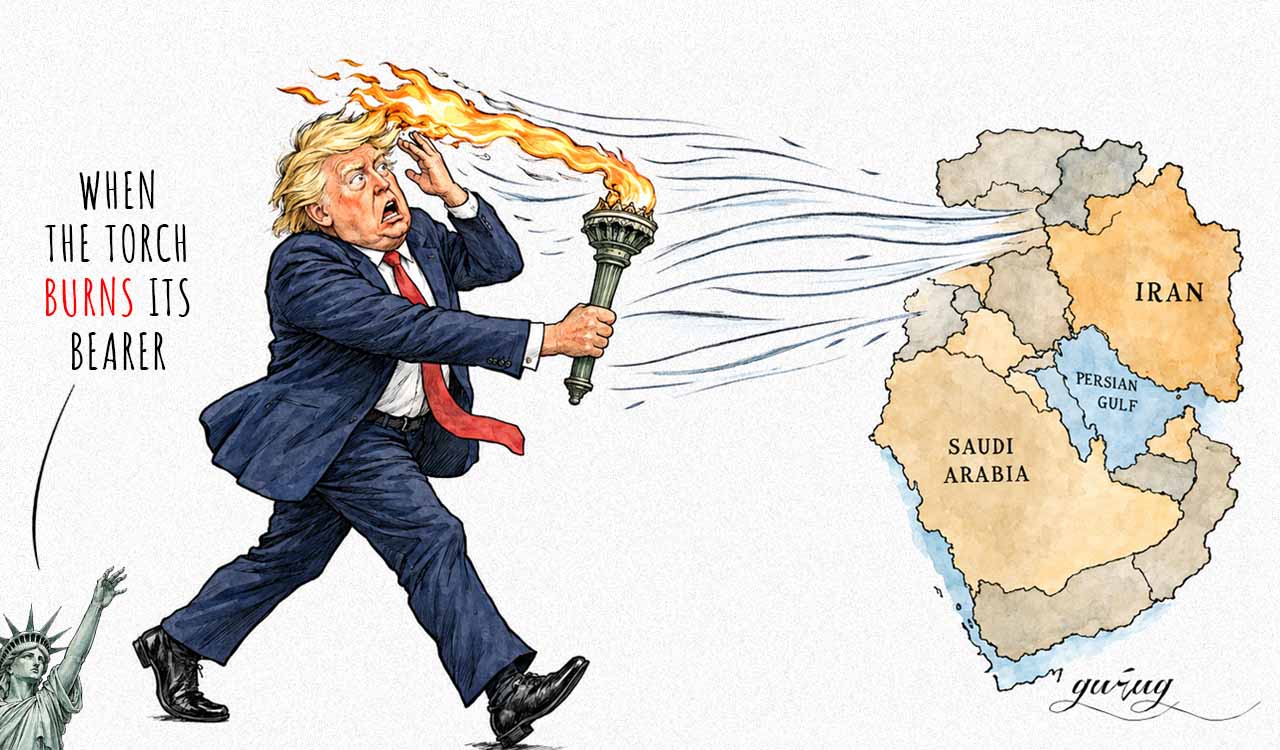
Located off Iran’s coast, Kharg accounts for nearly 90% of Iran’s crude exports and houses storage facilities capable of holding around 30 million barrels. Recent US strikes have targeted military installations on the island while deliberately sparing oil infrastructure. This restraint is not accidental.
Washington appears keen to avoid triggering a global oil shock even as it escalates militarily. This is particularly significant given rising tensions in the Strait of Hormuz and increased insurance risks for shipping.
Yet the situation remains precarious. Even without direct damage, the mere threat to Kharg has tightened markets. Analysts increasingly warn that Brent crude could surge sharply if the conflict intensifies — potentially approaching $150 per barrel.
Iran’s alternatives — such as the Jask terminal — are inadequate substitutes. Geography favours Kharg, with its deep-water access allowing large tankers to dock, unlike much of Iran’s shallow coastline. In effect, Kharg is both Iran’s economic backbone and its strategic Achilles’ heel.
India’s LPG Vulnerability
For India, the implications of this conflict are immediate and deeply concerning.
LPG is central to India’s household energy security. While diversification efforts — such as imports from the United States — offer some relief, they introduce new challenges. Tankers from the US take around 45 days to reach India, compared to just six days from the Gulf. In a crisis scenario, time becomes as critical as supply.
The Policy Imperative
The lesson is not merely about managing the current crisis — it is about preparing for the next one.
First, India must urgently expand its LPG storage capacity. Strategic reserves should be increased significantly through accelerated construction of underground and salt caverns, particularly in Rajasthan.
Second, supply diversification must be backed by logistical readiness. Long-distance imports require robust buffer stocks and improved infrastructure.
Third, refining policy must balance competing priorities. Increasing LPG production domestically often comes at the expense of petrochemicals and fuel quality, necessitating careful calibration.
Consequences
The Iran war is a distant conflict, but its consequences are immediate. From the legality of naval warfare to the vulnerability of oil infrastructure and the fragility of domestic energy systems, it has exposed the interconnected nature of modern geopolitics.
For India, the message is clear: energy security can no longer be treated as a technical issue. It is a strategic imperative. Because in today’s world, wars are not just fought on battlefields — they are felt in kitchens.
(The author is a retired Army officer)

Related News