From Udanta Martand to digital age: India celebrates 200 years of Hindi journalism
India marked 200 years of Hindi journalism with a seminar and exhibition at IGNCA, commemorating the launch of Udanta Martand in 1826. Rare archival newspapers were showcased, while a commemorative stamp and volume were released to celebrate the milestone


New Delhi: Exactly 200 years ago, from an old press located in the bylanes of Calcutta, a weekly titled ‘Udanta Martand’ — which translates to the “rising sun” — was published, quite aptly heralding the dawn of Hindi journalism in India.
Its very first issue, edited by Pt. Jugal Kishore Shukla, which came out on May 30, 1826, proclaimed itself as a journal with a premise: “Hindustaniyon ke hit ke het”. Rare images of the first page of this very seminal publication and other historic Hindi journals published in the 19th and 20th centuries, have been displayed as part of an exhibition hosted at the Indira Gandhi National Centre for the Arts (IGNCA) here on Saturday to mark the milestone occasion.
A two-day seminar, starting May 30, is also being hosted by IGNCA and Madhavrao Sapre Memorial Newspaper Museum and Research Institute, Bhopal, to commemorate 200 years of Hindi journalism.
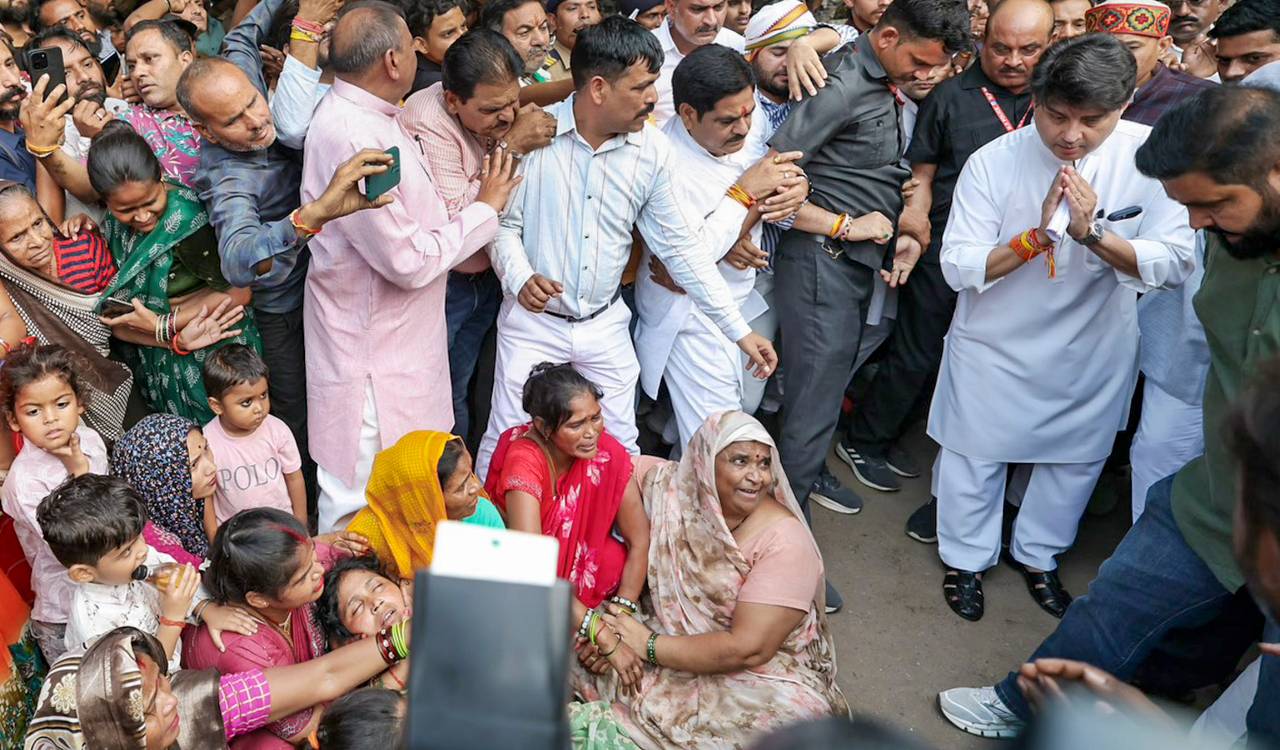
Union Minister for Communications Jyotiraditya Scindia, the chief guest at the opening session of the seminar, released a commemorative stamp, and also a commemorative volume on the bicentenary. On the occasion, a written message in Hindi sent by Prime Minister Narendra Modi was also played on the screen on the dais.
“I am confident that this glorious journey of 200 years of Hindi journalism will inspire new generations of journalists, researchers and other people associated with the media fraternity,” Modi said in his message dated May 29.
The exhibition draws from archival records housed at the newspaper museum of Sapre memorial, and includes rare images of the cover pages of various Hindi newspapers published in the 19th century, such as ‘Malwa Akhbar’ (Hindi/Urdu), ‘Akhbar Gwalior’, ‘Samachar Sudhavarshan’ (Hindi and Bengali), ‘Kavivachansudha’, ‘Hindipradip’ (monthly), ‘Hindosthan’, ‘Ananda Kadambini’, ‘Bharatbhrata’ and ‘Shree Venkateswar Samachar’, among others.
The 20th-century journals born before the independence, whose rare images have been showcased include, ‘Dainik Lokmat’, ‘Madhukar’, ‘Hind Kesari’, ‘Saraswati’, ‘Vigyan’, ‘Vishwamitra’, ‘Aaj’, ‘Sainik’ and ‘Aryavarta’.
According to one of the exhibits, at the end of every issue of ‘Udanta Martand’, it was written — “This ‘Udanta Martand’ is published every Tuesday, at Martand press in Calcutta’s Kolhu Tola, Amratala Gali, haveli at no. 37.” Veteran journalist and founder of Sapre memorial newspaper museum Vijaydutt Shridhar told PTI that he built the museum by collecting material from across the country, as part of his research for a scholarly work.
He also said that ‘Udanta Martand’, though started in May 1826, did not get much financial patronage, and folded in “one year and seven months”. In his address, he quoted author and journalist Makhanlal Chaturvedi, saying, “the pen should neither get stuck nor go astray”. Scindia said in his address: “The seed sown 200 years ago by Pt. Jugal Kishore Shukla, has grown into a massive banyan tree across the country”. He said, commitment, human sensitivity and national interest should remain at the core of journalism.

Related News