Gachibowli building collapse raises questions over illegal constructions
A month after an unauthorised building collapsed in Gachibowli, killing two workers, residents and RWAs have raised concerns over multi-storey constructions on small plots, alleged violations of building norms and the effectiveness of civic monitoring and enforcement
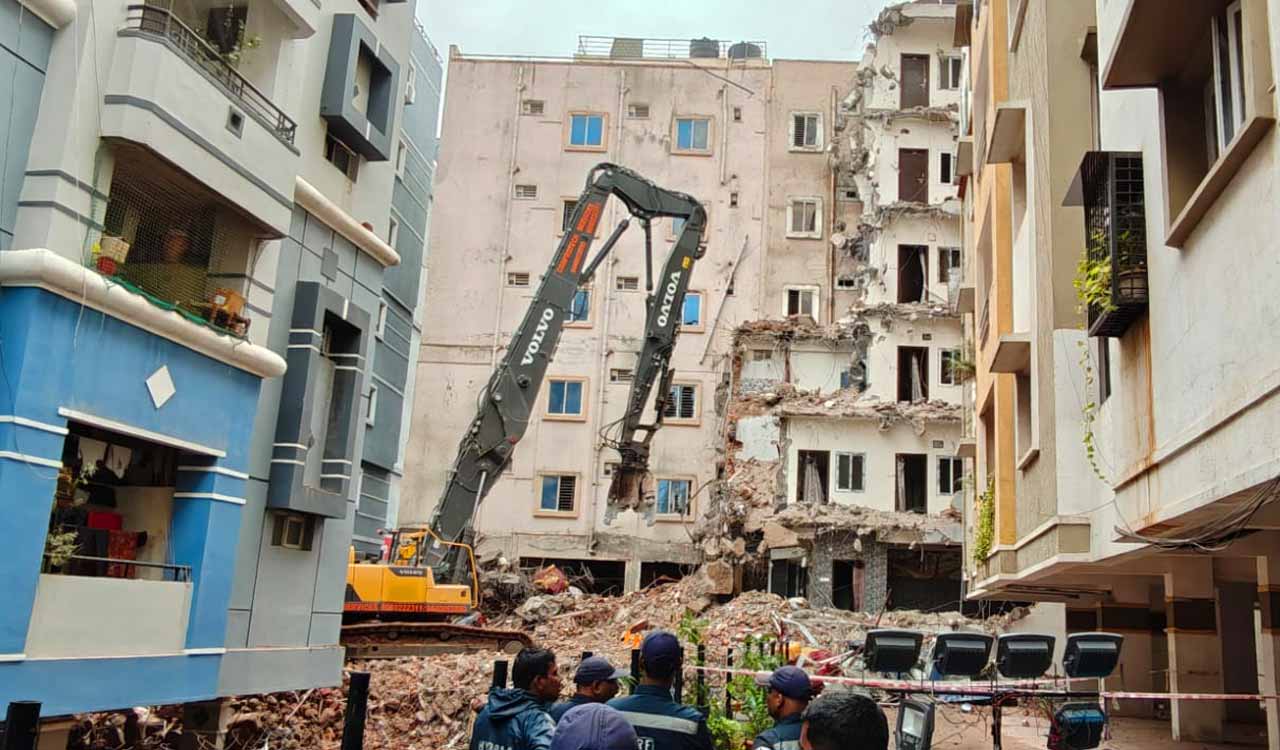


Hyderabad: A month after an unauthorised G+6 building collapsed in Anjaiah Nagar, Gachibowli, killing two workers, the Cyberabad Municipal Corporation (CMC) is facing criticism from residents and resident welfare associations (RWAs) over alleged lapses in preventing unauthorised constructions.
Questions are being raised over the civic body’s accountability as more such structures come to light. The concerns intensified after a four-storey building in NTR Nagar, Gopanpally, developed a dangerous tilt on Friday, forcing the evacuation of residents. The structure was subsequently demolished by civic authorities.
Several RWAs have questioned how such buildings are allowed to come up in violation of approved plans. They have also questioned the role of officials and staff tasked with monitoring construction activity and taking action against builders allegedly constructing additional floors beyond permitted limits and violating building norms.
The CMC is yet to compile a comprehensive database of hazardous and unauthorised structures built on 50-square-yard plots in Anjaiah Nagar and elsewhere within its limits, according to residents.
Unauthorised multi-storey buildings have proliferated on plots measuring 50 and 75 square yards across CMC limits, residents allege. They contend that the trend points to inadequate oversight and enforcement by the authorities.
The RWAs have also questioned how construction permissions were generated through a digitised system for restricted 50-square-yard plots. They have alleged that zoning rules were misinterpreted to permit commercial-scale vertical construction on small residential plots and that fitness certificates were issued without adequate checks on structural stability and foundation strength.
Some RWAs in Gachibowli and Madhapur said the commissioner had deployed enforcement teams for demolition drives and issued notices to under-construction sites, while allegedly overlooking risks posed by occupied buildings.
“There is a need for a comprehensive audit of buildings and identification of those violating the norms,” an office-bearer of an RWA said.
Another RWA representative called for a review of the functioning of the town planning and other wings responsible for enforcing building norms and monitoring compliance.
In several areas, buildings have been constructed edge-to-edge, leaving little or no setback between structures. Residents allege that, in many instances, narrow high-rises are constructed without adequate soil testing or proper structural engineering, raising concerns over their safety.
There are also allegations that some developers and builders use altered or fake blueprints to construct additional floors beyond approved plans, while civic teams allegedly fail to conduct mandatory ground-level inspections during critical stages of construction. Some residents have further alleged that developers upload incorrect structural data and plot dimensions on automated approval portals to circumvent scrutiny.

Related News