Heavy rains disrupt Mumbai as several areas receive over 300 mm rainfall
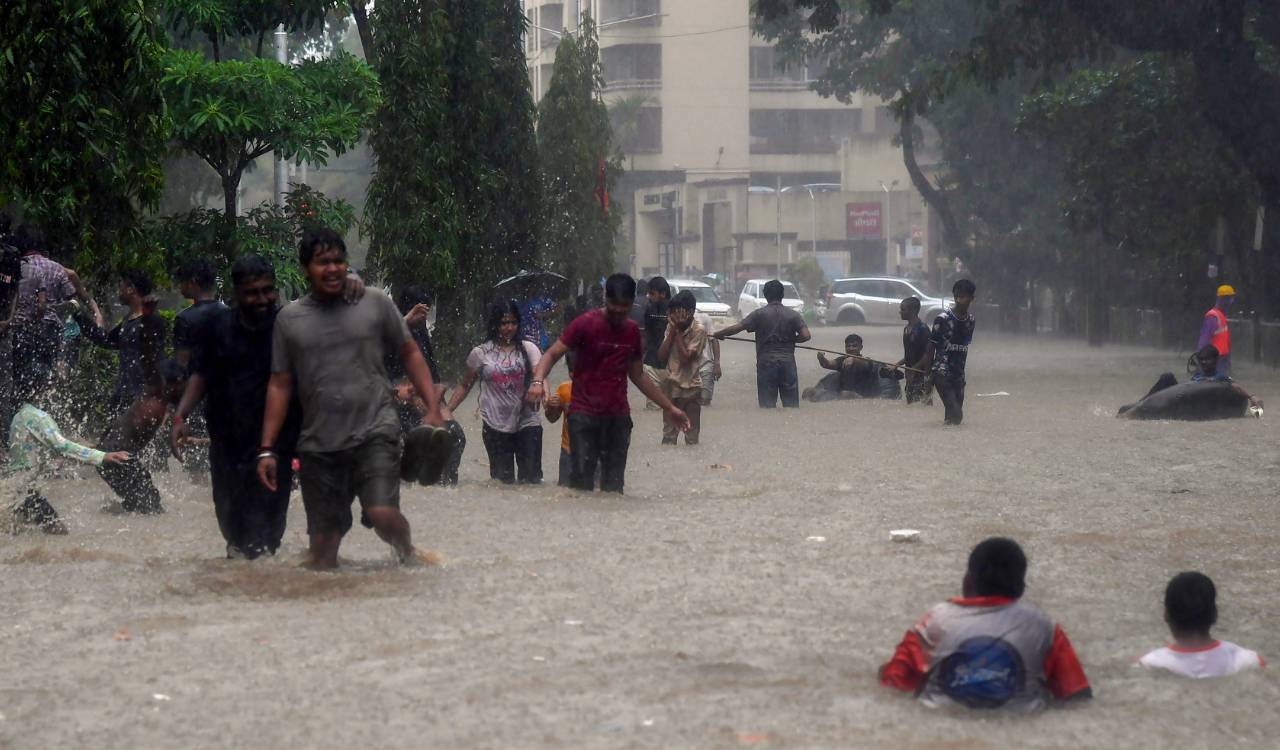
Heavy overnight rainfall in Mumbai flooded low-lying areas, disrupted road and rail traffic and affected thousands of commuters. Several areas recorded over 300 mm rainfall, while political leaders urged civic authorities to improve drain cleaning and waterlogging management
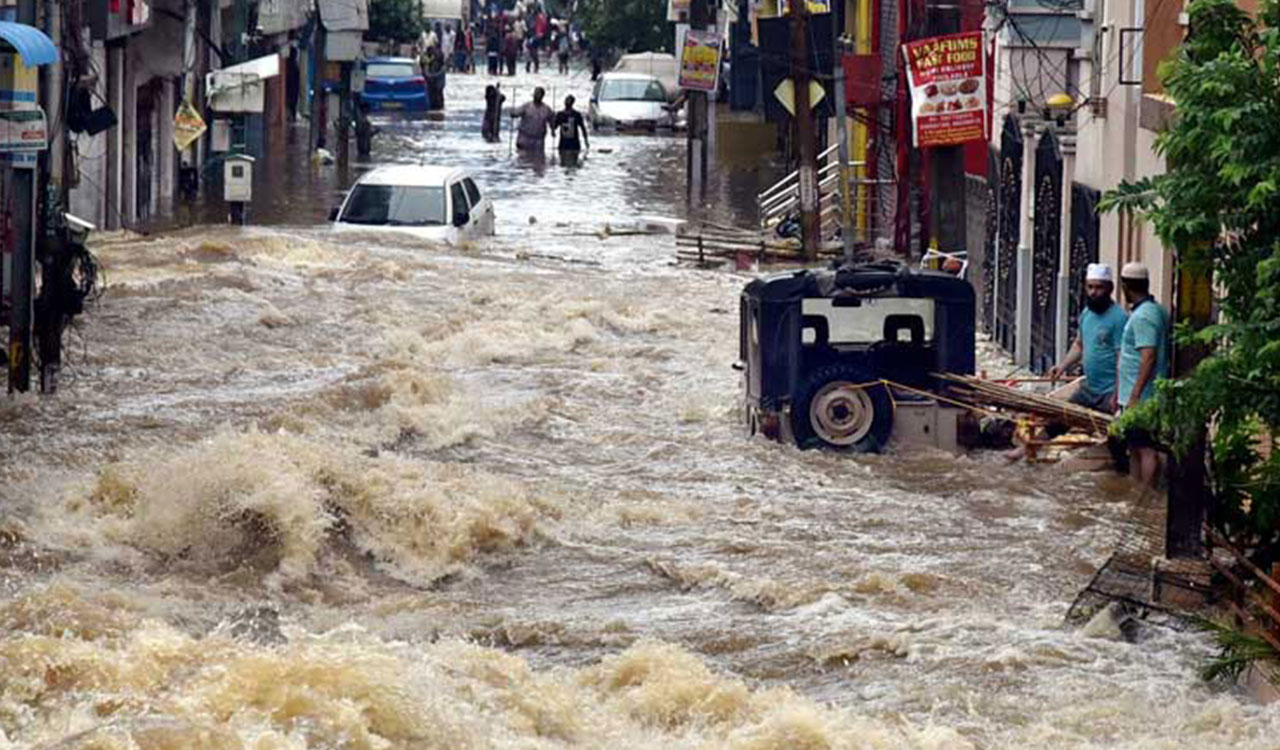


Mumbai: Heavy overnight showers a day after the monsoon’s arrival in Mumbai disrupted road and rail traffic, flooded low-lying zones and left commuters stranded on Wednesday, as some areas received over 300 mm of rainfall in 24 hours.
During Mayor Ritu Tawde’s inspection of the waterlogged Gandhi Market in King’s Circle, a Brihanmumbai Municipal Corporation (BMC) supervisor fell into an open water channel but was quickly rescued without any serious injuries, officials said.
The area witnessed severe waterlogging, disrupting traffic for hours, even as the IMD issued an ‘orange alert’, forecasting heavy to very heavy showers in Mumbai.
Congress MP Varsha Gaikwad shared a video of the incident on X and targeted the mayor, alleging, “This man has fallen into the pit of your inaction and corruption. This is not an accident; your corruption has been caught red-handed.”
Ruling Shiv Sena MLC Manisha Kayande urged Tawde to intensify efforts to clean drains and remove dry waste to prevent waterlogging and traffic disruptions during the monsoon.
Kayande, whose party is a constituent of the BJP-led Mahayuti government, also said the issue should not be viewed through a political lens and stressed that the focus must remain on resolving problems faced by people.
“It is not about politics but solving people’s problems,” she told reporters. The BMC is controlled by the BJP and Shiv Sena.
Municipal Commissioner Ashwini Bhide appealed to people to follow weather advisories and contact civic control rooms in case of emergencies.
She said all departments had been directed to remain vigilant as heavy rainfall was likely to persist and the administration was continuously monitoring the situation.
Mayor Tawde and former mayor Kishori Pednekar visited some areas to review the ground situation and the reasons for the waterlogging.
The India Meteorological Department (IMD) has issued an ‘orange’ alert for Mumbai and neighbouring Thane and Palghar districts, predicting heavy to very heavy rainfall and thunderstorms with lightning and gusty winds at isolated places over the next 24 hours.
The city observatory at Colaba recorded 248 mm of rainfall, while the suburban observatory at Santacruz logged 225 mm in the 24 hours ending at 8 am on Wednesday, the BMC said.
Among the areas that received exceptionally heavy rainfall, Malvani in the western suburbs recorded 340 mm, while Parel in central Mumbai received 334 mm during the period.
The intensity reduced later as the island city, eastern suburbs and western suburbs recorded 13 mm, 6 mm and 7 mm of rainfall, respectively, from 8 am to 2 pm, it said.
The southwest monsoon reached Mumbai on Tuesday, 13 days after its normal onset date.
The overnight rain inundated several low-lying areas of the city by Wednesday morning, affecting road and rail traffic.
Civic officials said water accumulation was reported at the Andheri subway, Hindmata and King’s Circle areas in the morning, affecting vehicular movement and leading to traffic congestion on key roads.
Suburban railway services were also affected as rainwater accumulated on tracks at some locations, though officials said the level remained below the danger mark prescribed for suspending train operations.
Several commuters complained of delayed services and overcrowded local trains during the morning peak hours, particularly on Central Railway corridors.
The heavy rain also affected Central Railway’s Trans-Harbour Line services between Thane and Vashi/Panvel in neighbouring Navi Mumbai after a track cave-in caused by excessive water flow between Turbhe and Koparkhairane stations, officials said.
A Central Railway spokesperson said the up line on the Thane-Vashi section was declared unsafe at 5.06 am, while the down line was declared unsafe at 5.50 am, affecting train operations during the morning rush hour.
The up line was restored at 7.27 am with a speed restriction of 10 kmph, while the down line was declared safe at 7.35 am, with trains permitted to run at 30 kmph.
“Track cave-in occurred because of excess water flow,” the official said.
As per a spokesperson for the Brihanmumbai Electric Supply and Transport (BEST), buses on more than 24 routes were diverted due to heavy rains in the morning.
A high tide of 3.41 metres was recorded at 8.28 am, while another high tide of 3.35 metres is expected at 7.41 pm, the BMC said.
Generally, heavy downpours combined with high tide lead to waterlogging in the metropolis, which is surrounded by the Arabian Sea.
Kayande said the cleaning of “nullahs” (drains) was essential, though some amount of waterlogging was expected during heavy rains.
Some drains had not been cleaned adequately, which contributed to water accumulation in parts of the city, she said.
“The mayor may need to work harder to clean the nullahs and remove dry waste from them so that water does not get logged and affect overall vehicular movement,” she added.
The 248 mm rainfall recorded at Colaba in the past 24 hours amounted to nearly 45 per cent of the station’s seasonal June rainfall of 542 mm. Similarly, Santacruz’s 225 mm rainfall accounted for around 42 per cent of its seasonal June rainfall of 537 mm, underscoring the intensity of the downpour, according to the BMC.
The civic body said its dewatering pumps, stormwater pumping stations and flood-control systems were operational, enabling rapid drainage of accumulated water and helping maintain traffic movement.

Related News
-

Mumbai landslide: Seven killed, seven injured in Ghatkopar after heavy rain
-
Monsoon fury grips Delhi, Mumbai, 16 feared trapped in Pune collapse
-
Maharashtra flood crisis: From hospital bed, Eknath Shinde monitors heavy rains and issues rescue orders
-
Red alert across Maharashtra as monsoon fury batters Mumbai, coastal districts