How insects, smallest animals survive Antarctica
The heat insects need for metabolism and growth comes from the environment. This is partly how they are so abundant around the world
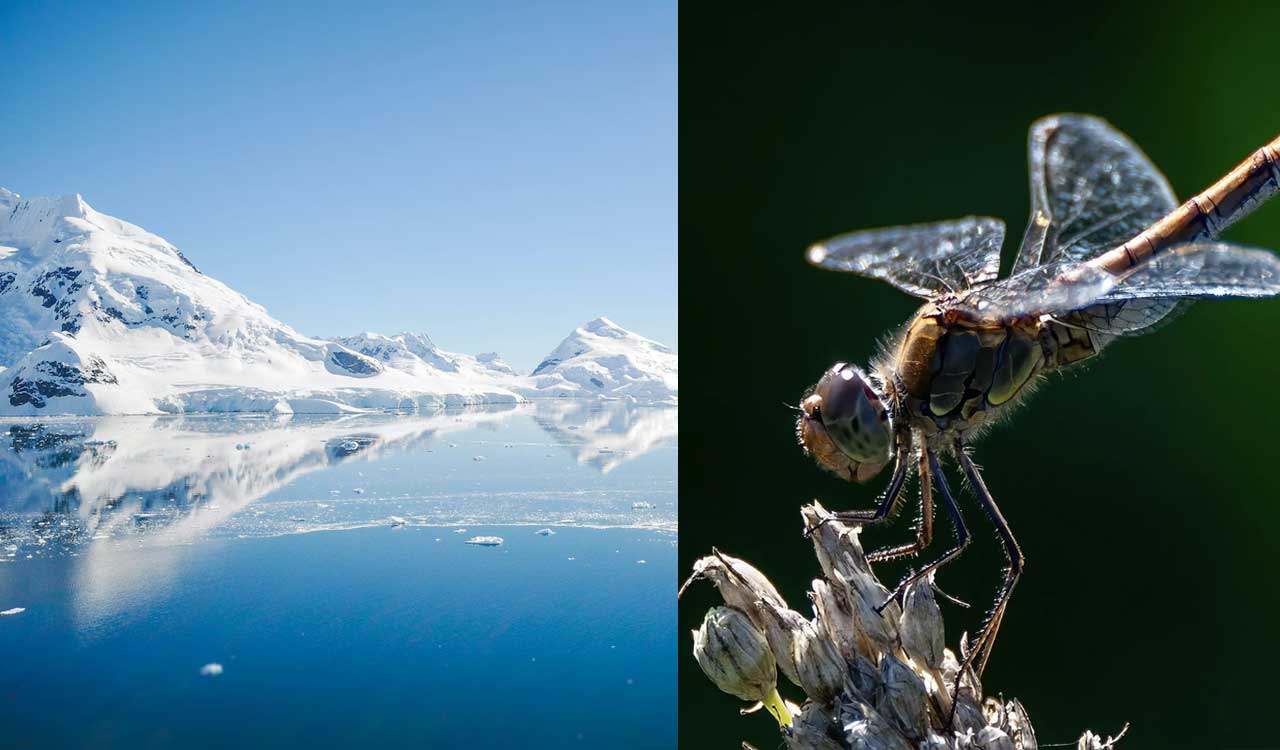


In Antarctica’s freezing depths, tiny creatures have mastered survival tactics that could unlock secrets to extreme cold resistance, with implications for science and medicine.
Some of the most intense battles against the environment are waged by the smallest of creatures. When it’s cold, we, as warm-blooded (endothermic), animals simply put on a coat. Other endotherms, can be large, fat or furry to insulate their body from the cold.
Generating your own body heat, however, requires a lot of energy. Insects do not do not do this. The heat they need for metabolism and growth comes from the environment. This is partly how they are so abundant around the world.
Insects need less energy to grow compared with warm-blooded animals like mammals and are great at exploiting this advantage. Not being able to generate your own body heat is a problem for insects in cold places. They are at the mercy of the environmental temperature and can only grow, develop and feed when it is warm enough.
Typically this optimum temperature is around 20 degrees Celsius. Yet some insects survive when temperatures drop below freezing. Generally, when the temperature goes below 0°C this causes damage to animal cells and even death. This cell damage is what causes frostbite.
Many insects use one of two simple strategies. Freeze tolerance or freeze avoidance. For example, they produce cryoprotectants, such as glycerol, which lower their freezing point. This allows the animal to undergo supercooling without freezing. Some generate antifreeze proteins that stop ice crystals from forming in their tissue.
Mites are common in the Antarctic – there are hundreds of species. Some even live in the nasal cavities of penguins. Penguin noses provide not only a source of food for the mites that feed on the penguins’ dead skin cells, but also a warm environment.
However, some Antarctic mites, which don’t rely on a host, such as Halozetes belgicae, are freeze-avoiding, using antifreeze compounds to lower the freezing point of their body to well below 0 degrees Celsius.
One of the smallest land animals in Antarctica are the springtails, related to primitive insects but lacking some of the features we see in modern insects. For example, their mouthparts are internal whereas insects have external mouthparts.
One springtail, Gomphiocephalus hodgsoni, can reach a temperature of -38 degrees Celsius before it freezes. It is a small species of only 1-2 millimetres in length but important for the Antarctic soil ecosystem, fulfilling an important function as a decomposer of organic matter.
The midge species Belgica Antarctica, however, is the only true insect found in Antarctica. It endures many periods of sub-zero temperatures throughout its life and has some unique strategies to deal with the hostile Antarctic climate.
This species takes two years to reach adulthood – which in insect time is quite the long while. Some insects such as aphids have multiple generations in a year.
Belgica Antarctica can tolerate ice crystals forming in its body by minimising the damage they do to tissue. It can also lose water from its body through a semi-permeable outer membrane, removing molecules that could form into ice crystals.
Perhaps among the most dominant animals in the Antarctic, and indeed anywhere on the planet, are the nematodes. This is a small worm-like animal, that lives in and on top of the soil.
Some species like Panagrolaimus davidi can tolerate their body cells freezing. They can also undergo a dormant state called diapause by dehydrating themselves (cryptobiosis), which prevents ice crystals forming in their cells.
Another group that uses this method for dealing with the cold Antarctic climate are the tardigrades (also known as water bears). Freezing can extend the life of this animal. In fact, one tardigrade species known as Acutuncus antarcticus was frozen at -20 degrees Celsius and defrosted 30 years later with no ill effects.
Invertebrates, make up an enormous proportion of all life on earth. There are so many species yet to be discovered, which could help us unlock more secrets to survival in the most extreme environments and how this can benefit humans.
Freeze tolerance and avoidance strategies, can enhance our knowledge of cryopreservation for medicine and organ transplants, improve food storage, aid climate adaptation and drive innovation in biotechnology and materials science. Studying how these microscopic life forms endure extreme conditions could reveal secrets about the evolution of life on Earth and even offer insights into the future of cryopreservation.

Related News
-

Stubble fires leave trail of death and environmental damage in Telangana
-
Surprise shark caught on camera for first time in Antarctica’s near-freezing deep
-
Hyderabad-based startup to begin human clinical trials for India’s first AI-driven antibiotic
-
Hyderabad woman becomes first two-time kidney transplant recipient to conquer Antarctica