Hyderabad police review KBR Park traffic trial, permanent changes yet to be decided
Hyderabad Police Commissioner V.C. Sajjanar inspected the traffic trial around KBR Park and reviewed congestion patterns at key junctions. Officials identified operational challenges, proposed infrastructure improvements, and said any permanent traffic changes would be based on detailed analysis of collected data.
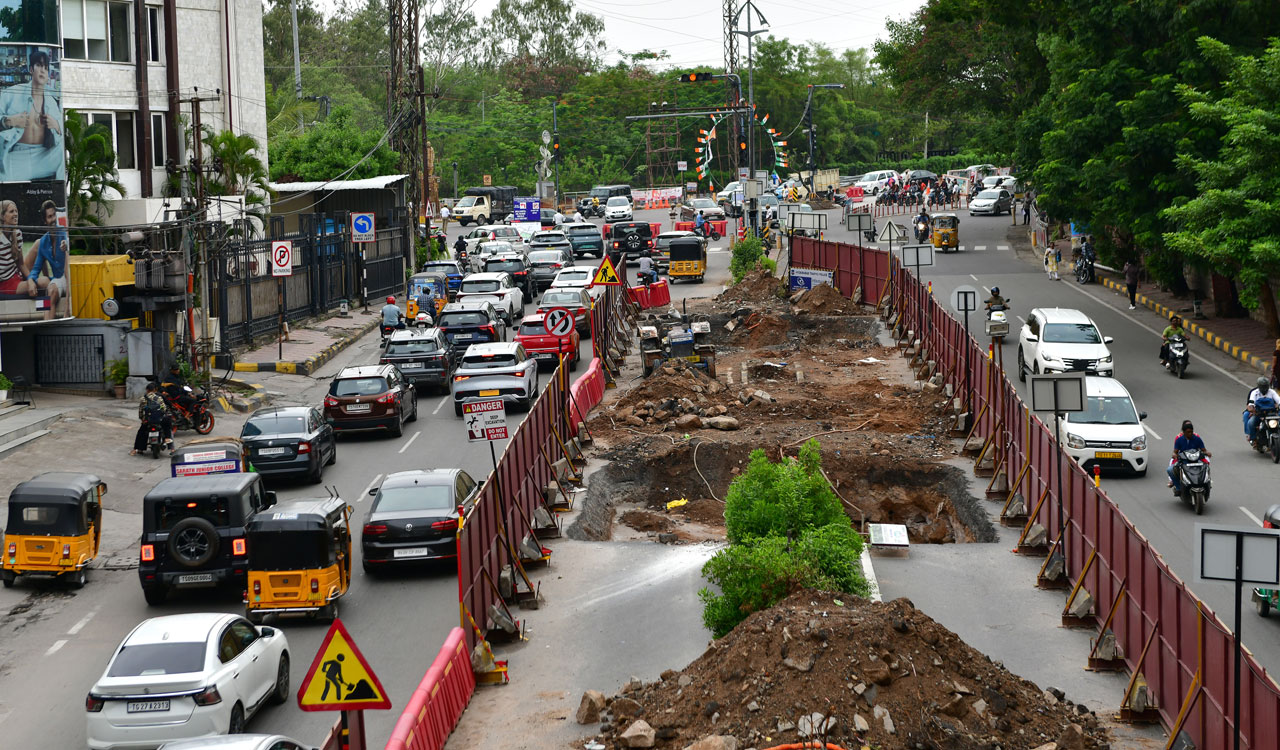


Hyderabad: Hyderabad Police Commissioner VC Sajjanar on Sunday inspected the trial run and reviewed traffic movement at various key junctions around KBR Park. He visited major traffic points including the KBR Park Main Gate, Basavatarakam Hospital, Agrasen Junction, Film Nagar, Road No 45 and Jubilee Hills Check Post.
Interacting with the media, Sajjanar said the trial was conducted to address future traffic demands and find long-term solutions to congestion issues in the area. He recalled that the first one-way traffic trial was conducted on April 5 for two hours and the observations from that exercise had been incorporated into the current trial.
The Commissioner clarified that the trial would continue only until 8 pm on Sunday and that normal traffic movement would resume from Monday morning. Officials were studying the challenges arising during the trial period to assess its effectiveness.
Meanwhile, Joint Commissioner of Police (Traffic) Joel Davis said officials had identified certain difficulties at locations where vehicles were required to change lanes during the trial. He assured that necessary modifications would be incorporated before any permanent implementation of the system.
“To facilitate smoother lane changes, the traffic police plan to create a 150-metre interchange stretch between Jubilee Hills Check Post and KBR Park. The department is also studying the feasibility of installing pedestrian signals near KBR Park and the Check Post to improve pedestrian safety,” he said.
Davis added that drone technology is being used to continuously monitor traffic movement at key junctions and collect data. He emphasised that any permanent changes to the traffic system would be made only after a comprehensive analysis of the findings.

Related News