ISRO preps for re-entry experiment of decommissioned satellite on March 7
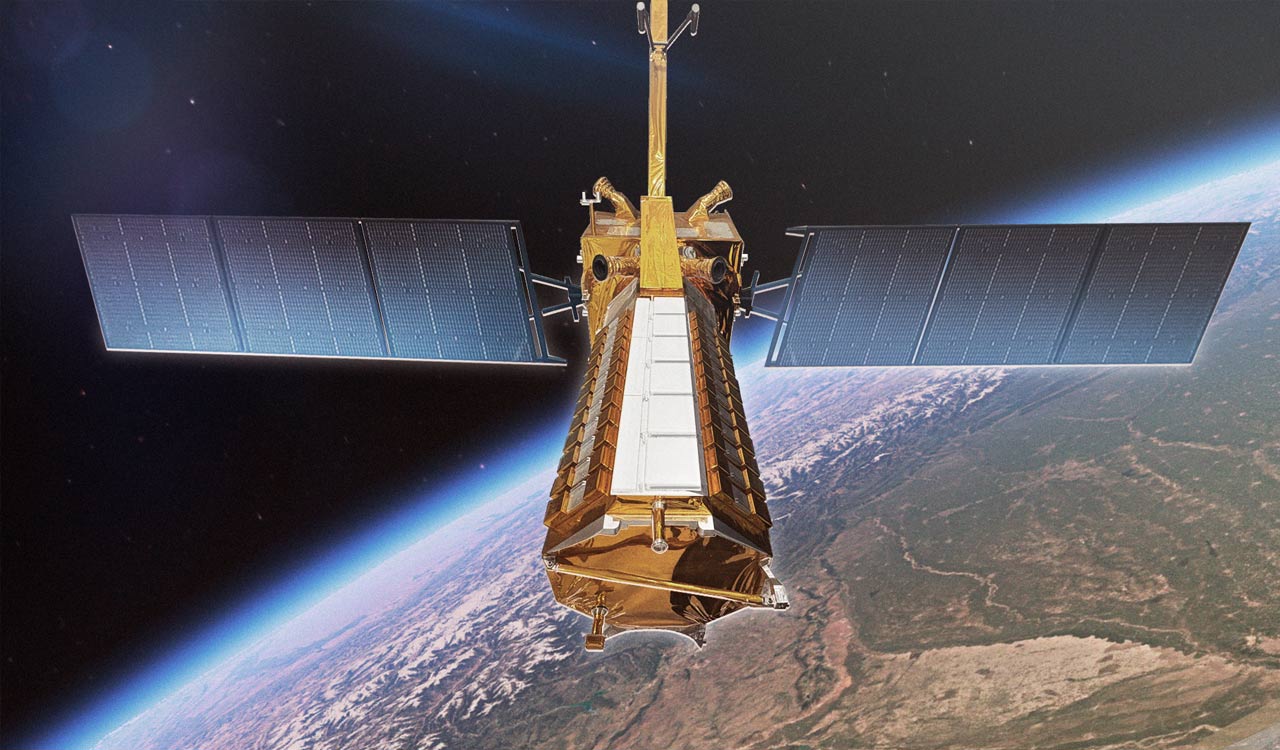
Megha-Tropiques-1 (MT1) was launched on October 12, 2011, as a joint satellite venture of ISRO and French space agency CNES for tropical weather and climate studies.


Bengaluru: The Indian Space Research Organisation (ISRO) is preparing for a challenging experiment of controlled re-entry of a decommissioned low earth orbit satellite, Megha-Tropiques-1 (MT1), into the earth’s atmosphere on March 7.
MT1 was launched on October 12, 2011, as a joint satellite venture of ISRO and French space agency CNES for tropical weather and climate studies.
Also Read
Although the mission life of the satellite was originally three years, the satellite continued to provide valuable data services for more than a decade supporting regional and global climate models till 2021, the Bengaluru-headquartered space agency noted in a statement on Sunday.
UN/IADC (Inter-Agency Space Debris Coordination Committee) space debris mitigation guidelines recommend deorbiting a LEO (Low Earth Orbit) object at its end-of-life (EOL), preferably through controlled re-entry to a safe impact zone, or by bringing it to an orbit where the orbital lifetime is less than 25 years, according to ISRO.
It is also recommended to carry out “passivation” of on-board energy sources to minimise the risk of any post-mission accidental break-up.
The orbital lifetime of MT1, weighing about 1,000 kilograms, would have been more than 100 years in its 20 degree inclined operational orbit of 867 km altitude. About 125 kg on-board fuel remained unutilised at its end-of-mission that could pose risks for accidental break-up.
This leftover fuel was estimated to be sufficient to achieve a fully-controlled atmospheric re-entry to impact an uninhabited location in the Pacific Ocean.
Controlled re-entries involve deorbiting to very low altitudes to ensure impact occurs within a targeted safe zone.
Usually, large satellites/rocket bodies which are likely to survive aero-thermal fragmentation upon re-entry are made to undergo controlled re-entry to limit ground casualty risk. However, all such satellites are specifically designed to undergo controlled re-entry at EOL.
MT1 was not designed for EOL operations through controlled re-entry which made the entire exercise extremely challenging.
Furthermore, the on-board constraints of the aged satellite, where several systems had lost redundancy and showed degraded performance, and maintaining subsystems under harsher environmental conditions at much lower than originally designed orbital altitude added to the operational complexities.
Innovative workarounds were implemented by the operations team based on the study, deliberations, and exchanges among the mission, operations, flight dynamics, aerodynamics, propulsion, controls, navigation, thermal, and other subsystem design teams across the ISRO centres, which worked in synergy to surmount these challenges.
An uninhabited area in the Pacific Ocean between 5 degrees south to 14 degrees south latitude and 119 degrees west to 100 degrees west longitude was identified as the targeted re-entry zone for MT1.
Since August 2022, 18 orbit manoeuvres were performed to progressively lower the orbit. In between the de-orbiting, aero-braking studies at different solar panel orientations were also carried out to gain better insights into the physical process of atmospheric drag affecting the orbital decay of the satellite.
The final de-boost strategy has been designed after taking into consideration several constraints, including visibility of the re-entry trace over ground stations, ground impact within the targeted zone, and allowable operating conditions of subsystems, especially the maximum deliverable thrust and the maximum firing duration of the thrusters.
The final two de-boost burns followed by the ground impact are expected to take place between 16.30 hours to 19.30 hours on March 7.
Simulations show that no large fragments of the satellites are likely to survive the aerothermal heating during the re-entry.
“As a responsible space agency committed to safe and sustainable operations in outer space, ISRO proactively takes efforts for better compliance with the UN/IADC space debris mitigation guidelines on post-mission disposal of LEO objects,” the statement said.
The re-entry experiment of MT1 has been undertaken as a part of the ongoing efforts as this satellite with sufficient leftover fuel presented a unique opportunity to test the relevant methodologies and understand the associated operational nuances of post mission disposal by direct re-entry into the Earth’s atmosphere, it was stated.

Related News
-

Editorial: Diluting institutional autonomy may boomerang
-
Incredible to watch capability ISRO is developing in science missions: Indian-American NASA senior official
-
India, France step up space cooperation with new private-sector deals
-
ISRO says remains at centre of India’s space programme, refutes media reports as ‘baseless’