Kalyana Lakshmi scheme turns 10, beneficiaries await relief amid delays
A decade after launch, Kalyana Lakshmi continues to aid families but faces delays in disbursal and scrutiny. Reduced allocations and unmet promises, including gold support, have drawn criticism amid poor target achievement and implementation gaps.



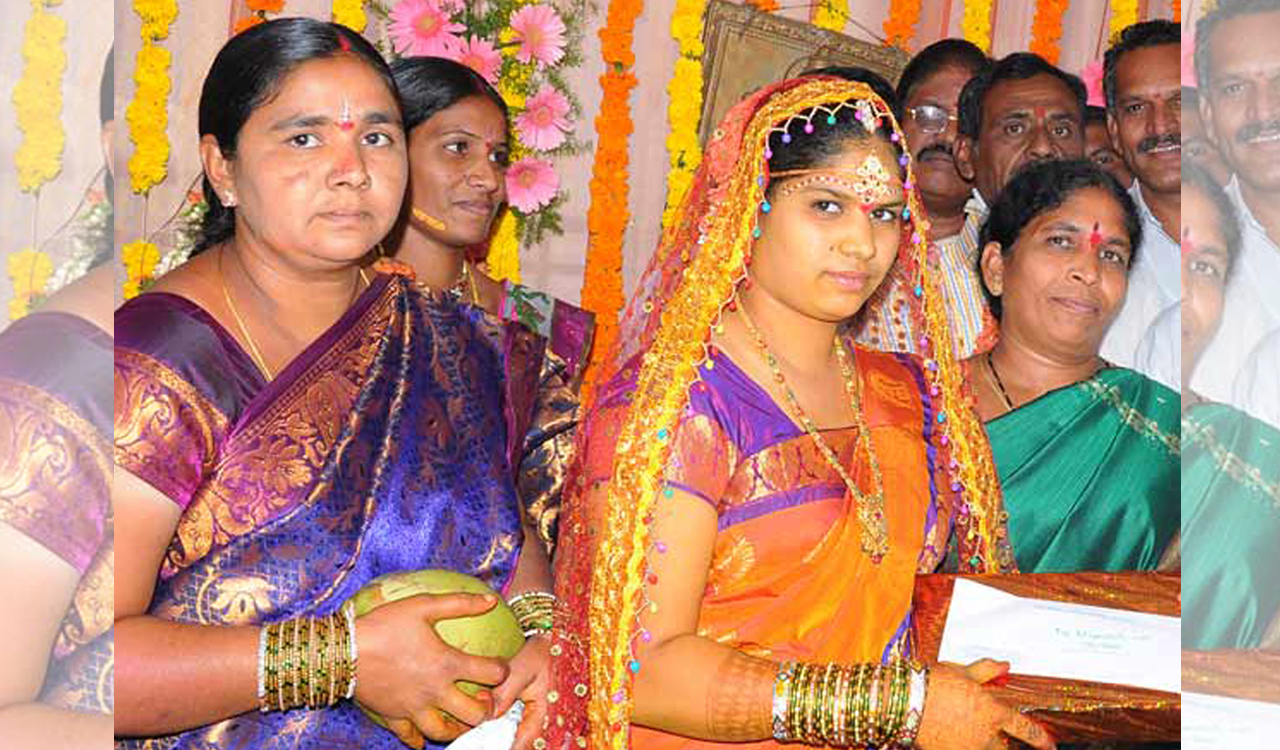
Hyderabad: A decade after its launch, the Kalyana Lakshmi scheme continues to support thousands of families, particularly brides from economically weaker sections. However, delays in application scrutiny and cheque disbursement over the past two years have caused growing concern among beneficiaries.
The Congress government, despite being in power for over two and a half years, is yet to fulfil its electoral promise of providing one tola of gold to each applicant. This has led to mounting questions from women directed towards Ministers and MLAs on different occasions.
The scheme was launched on April 21, 2016, by the Bharat Rashtra Samithi (BRS) government to provide financial assistance to unmarried girls from BC and EBC communities. Currently, beneficiaries receive Rs.1,00,016, while differently-abled applicants are given Rs.1,25,145.
Beyond financial support, the scheme has played a role in reducing child marriages, as eligibility requires the bride to be at least 18 years old. However, concerns have emerged over funding and implementation.
The allocation for the scheme saw a slight dip from Rs.2,179.69 crore in 2025–26 to Rs.2,173 crore in 2026–27. This reduction, despite population growth, has raised questions about the government’s commitment.
Performance figures also reflect a gap between targets and achievements. In 2024–25, against a target of 2,17,247 applications, only 61,332 were processed. In 2025–26, the number was 62,756 against the same target. The government has retained the identical target for 2026–27.
During the recent budget session, a few legislators flagged delays in processing applications. BRS MLA from Narsapur, Sunitha Laxma Reddy, cited instances where beneficiaries received cheques during the first birthday celebrations of their children, highlighting the extent of the backlog.

Related News