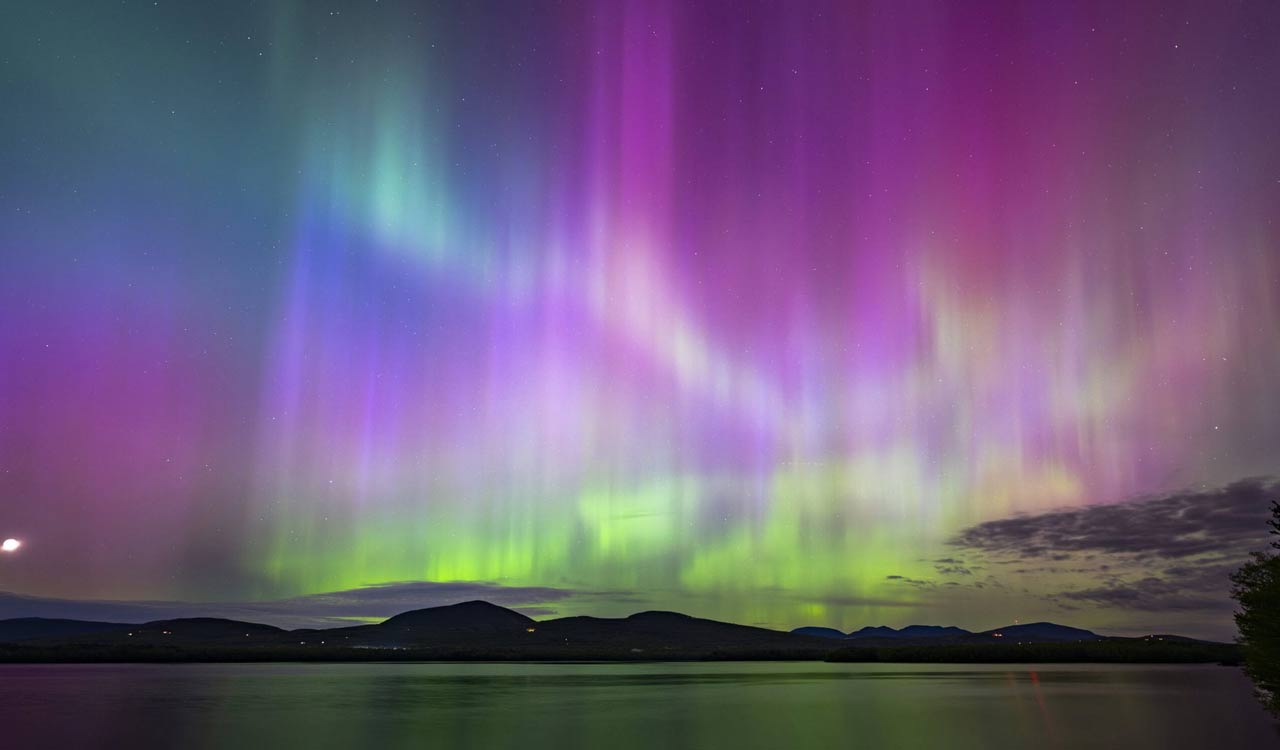
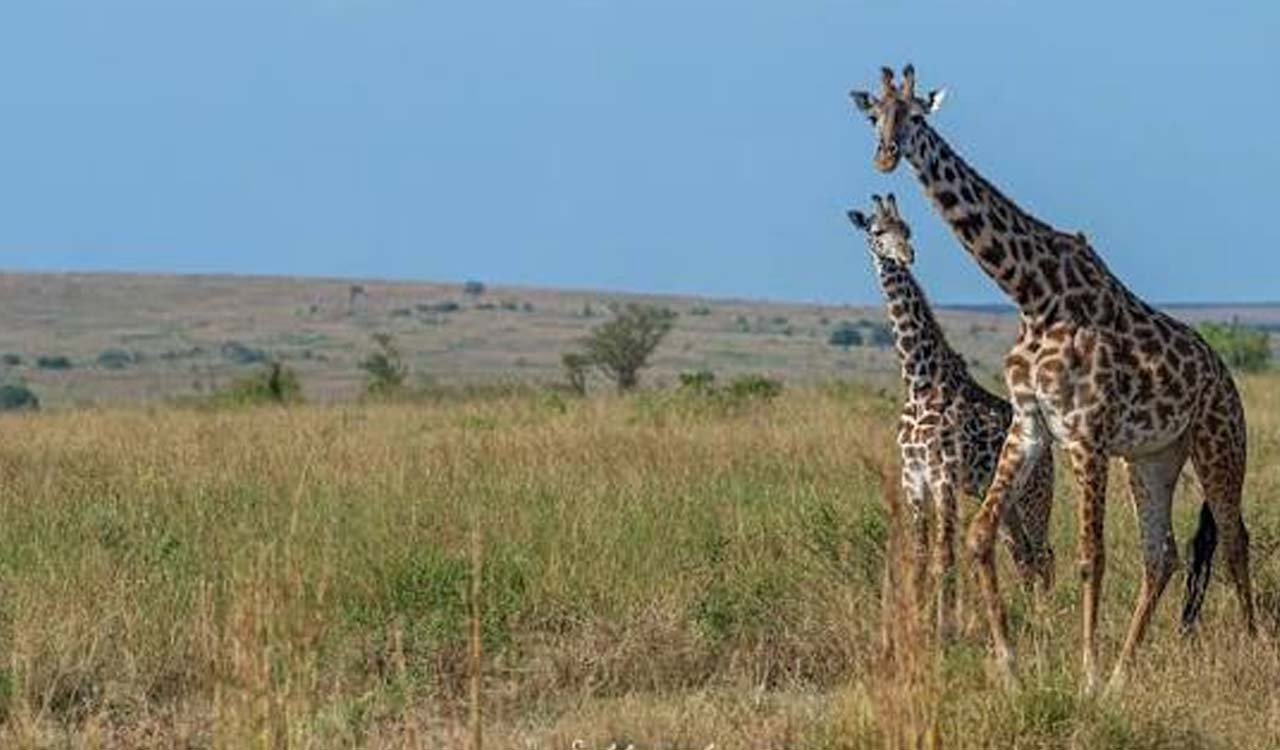
Life on Earth has been painting its own canvas for billions of years
The journey of Earth towards a colourful world began with the evolution of vision, which initially developed to distinguish light from dark over 600 million years ago
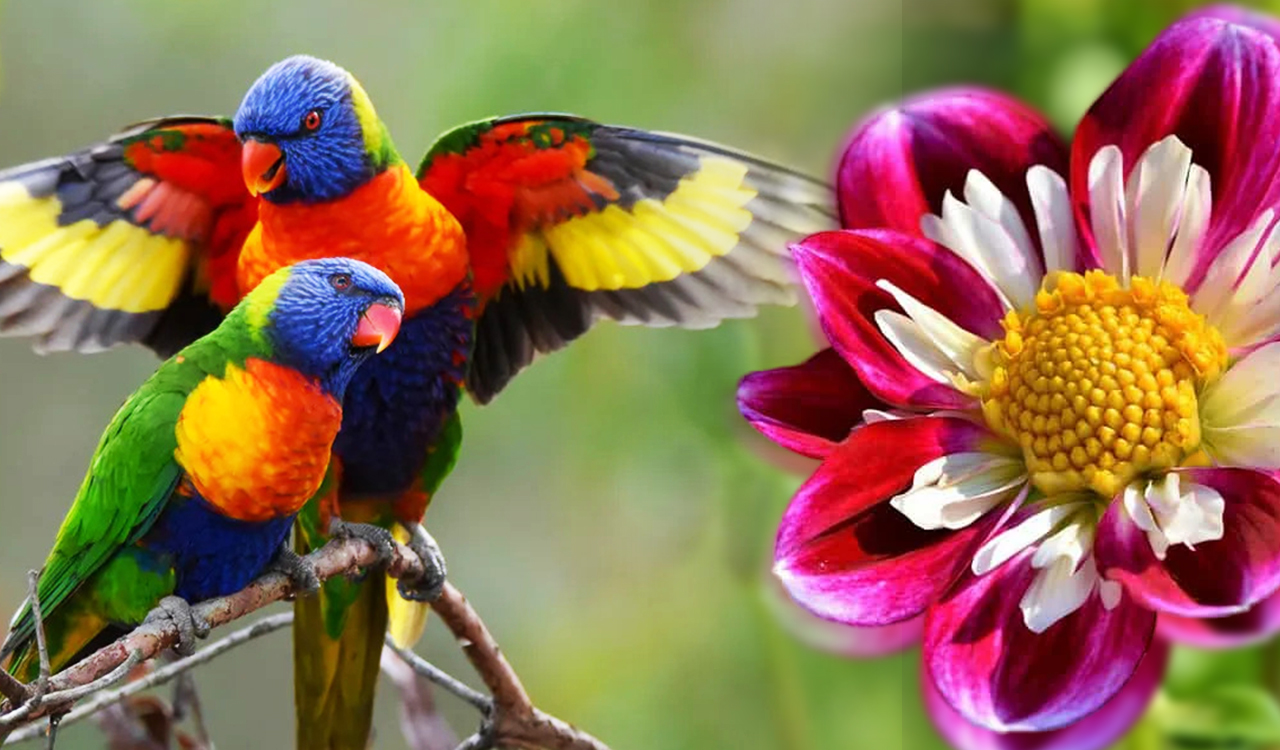


Hyderabad: In the time unknown, the Earth was just a world of muted browns and greens. Gradually, over a period of millions of years, the planet exploded with vivid colours of flowers and feathers. Of course evolution is the primary reason. But how and why did this explosion of colour happen?
According to studies, the journey towards a colourful world began with the evolution of vision, which initially developed to distinguish light from dark over 600 million years ago. This ability probably arose in early organisms, like single-celled bacteria, enabling them to detect changes in their environment, such as the direction of sunlight.
Over time, more sophisticated visual systems evolved and allowed organisms to perceive a broader spectrum of light. For example, trichromatic vision – the ability to detect three distinct wavelengths such as red, green and blue – originated approximately 500-550 million years ago.
This coincided with the “Cambrian explosion” (about 541 million years ago), which marked a rapid diversification of life, including the development of advanced sensory systems like vision.
The first animals with trichromatic vision were arthropods (a group of invertebrates that includes insects, spiders and crustaceans). Trichromatic vision emerged 420-500 million years ago in vertebrates. This adaptation helped ancient animals to navigate their environments and detect predators or prey in ways that monochromatic vision could not.
Trilobites had compound eyes. This means eyes with multiple small lenses, each capturing a fraction of the visual field, which combine to form a mosaic image.
These eyes could detect multiple wavelengths, providing an evolutionary advantage in dim marine environments by enhancing the animal’s visibility and motion detection.
The first burst of conspicuous colour came from plants. Early plants began producing colourful fruits and flowers, such as red, yellow, orange, blue and purple, to attract animals to help plants with seed dispersal and pollination.
The colourful fruits, which appeared roughly 300-377 million years ago, co-evolved with seed-dispersing animals, such as early relatives of mammals.
Flowers and their pollinators emerged later, around 140-250 million years ago. These innovations marked a turning point in Earth’s palette.
The rise of flowering plants (angiosperms) in the Cretaceous period, over 100 million years ago, brought an explosion of colour, as flowers evolved brighter and more vibrant hues than seeds to attract pollinators like bees, butterflies and birds.
Conspicuous colouration in animals emerged less than 140 million years ago. Before, animals were mostly muted browns and greys. This timeline suggests that colour evolution was not inevitable, but was shaped by ecological and evolutionary factors, which could have led to different outcomes under different circumstances.
Vibrant colours often evolved as a kind of signalling to attract mates, deter predators, or establish dominance. Sexual selection probably played a strong role in driving these changes.
Dinosaurs provide some of the most striking evidence of early animal colouration. Fossilised melanosomes (pigment-containing cell structures called organelles) in feathered dinosaurs like Anchiornis reveal a vivid red plumage. These feathers probably served display purposes, signalling fitness to mates or intimidating rivals.
Similarly, the fossilised scales of a green and black ten million-year-old snake fossil suggest early use of colour for signalling or camouflage.
The evolution of colour is not always straightforward. Take poison frogs, for instance. These small amphibians display striking hues of blue, yellow, or red, not to attract mates but to warn predators of their toxicity, a phenomenon known as ‘aposematism.’
So why evolve bright warning signals when camouflage could also deter predators?
In regions where predators learn to associate vibrant colours with toxicity, conspicuous colouration is an effective survival strategy.
Unlike many mammals, which have dichromatic vision and see fewer colours, most primates including humans have trichromatic vision, enabling us to perceive a broader range of hues, including reds.
This probably helped our ancestors locate fruit in forests and likely played a role in social signalling.
We see flowers differently from pollinators like bees, which can detect ultraviolet patterns invisible to us, highlighting how colour is tailored to a species’ ecological needs.
Meanwhile, climate change, habitat loss, and human influence are altering the selective pressures on colouration. For example, some fish species exposed to polluted waters are losing their vibrant colours, as toxins disrupt pigment production in them.

Related News
-

Tenant farmers seek Cultivator Cards as Telangana assesses drought, El Nino impact
-
Earth’s magnetic north pole is shifting rapidly – so what will happen to the northern lights?
-
Explainer: How CO₂ rise is changing savanna grasslands
-
Explainer: How sugar from outer space became one of the backbones of life on Earth