Editorial: Caste census exercise gets tricky
The government’s open-ended approach to recording caste responses could create major challenges in standardising millions of entries, raising concerns over data quality and verification
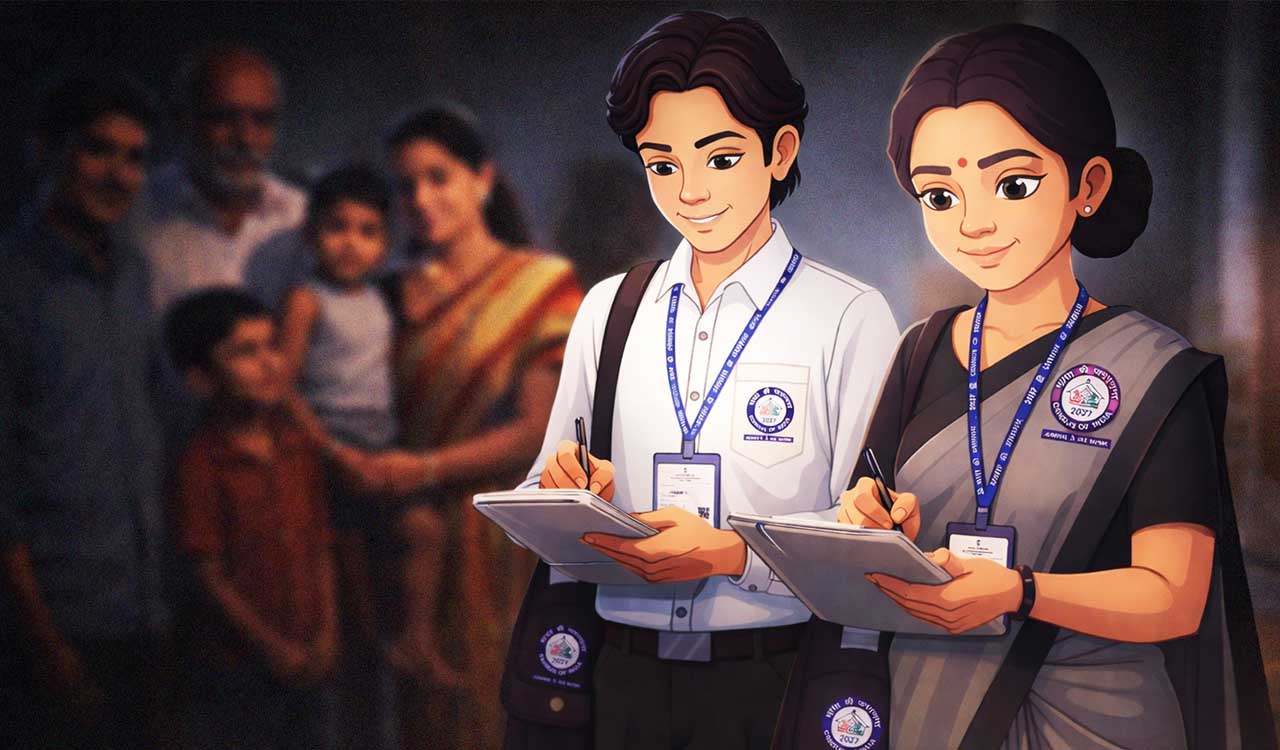


The government’s decision to use an open-ended format for the caste census, to be conducted alongside the population enumeration phase of the Census 2027, is fraught with complex problems. The open-ended format for recording people’s responses to the question of caste, rather than a drop-down menu of castes, poses a tricky challenge: converting millions of individual responses into reliable, standardised caste data without altering what respondents have reported. As per the plan, the enumerators will simply ask people to state their caste and record the answer verbatim, without attempting to classify surnames, sub-castes or other responses into broader caste categories. Population enumeration, along with the caste census, will be conducted across the country in February. This methodology is expected to create massive data processing hurdles, risks generating millions of unverified distinct entries, and leaves the state vulnerable to accusations of arbitrarily standardising or altering raw public responses. Without a restricted list, respondents may report sub-castes, clans, or regional variations verbatim. The open-ended method was exactly how the 2011 Socio-Economic and Caste Census (SECC) was conducted. The exercise failed to produce usable caste data largely because of poor data quality, the absence of a standardised caste registry and flaws in operational design. Since respondents could self-report caste names without verification, the exercise generated an administrative nightmare. The final dataset contained nearly 46.7 lakh distinct caste names, compared with the 4,147 castes recorded in the last comprehensive caste census in 1931. The Centre eventually withheld the raw caste data.
The government’s justification for the open-ended format is that it is the only way to conduct the exercise without the state itself becoming an arbiter of caste identities. Creating a dropdown menu would create a situation in which the state participates in unreliable data, it is argued. When the British first started counting India’s population in 1881, caste data was included in the information gathered. For the next half-century, the decennial censuses collected caste information. After Independence, the government decided to avoid the question of caste in the census, only counting Scheduled Castes and Tribes. How castes will be listed is a thorny political question, given that the Centre and States have differing, and often contentious, OBC lists. Linguistic and regional diversity in caste names, splitting of castes and subcastes over time, and disagreements over whether specific castes fit into SC, OBC, or general categories, are likely to complicate the process. Religion adds another factor to the mix, with questions about how non-Hindu groups will be recognised and whether they will get benefits on the basis of the caste census. Whatever the challenges, counting castes is an essential tool to ensure social justice. However, on a broader note, the caste census should not be allowed to ossify social divisions, but should only be used to better target the benefits of affirmative action.
Also Read

Related News