Mancherial forests to wait for tiger cubs as tigresses are yet to mature
Despite the arrival of at least two male tigers in Mancherial district, forest officials say tiger breeding may take another two years as the two resident tigresses are yet to attain biological maturity, delaying hopes of cubs in the region
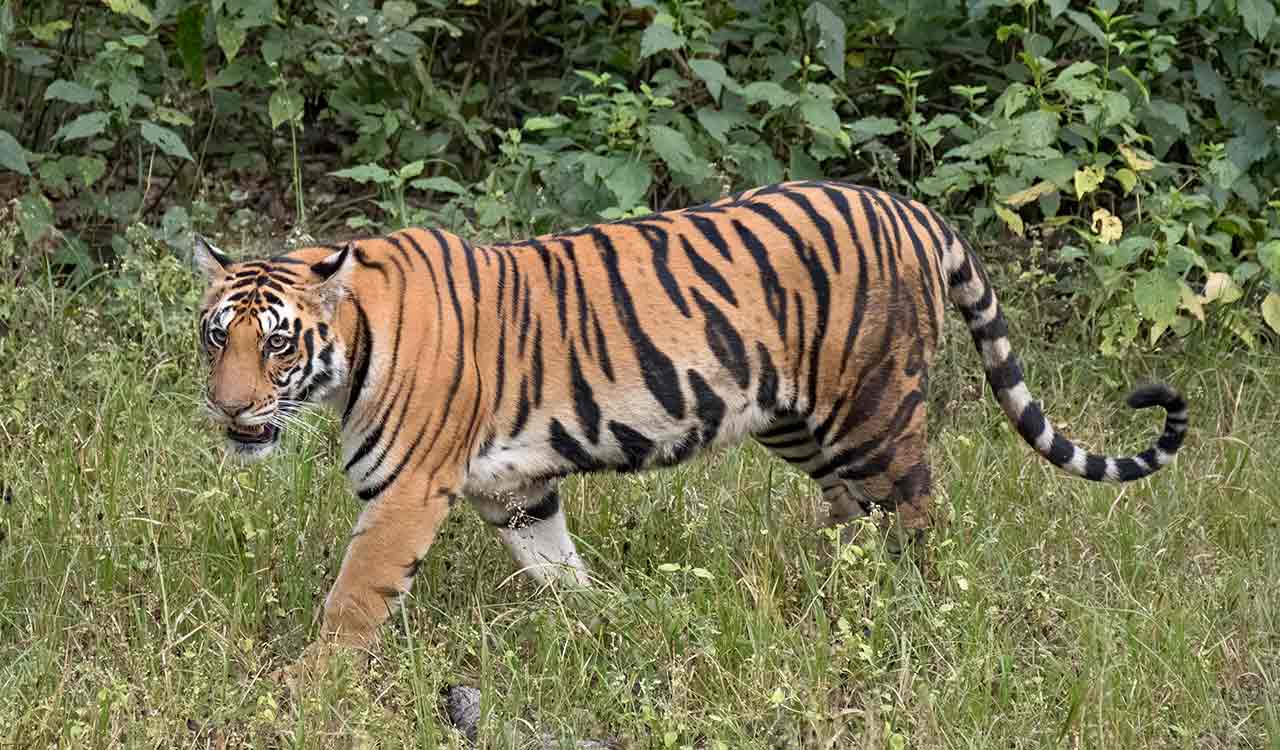


Mancherial: The forests of Mancherial district will have to wait for at least a couple of years for the possibility of seeing their own tiger cubs, as the two resident female tigers are yet to attain breeding maturity.
According to forest officials and environmentalists, at least two male tigers have been roaming the district for over a month. In fact, three male tigers from Maharashtra are believed to have entered the district in search of territory and female partners, trekking nearly 400 km via Kumram Bheem Asifabad district, as winter is considered the breeding season for tigers. Their movement along forest fringes, cotton fields, and near coal mines has triggered panic among villagers.
However, their search for a female mate might have to wait since the two female tigers in the forest are not yet biologically ready to mate. The tigresses, both aged around 20 months, need at least another year to mature physically and biologically.
The two resident tigresses, L1 and T1, also from Maharashtra, have been in the district for about one year and nine months respectively. L1 has settled in the Luxettipet range and hunts wild prey occasionally, while T1 moves between the Tiryani and Muthyampalli ranges and has been involved in frequent cattle kills.
Officials explained that adult tigresses attract males through pheromones, scent marking, raking tree trunks, and urine spraying, signals that the young tigresses have yet to exhibit.
Environmentalists hope the presence of male tigers would result in breeding and an increase in the local tiger population once the tigresses mature. Officials are now focusing on keeping the two tigresses safe from poachers, so that they can continue residing in Mancherial’s forests and, over the years, rear their own families here.

Related News