Mancherial: Villagers urged to verify pugmarks before sharing on social media
Forest officials in Mancherial have advised villagers to correctly identify tiger and leopard pugmarks to avoid panic. With images often shared on social media, officials explained key differences in size, shape and depth, urging verification before posting.

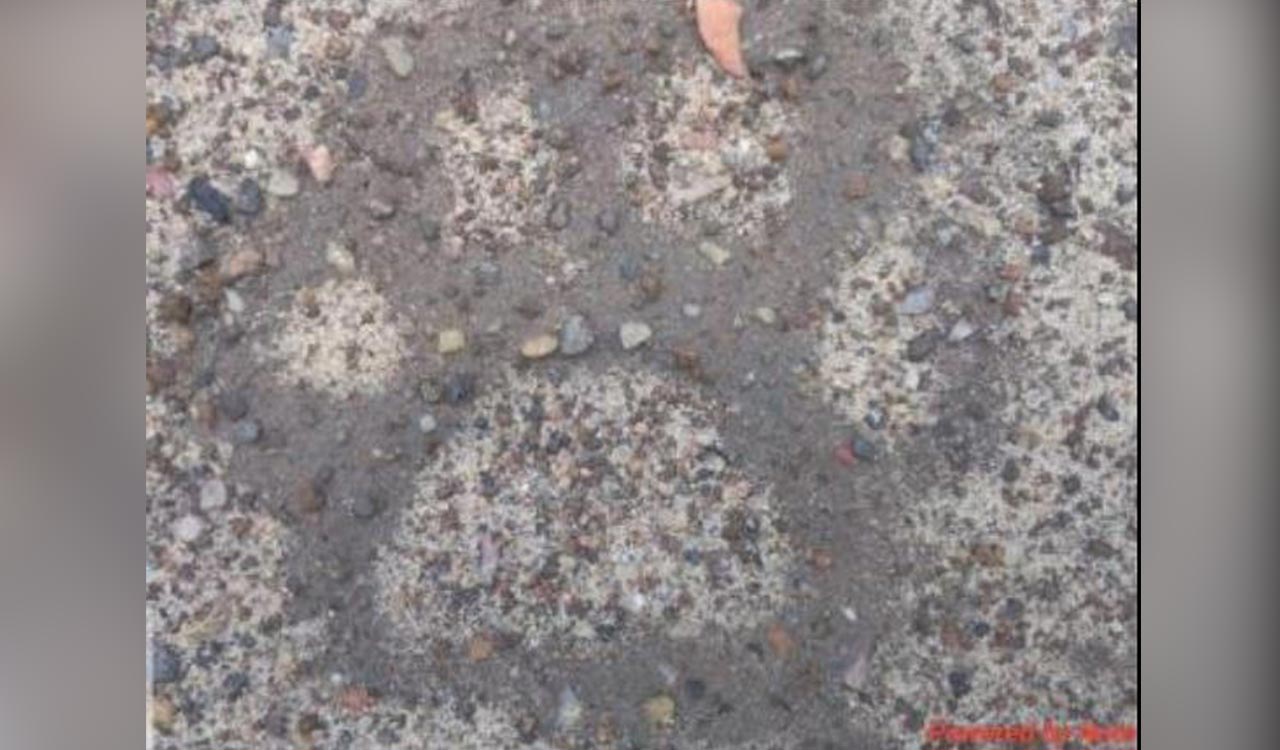


Mancherial: The movement of both resident and migrant tigers in the forests of the district, as well as along the fringes of several villages, has become a routine occurrence. However, many villagers remain unsure about how to distinguish tiger pugmarks from those of leopards, often causing unnecessary alarm.
With smartphones now widespread, residents frequently photograph pugmarks found in agricultural fields and share them on social media. In several instances, images of leopard pugmarks have been circulated as those of tigers, triggering panic among locals. Such posts routinely prompt Forest officials to visit the spot to verify the tracks.
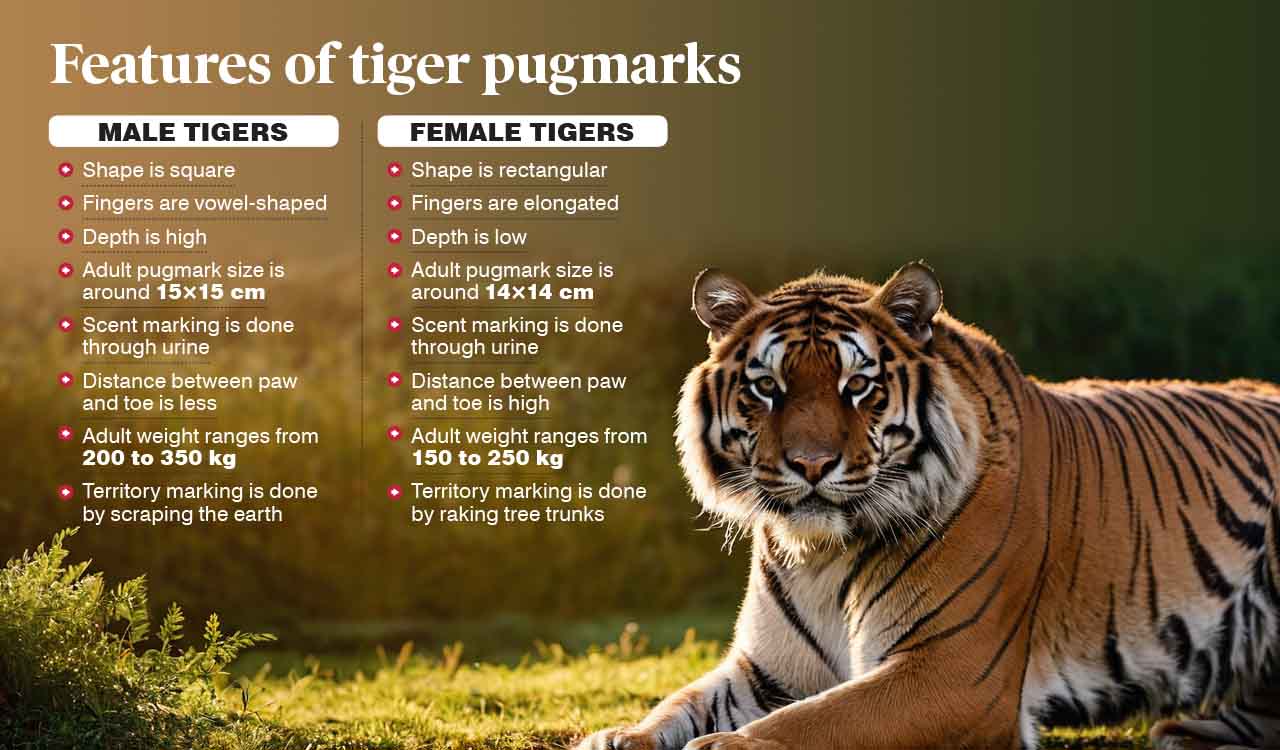
Forest officials specialising in wildlife protection explained that tiger pugmarks display certain distinctive features. The pugmarks of adult male tigers are typically square, while those of females are rectangular. Male tigers have oval-shaped toes, while females have elongated ones. The depth of male pugmarks is greater, and the distance between the pad and the toes is less when compared to those of females. The size of pugmarks of male tigers is also generally larger.
Officials added that adult male tigers weigh between 200 and 350 kilograms, while adult females range from 150 to 250 kilograms. Male tigers mark their territories by scraping the ground, while females rake the trunks of trees. Male tigers release scent while urinating, while females spray urine and scent using their glands.
They further clarified that leopard pugmarks, which are often mistaken for tiger tracks, are smaller in size, shallower, and differ in both shape and depth. Officials urged villagers to verify pugmarks with the Forest Department before posting images on social media to avoid creating unwarranted panic, noting that many do so simply to attract online attention.

Related News