Manipur’s new faultline: Why Kuki–Naga conflict needs a political solution
Peace processes that involve only armed groups while sidelining civil society cannot resolve conflicts driven by identity, land disputes and political exclusion


By Brig Advitya Madan
During my tenure as Deputy Inspector General of the 27 Sector in Churachandpur, Manipur, I had the opportunity to interact closely with both Naga and Kuki communities across the hill districts. Those interactions revealed that the tensions between the two communities are rooted not in isolated incidents but in decades of mistrust, competing territorial claims, political anxieties and the weakening presence of the state in the hills.
Also Read
The recent escalation between Kukis and Nagas is, therefore, not an abrupt development. It is the resurfacing of an unresolved historical faultline.
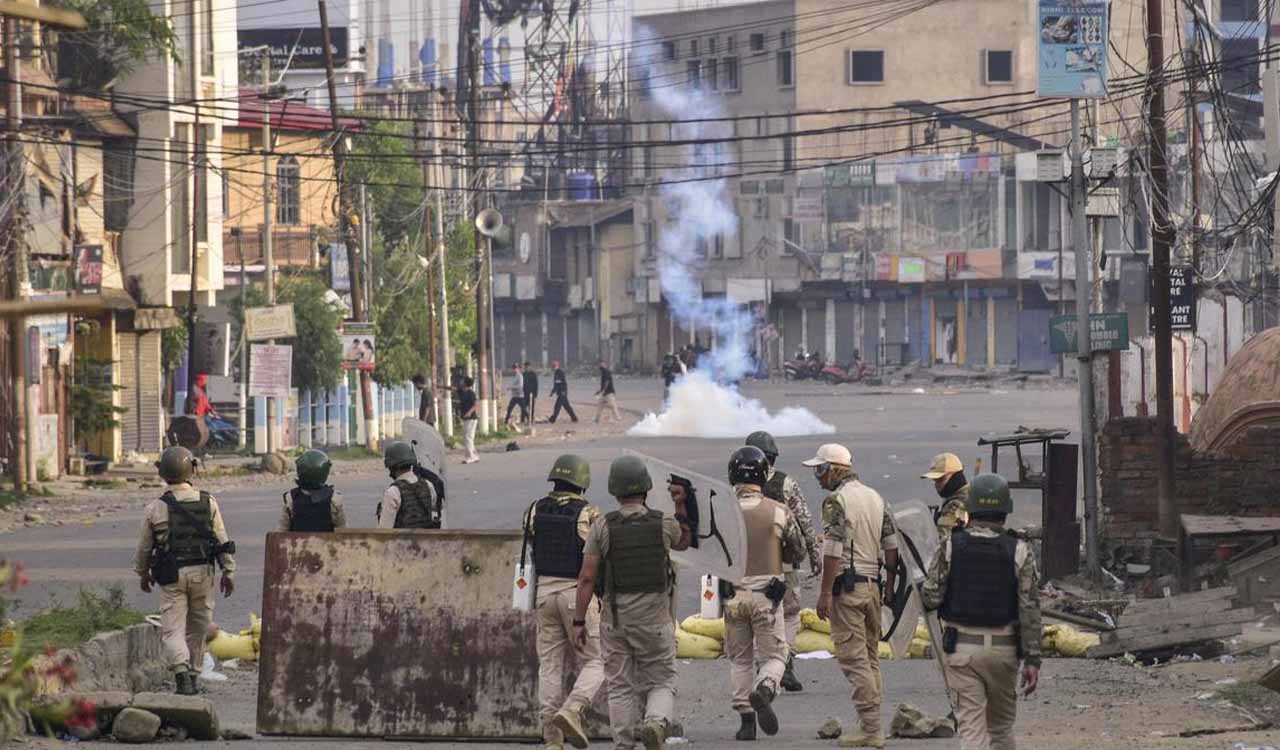
The latest tensions reportedly began in February this year after a local altercation in Litan in Ukhrul district. The situation deteriorated further following the killing of church leaders in Kangpokpi and Noney districts and subsequent retaliatory abductions in Senapati and Kangpokpi. What initially appeared to be localised incidents soon acquired an ethnic dimension.
Significantly, the focus of conflict in Manipur has now shifted from the Meitei–Kuki confrontation to renewed Kuki–Naga hostility.
Roots of the conflict
To understand the present crisis, one must revisit the political history of Manipur’s hills. Nagas constitute roughly a quarter of Manipur’s population and are concentrated in districts such as Ukhrul, Senapati, Tamenglong, Chandel and Tengnoupal. Kukis are spread across Churachandpur, Kangpokpi and several mixed hill districts. The geography is deeply interlocked, with most districts containing both Naga and Kuki villages. This makes territorial assertions highly contentious.
The roots of the conflict go back decades. Violent clashes between Naga and Kuki groups during the 1990s claimed more than a thousand lives and displaced entire villages. Historical grievances from that period continue to shape political mobilisation and community perceptions.
The conflict sharpened with the rise of Naga nationalism and the demand for “Greater Nagalim”, which sought to integrate Naga-inhabited areas of Manipur with Nagaland. Kukis living in these areas viewed the demand as a threat to their security and identity. The emergence of the NSCN(IM) further intensified tensions, with allegations of forced taxation, intimidation and displacement in several hill districts. In response, Kuki groups began demanding a separate administrative arrangement for Kuki-dominated areas.
Issue of Land
At the heart of the conflict lies the issue of land. Nagas view themselves as the traditional custodians of large parts of the hills and often regard Kukis as later settlers. Kukis reject this narrative and point to their own historical presence and sacrifices.
The problem is compounded by overlapping customary claims and the absence of clearly demarcated ownership patterns in many hill areas. In reality, there is rarely any exclusive “Naga land” or “Kuki land”. Villages and tribal settlements have coexisted for generations, often uneasily.
Economic factors have also aggravated tensions. Control over trade and smuggling routes along the India–Myanmar border has altered local power equations. Instability in Myanmar has intensified competition over strategic corridors, while armed groups and vested interests continue to exploit ethnic divisions for influence and territorial control.
Political Crisis
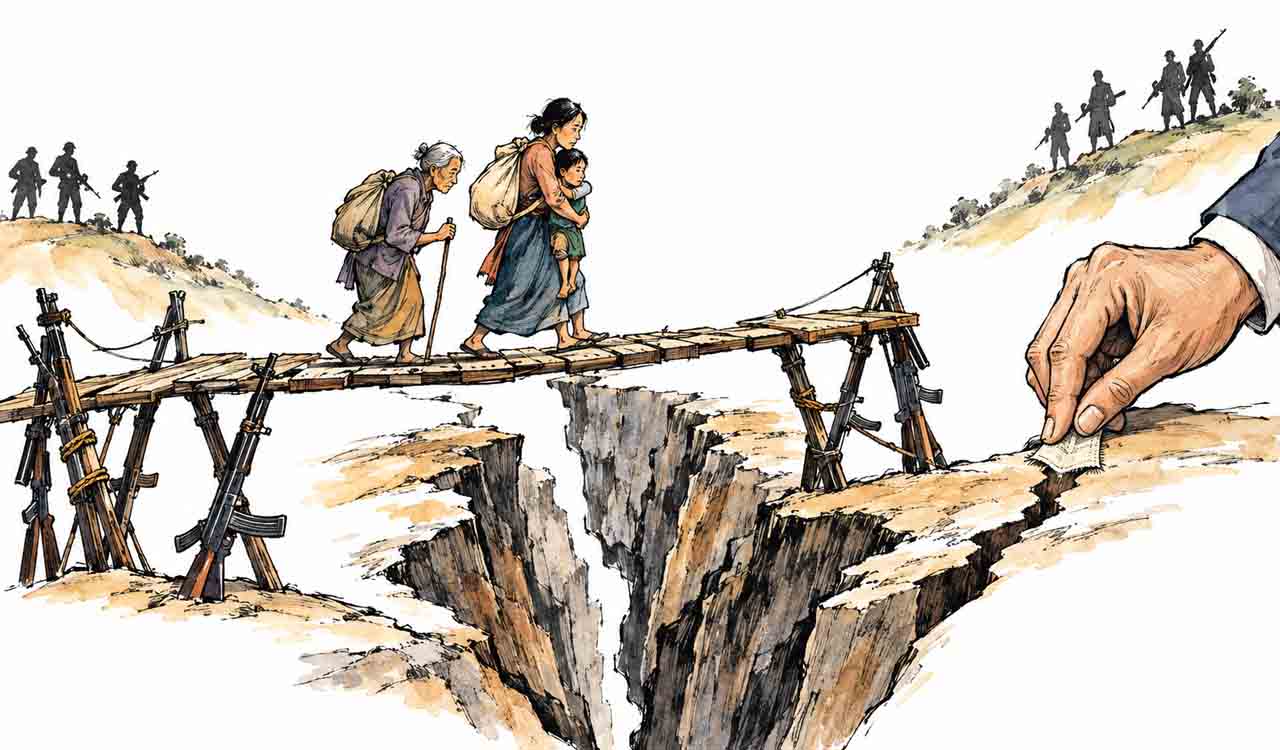
The deeper crisis, however, is political. Manipur today suffers from a collapse of trust between communities and the state. Security deployments can contain violence temporarily, but they cannot resolve conflicts rooted in identity, land and political exclusion.
The Government of India must, therefore, move beyond episodic firefighting. First, there is an urgent need for sustained political dialogue involving Naga, Kuki and Meitei representatives under a credible institutional framework. Peace processes that engage only armed groups while excluding civil society cannot deliver durable solutions.
Second, the development of the hill and border districts must become a national priority. Roads, healthcare, education, digital connectivity, and employment generation are essential not only for welfare but also for reducing dependence on underground networks and illicit economies. In many hill areas, the absence of effective governance has allowed armed groups to fill the vacuum.
Third, the nexus between politics, policing, and militant groups must be addressed with greater resolve. Selective enforcement and informal patronage networks have steadily weakened public confidence in state institutions. A professional and ethnically balanced administrative structure is critical for restoring trust.
Finally, the Centre must address demands for greater local autonomy with sensitivity and constitutional clarity. Administrative decentralisation can improve governance in the hills, but it must not deepen ethnic fragmentation or trigger fresh territorial anxieties.
Manipur’s history demonstrates that ethnic conflicts rarely remain confined to one community or one district. Left unresolved, they spread across generations and harden into permanent hostility.
The present Kuki–Naga tensions are, therefore, not merely another law-and-order challenge. They are a reminder that peace in Manipur will remain fragile unless the Indian state rebuilds trust through political dialogue, equitable governance, and credible state institutions.
(The author commanded 15 Punjab in Lebanon in 2007 and Brigade/Sector in Manipur as DIG in 2013, and was Brigadier Operational Logistics Western Command in 2014)

Related News