Editorial: Grief returns to Manipur
Fresh violence has shattered hopes of stability following the restoration of popular government, deepening despondency in the turbulent north-eastern State
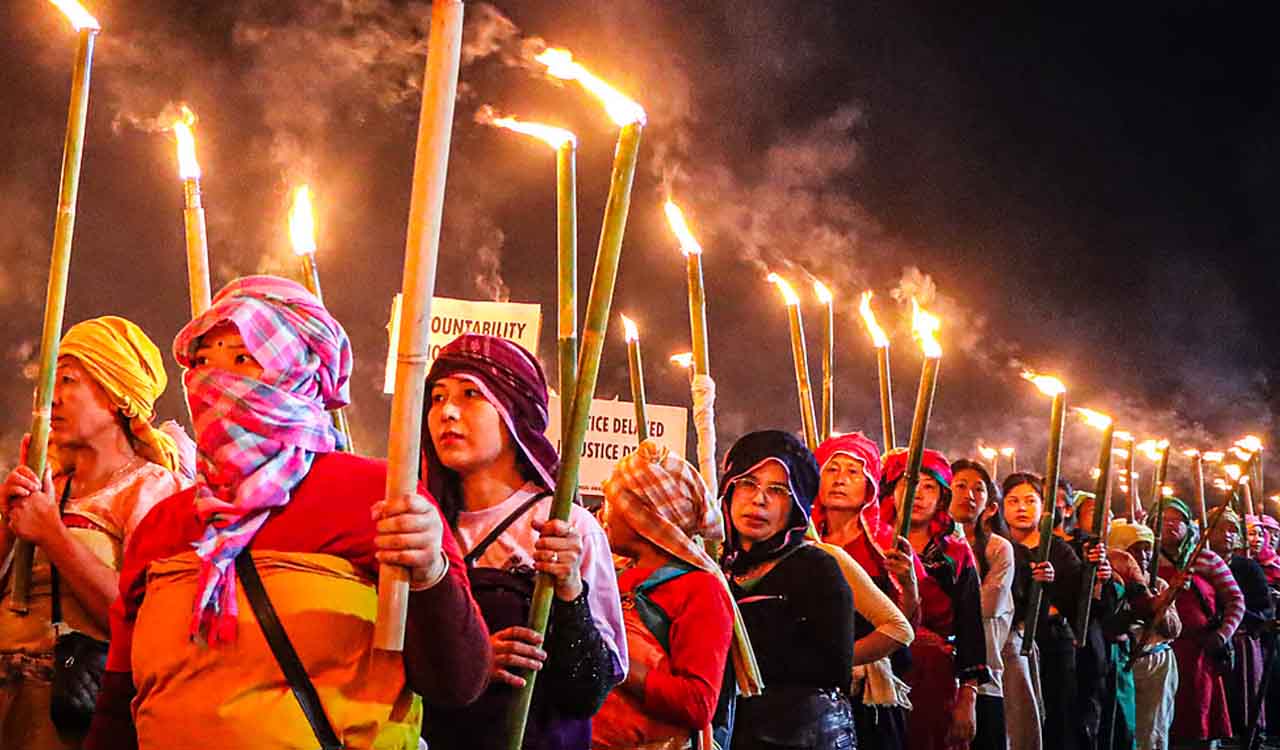


Manipur is again on the boil. A sense of optimism surrounding the restoration of popular government in February this year appears to be fizzling out, giving way to despondency in the turbulent north-eastern State. Fresh violence that led to the killing of five people, including two children, and the continued road blockade by protestors have come as grim reminders of the fragility of efforts to restore peace in the region, which has been rocked by ethnic violence for years. Meitei civil society groups have accused Kuki-Zo insurgent groups of being behind the recent attack that claimed the lives of innocent children in Bishnupur. Three more persons were killed when CRPF personnel opened fire on a mob that tried to loot an armoury. The Bishnupur-Churachandpur road has remained blocked for nearly two weeks, hindering the National Investigation Agency’s (NIA) investigation into the killing of the children. The Naga-dominated Litan area of Ukhrul has witnessed a wave of violence and arson between Nagas and Kukis since February 7, three days after BJP’s Yumnam Khemchand Singh was installed as the new Chief Minister, ending a year-long President’s Rule. Manipur is inhabited by three communities — Meitei, Naga and the Kuki-Zo. More than 250 people have been killed since ethnic violence between Meitei and Kuki-Zo first erupted in the State in May 2023. The cause of the ongoing crisis lies in the demand by the Meitei community, a majority of them Hindus, for Scheduled Tribe status and a strong pushback by Kukis, a majority of them Christians who inhabit the hilly regions.
The ominous developments — spurt in ethnic violence, targeted killings and attacks on residences of legislators and ministers — mark a deepening crisis. Ethnic divides, regional grievances and economic stagnation have contributed to the unrest. Manipur, like most of north-eastern India, is an amalgamation of multiple cultures, faiths and ethnicities, many with a history of mistrust and violence. The NDA government’s past attempts to bring the warring sides to the negotiating table have been unsuccessful. There is a huge disconnect between the Centre and the local people, whose concerns and aspirations remain unaddressed. However, the installation of YK Singh as the 13th chief minister, nearly a year after the much-discredited N Biren Singh resigned from the post, had raised hopes of a possible political resolution. The appointment of two Deputy Chief Ministers — Nemcha Kipgen from the Kuki-Zo community and Losii Dikho from the Naga People’s Front — was clearly aimed at signalling inclusivity and served a symbolic purpose in a State that has witnessed much bloodshed. With ethnic violence raising its ugly head once again, there is a need for a broader engagement to find a political solution. Manipur’s genuine civil society, cutting across ethnic divides, must be encouraged to reverse social polarisation. It is they who should lead the discourse, not armed groups — supported by political elements — on either side.
Also Read

Related News