NEET paper leak: Why India needs Army-supervised exam security
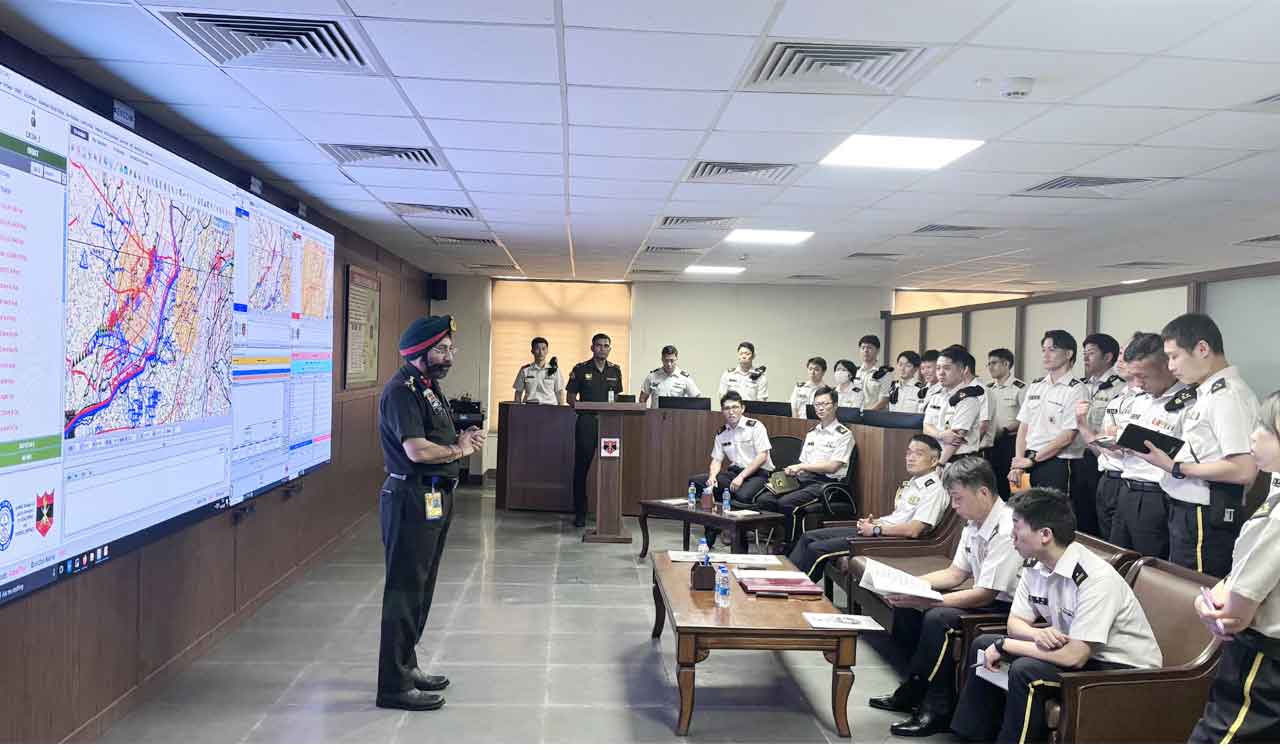
The Armed Forces function with structured command, controlled access, and strict accountability. If these systems can protect critical national operations, can the same discipline be tested to secure India’s examination infrastructure?


By Chada Rekha Rao
How often has the NEET paper been leaked? “No one knows”, is the answer according to many in the coaching industry.
The two brothers arrested in Rajasthan for their involvement in this year’s leak had announced that five children from their family cleared NEET last year and got into the Government Medical College. Does it mean the question paper got leaked last year, too? NEET leaks have been officially acknowledged in 2017, 2024 and now in 2026. In 2019, many candidates used proxies to appear for NEET, after which biometric checks were tightened.
In earlier years, the leaks were ruled to be localised and did not trigger the cancellation of exams. Is the Prime Minister’s Pariksha pe Charcha just a charcha? Just another radio talk, or need to address the real hidden flaws and security threats?
NTA needs Margdarshan
More than students, the National Testing Agency (NTA) needs the Margdarshan. Year after year, India is forced to confront the same disturbing pattern. A national examination is conducted. Allegations of paper leak surface. Investigations begin. Simple people arrested, not sure if they are powerful enough to leak the question paper. Exams are cancelled or re-conducted. Committees are formed. Statements are issued. Reforms are promised. And yet, the cycle repeats.
This is no longer an isolated academic issue. It has become a structural governance failure affecting the credibility of India’s examination ecosystem. The NEET-UG examinations, with participation of over 20 lakh-plus students annually, have repeatedly faced allegations of question paper leaks and organised malpractice networks.
Recruitment examinations and eligibility tests have also been affected in multiple cycles, sometimes leading to cancellations, re-examinations, or court interventions. The pattern is no longer accidental. It is recurring. What is emerging is not simple malpractice inside examination halls, but organised systems involving networks, intermediaries, digital circulation channels, and insider access points.
Serious crisis
The scale itself makes the crisis serious. When examinations involving lakhs of candidates are disrupted, the impact is not limited to students. It affects admissions, academic calendars, counselling schedules, institutional planning, and workforce entry timelines.
The system does not fail quietly. It collapses publicly. At the centre of this crisis is a fragmented structure. Question paper preparation, printing, encryption, storage, transportation, centre allocation, invigilation, and evaluation are handled by multiple layers of administration.
Each layer is a potential vulnerability. When systems are fragmented, even one weak link is enough to compromise the entire chain. Over time, this fragmentation has been exploited. What was once isolated malpractice has evolved into organised networks that understand administrative gaps, human vulnerabilities, and digital pathways. This is why repeated reforms have failed to fully stop the cycle. Because the problem is not only procedural. It is structural.
Even the CBSE Class 12 on-screen evaluation has entered controversy this year. Introduced to improve efficiency and speed, the system has faced concerns regarding screen fatigue, inconsistent evaluation, technical disruptions, and pressure-driven correction timelines. Teachers have raised concerns that prolonged digital evaluation reduces attention span and affects consistency in marking.
One evaluator may assess strictly, another may assess leniently. One may rush under deadline pressure, another may miss key content due to fatigue. Evaluation is not mechanical work. But the system often treats it like that. Technology has improved speed, but has also introduced new forms of inconsistency. This shows that the crisis is not limited to entrance examinations. It extends to evaluation systems as well.
Trust Deficit
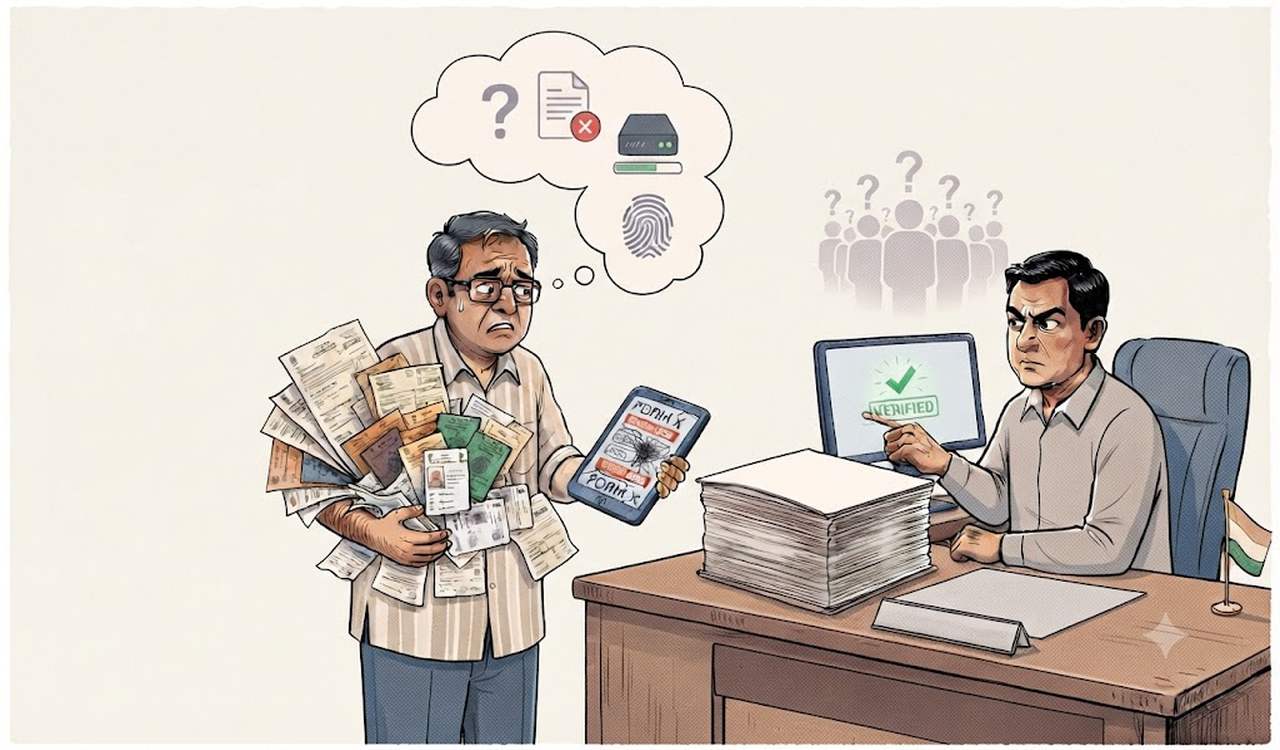
Across the examination ecosystem, one issue remains constant: trust deficit. When a student writes an examination, the assumption is simple — that merit will be rewarded fairly. When that assumption breaks, the entire system loses moral authority. Even when corrective action is taken, the damage to public trust remains. Because the crisis is not only about catching wrongdoing. It is about preventing it.
This raises a serious question: Why does India continue to rely only on administrative systems that repeatedly fail under the pressure of scale and complexity? At this stage, a difficult but necessary idea must be discussed.
Pilot Project
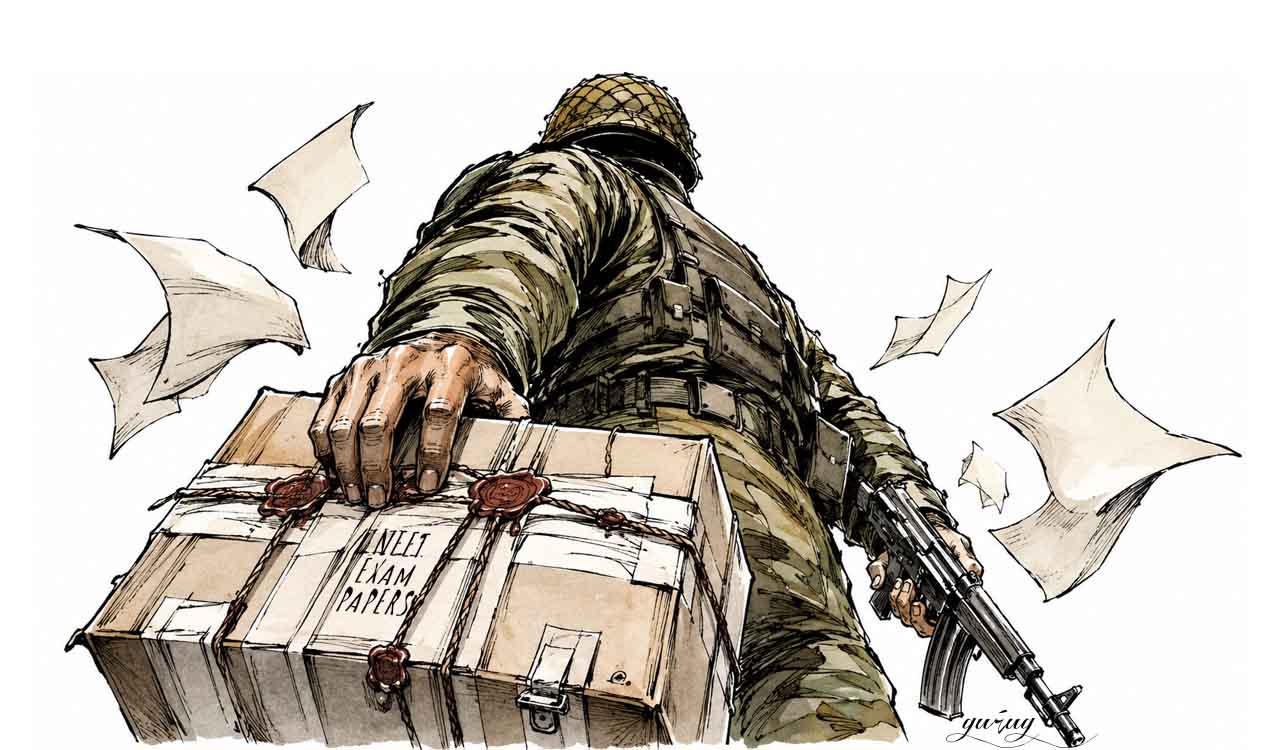
Should India consider a defence-supervised pilot project for examination security management? This is not about the militarisation of education. It is not about removing civilian control over academic systems. Academic functions such as syllabus design, eligibility criteria, counselling, and results must remain with educational bodies. But examination security is different.
Question paper movement, encryption systems, storage protocols, transport security, surveillance, cyber protection, and insider-threat monitoring are operational functions. These are areas where discipline, confidentiality, and chain-of-command systems matter most. India already entrusts the Armed Forces with highly sensitive operational responsibilities during disasters, emergencies, border operations, rescue missions, and national crises.
The Armed Forces function through structured command, controlled access, and strict accountability systems. The argument is simple: if such systems can manage high-risk national operations, can a similar discipline be tested in securing examination infrastructure?
India already conducts multiple structured defence recruitment examinations with relatively strong security frameworks, including NDA, CDS, AFCAT, Agniveer recruitment tests, Indian Navy entrance exams, Technical Entry Scheme, Coast Guard selections, Sainik School entrance systems, and CAPF-related examinations. These examinations involve nationwide coordination, identity verification, strict protocols, and controlled logistics systems.
Compared to several civilian examination systems, defence-linked examinations have generally faced fewer large-scale leak controversies. That contrast is important.
The nature of examination crime has evolved. It is no longer about copying inside a hall. It is about system penetration before the examination even begins. In such a scenario, incremental reforms may not be sufficient. The system requires structural strengthening.
A defence-supervised pilot project could focus only on operational security components such as encrypted question paper systems, compartmentalised printing, real-time logistics tracking, biometric verification, AI-based surveillance, cyber-security monitoring, secure transport chains, and centralised command oversight. Even limited implementation of such systems can significantly reduce vulnerabilities. More importantly, it changes perception.
Weak, fragmented system
Today, leak networks operate because they believe the system is weak, slow, and fragmented. Strong operational discipline changes that belief. Deterrence is not only legal. It is psychological. At the same time, the crisis is not limited to entrance examinations.
CBSE on-screen evaluation systems also highlight structural issues. While digitisation has improved efficiency and speed, it has also introduced concerns about fatigue, inconsistency, pressure-based evaluation, and technical limitations. Evaluation quality depends on human attention. When systems demand high-volume digital correction under strict timelines, fatigue becomes a factor. Fatigue affects judgment. Judgment affects marks. Marks affect futures. This is not a minor administrative issue. It is a fairness issue.
Across both examination and evaluation systems, one reality is clear: the credibility of the system is under pressure. A nation cannot afford to lose trust in its merit system. Because examinations are not just academic exercises. They are gateways into medicine, engineering, administration, teaching, research, and governance. If these gateways are perceived as compromised, the long-term damage extends beyond education into the functioning of institutions themselves.
Critics may argue that involving defence institutions in examination security risks undermining civilian systems. That concern must be acknowledged. But the proposal here is not a permanent transfer of authority. It is a pilot experiment.
A controlled, limited, structured test of whether defence-grade operational discipline can strengthen examination security. If it works, it can be expanded. If it does not, it can be revised. But refusing even to test stronger systems despite repeated failures would be institutional denial.
India protects its borders, infrastructure, and strategic assets with seriousness. Merit deserves similar seriousness. Because the doctors, engineers, scientists, and administrators produced through these examinations will shape the future of the country.
A compromised examination system eventually produces compromised systems everywhere else. That is why examination integrity can no longer be treated as routine administration. It is a question of national credibility. And national credibility must be protected with the highest possible seriousness.

(The author is an academician)

Related News