New cybersecurity tech protects computer networks in vehicles
In collaboration with experts from Virginia Tech, the University of Queensland and Gwangju Institute of Science and Technology, researchers at the US Army Research Laboratory devised a technique called ‘DESOLATOR
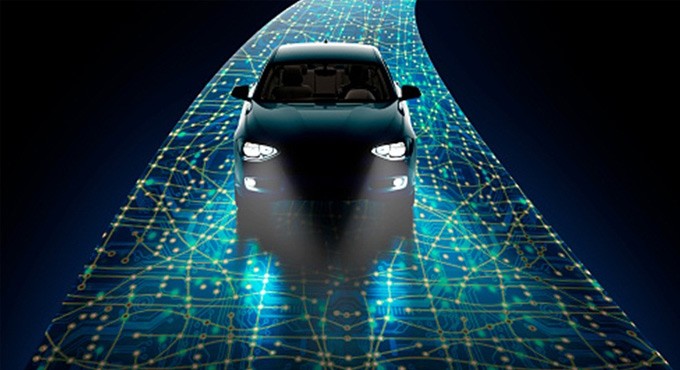


New York: A team of US researchers has developed a new machine learning-based framework to enhance the security of computer networks inside vehicles without undermining performance.
In collaboration with experts from Virginia Tech, the University of Queensland and Gwangju Institute of Science and Technology, researchers at the US Army Research Laboratory devised a technique called ‘DESOLATOR’ to help optimise a well-known cybersecurity strategy known as the moving target defense.
DESOLATOR, which stands for deep reinforcement learning-based resource allocation and moving target defense deployment framework, helps the in-vehicle network identify the optimal IP shuffling frequency and bandwidth allocation to deliver effective, long-term moving target defense.
“The idea is that it’s hard to hit a moving target,” said Dr Terrence Moore, a US Army mathematician.
“If everything is static, the adversary can take their time looking at everything and choosing their targets. But if you shuffle the IP addresses fast enough, then the information assigned to the IP quickly becomes lost, and the adversary has to look for it again,” he explained in a statement.
The research team used deep reinforcement learning to gradually shape the behaviour of the algorithm based on various reward functions, such as exposure time and the number of dropped packets, to ensure that DESOLATOR took both security and efficiency into equal consideration.
“Existing legacy in-vehicle networks are very efficient, but they weren’t really designed with security in mind,” Moore said. “Nowadays, there’s a lot of research out there that looks solely at either enhancing performance or enhancing security. Looking at both performance and security is in itself a little rare, especially for in-vehicle networks.”
In addition, DESOLATOR is not limited to identifying the optimal IP shuffling frequency and bandwidth allocation.
Since this approach exists as a machine learning-based framework, other researchers can modify the technique to pursue different goals within the problem space.
According to Army computer scientist and programme lead Dr Frederica Free-Nelson, this level of fortification of prioritised assets on a network is an integral component for any kind of network protection.
“This ability to retool the technology is very valuable not only for extending the research but also marrying the capability to other cyber capabilities for optimal cybersecurity protection,” Nelson said.

Related News