Opinion: Blurred lines—fake news, disinformation and public perception
From 19th-century moon men to now, deepfakes, misinformation and disinformation threaten critical thinking, public trust, and democracy


By Ramakrushna Baral, Dr Fazlunnisa H, Dr Kabita Baral
Bat-winged men on the moon and alien invasions, two dramatic incidents of fake news and misinformation spread across two centuries in 1835 and 1938, are testimony to the mindless actions that unfold among the consumers of misinformation, disinformation and fake news.
Also Read
Roots of ‘Misinformation’
UNESCO’s Handbook on Journalism defines ‘Fake News’ as fabricated content that mimics news media format but lacks editorial norms and verification. It is often designed to mislead, provoke, or generate clicks, whereas ‘Misinformation’ is false information shared without harmful intent. On the other hand, ‘Disinformation’ is false information shared with the intent to deceive and ‘Malinformation’ is using genuine information maliciously.
In 1835, The Sun profited hugely from the six-part news series that claimed Sir John Herschel, British astronomer and son of Sir William Herschel, who had discovered the planet Uranus, had built a massive telescope at the Cape of Good Hope. British writer Richard Adams Locke, who authored the articles, claimed that Sir John Herschel had built the finest telescope that revealed life on the Moon and bat-like men. There was no formal retraction, and Sir John himself was both amused and annoyed at the use of his name in the biggest fake news scam. The fact that people lapped up the satirical and pseudoscientific article without much thought brings to focus their information-consuming behaviour.
A similar incident occurred in 1938 when newspapers created panic among listeners over the radio dramatisation of HG Wells’ science fiction ‘The War of the Worlds’. These occurrences trace the origins of misinformation that can arise from media sensationalism, ideological agendas, or flawed methodology and why critical thinking and peer review are essential in science.
Knowledge Society
The UN Global Risk Report 2024 and the Global Risk Report of the World Economic Forum 2025 have identified disinformation as one of the top threats to the world at present. According to the ‘Digital 2025: India’ report, more than 806 million people have internet connections, with over 491 million using social media platforms. Without parallel investment in information and media literacy, several factors, such as linguistic and cultural diversity, political polarisation and persistent division in society, make the land a fertile ground for the rise of disinformation.
We live in a knowledge society, which thrives on the critical use of information to generate new ideas for the greater good. Yet studies conducted by the University of Oxford and fact-checking agencies such as Alt News and BOOM have found that India has the highest volume of misinformation shared on social media platforms.
Panic and Polarisation
Mistrust and polarisation are fuelled by such misinformation that is spread to such a large extent. It leads to binary debates and undermines informed decision-making. Most dangerously, it poses a risk to the lives and safety of people. The Cold fusion scandal (1989) involving two chemists, Stanley Pons and Martin Fleischmann, who achieved fusion at room temperature, had the scientific community in a frenzy. It was considered the most remarkable discovery, and all magazines and newspapers covered it, only to be debunked later and find its place among ‘fraud theories’.
This brings us to the consequence of publishing without peer review and questions the hype among information consumers. The creators of misinformation, disinformation and malinformation can only thrive so long as there is a market for such consumption. The medium of information transfer has transformed and is faster today, catering to the needs and demands of information seekers. But are we equipped to consume information with a pinch of critical thinking skills?
Media & AI Collusion
India’s declining position in the Press Freedom Index highlights shrinking space for independent journalism. The pursuit of higher TRPs has driven an increase in hate-mongering debates, manipulative visuals, and selective framing of news stories. Digital-first outlets frequently manipulate internet algorithms to drive traffic, often spreading unverified claims in their quest for virality.
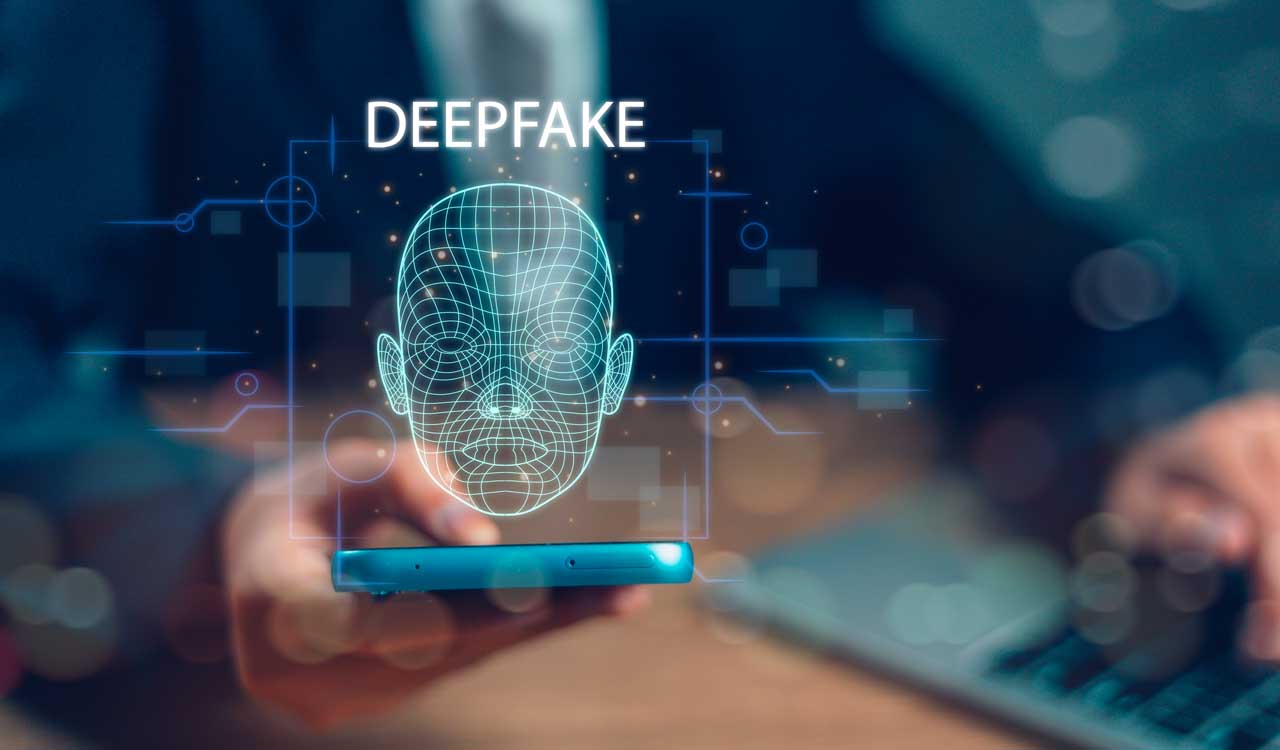
Recently, social media has demonstrated its capacity to turn grievances into political crises. In combating misinformation, Generative AI presents a formidable challenge, creating deepfakes, synthetic voices, and hyper-realistic images that are easy to manipulate and hard to detect. In countries like India, with low digital literacy, AI has rapidly amplified confusion, misleading millions. Every person with a mobile device and internet access is both a consumer and creator of content. Without advancements in regulation and technology safeguards, we risk a flood of misinformation that could drown the truth.
India’s Efforts
Section 353 of BNS 2023 criminalises the dissemination of false claims, rumours, or reports, particularly via electronic channels, when done with the intent to incite public disorder, panic, hostility, or threaten national sovereignty. Section 152 of BNS updates the sedition law under IPC Section 124A, defining offences that threaten India’s sovereignty, unity, and integrity.
The 2021 Intermediary Guidelines & Digital Media Ethics Code Rules, under the IT Act (2000), require platforms to remove unlawful content and trace sources. However, enforcement remains inconsistent, and deception continues. The recent proposal to establish government fact-checking units received criticism from those who viewed it as a potential threat to free speech.
Tackling the Problem
Addressing the negative impacts of misinformation requires a comprehensive strategy, beginning with fundamental skills such as information, media, legal, civic, and political literacy. It involves creating an ecosystem to combat misinformation, disinformation, and fake news through partnerships with government agencies, libraries, and information centres, supported by AI-powered monitoring systems to limit the spread.
Students and young adults should be encouraged not just to passively consume content but to actively create it with critical thinking. Promoting fact-checking, inclusiveness, and transparency in reporting ensures quality journalism. Crucially, people must learn to resist the impulse to immediately share information received on social media without doubt. In a democracy, informed citizens are our best defence against manipulation.
Will people abandon their common sense and fall prey to misinformation’s deception? If misinformation continues to pose as truth, it endangers not only individuals but democracy itself.
(Ramakrushna Baralis is UGC-JRF Research Scholar, and Dr Fazlunnisa H is Assistant Professor, Department of Library and Information Science, University of Madras, Chennai. Dr Kabita Baralis, Assistant Professor, Department of Environmental Studies, Berhampur University, Odisha)

Related News