Opinion: Lives in limbo — Myanmar and Manipur refugees in India’s northeast
As refugees from Myanmar and violence-hit Manipur seek shelter in Mizoram, India confronts a growing humanitarian challenge without a formal protection framework


By Geetartha Pathak
During a recent visit to three relief camps near Sairang, on the outskirts of Aizawl, this writer met members of the Matupi tribe from Myanmar who have been living in Mizoram for nearly four years after fleeing military violence. Around 460 refugees are sheltered in these camps. Men and women narrated how their villages were burnt, how supporters of the pro-democracy movement were hunted down, and how families were forced to escape through forests to survive.
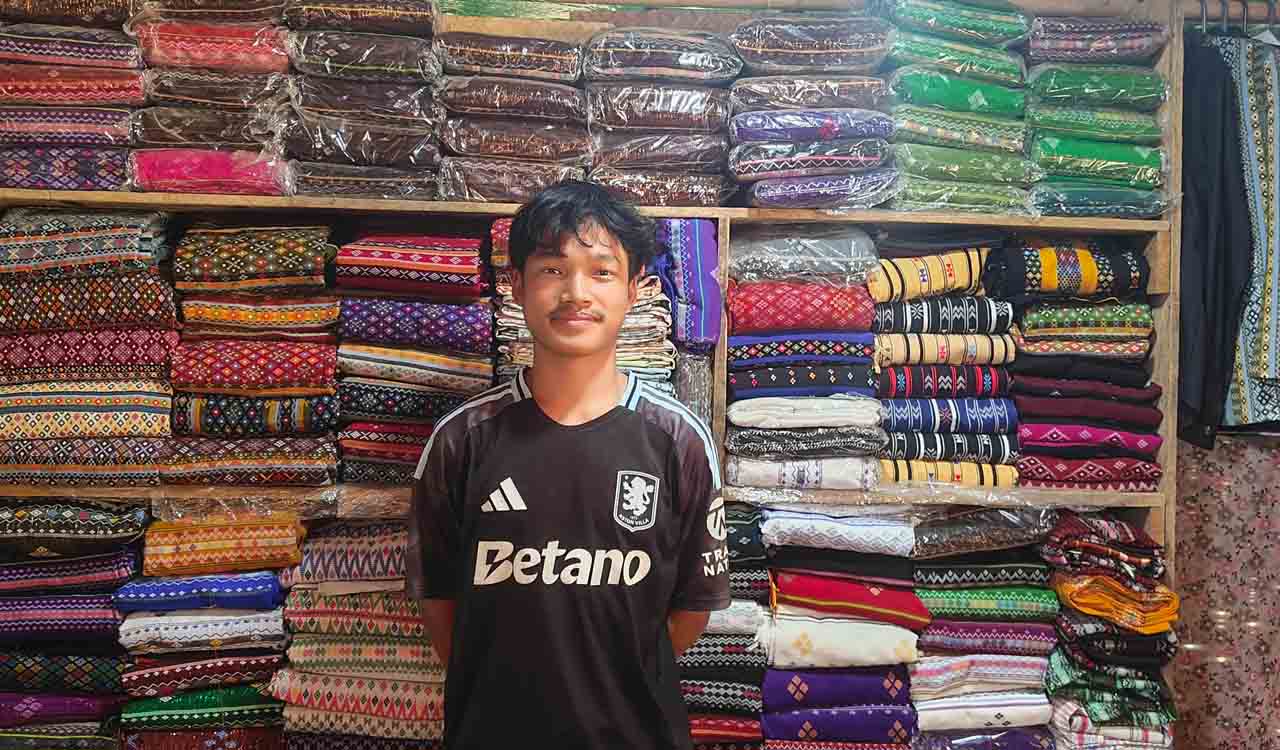
They were categorical that returning home is impossible: many believe they would be arrested or killed by Myanmar’s military junta the moment they cross back. Haanailen, a young inmate in the refugee camp who is studying BCA at North-Eastern Hill University, shared the story of his traumatic ordeal. The young boy supports his family by selling traditional dresses of the ethnic groups in that region online.
Profound Uncertainty
What is visible in these camps is not only material deprivation but also profound uncertainty. Most adults now survive as daily-wage labourers or petty traders, while several children have been enrolled in schools in Mizoram and in other northeastern States through community support. Yet, without any legal refugee status, their future remains fragile, dependent largely on goodwill rather than rights.
This experience reflects a much larger humanitarian crisis unfolding quietly along India’s eastern frontier. Since the military coup in Myanmar in 2021, tens of thousands of civilians— mainly from Chin, Kuki-Zo and allied ethnic communities — have crossed into Mizoram. Relief camps have been established in multiple districts, while many refugees reside with relatives or in rented accommodations.
Alongside them are Kuki-Zo families displaced from Manipur, who fled ethnic violence and found shelter in Mizoram, often in the same localities as Myanmar refugees. What binds these displaced groups is not only shared suffering but also shared ethnicity, language, faith and kinship ties with the host population.
Roots of the Crisis
The response of Mizo society and the State government has been deeply humanitarian. Churches, village councils, civil society organisations and government departments have together ensured access to food, shelter, basic healthcare and schooling. In a region with limited economic resources, this solidarity is remarkable. But compassion alone cannot substitute for long-term policy, especially when displacement is prolonged, and political solutions remain distant.
The roots of this crisis lie not merely in contemporary conflicts but in colonial history. The British drew borders that cut across traditional homelands of Naga, Kuki, Chin and Zo communities, splitting families and clans between what later became India and Myanmar. For generations, movement across these hills has remained fluid, regulated by customary practices rather than passports. The border existed on maps, not in social reality.
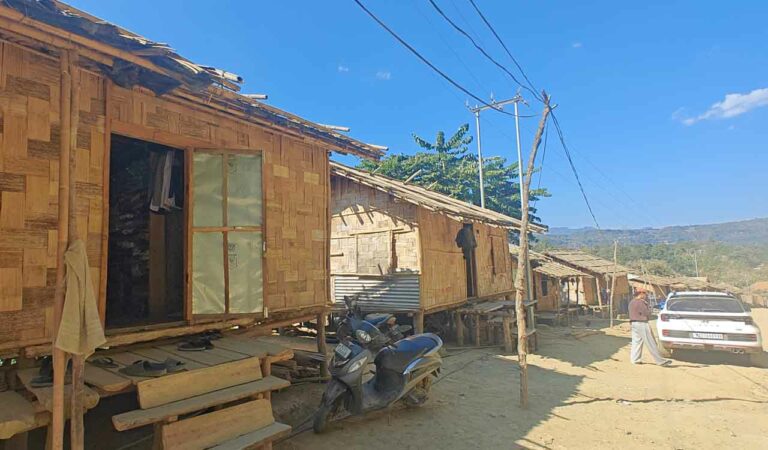
Refugee camps near Sairang, Mizoram. Photos: Geetartha Pathak
It is against this historical backdrop that the Union government’s decision to fence the India–Myanmar border has generated deep unease among borderland communities. For many Zo and Naga groups, fencing is seen not only as a security measure but as a political act that further entrenches colonial-era divisions. Community leaders argue that fencing threatens livelihoods, disrupts kinship networks and undermines long-standing cultural continuity. For refugees escaping persecution, such barriers risk converting a humanitarian corridor into a closed gate.
Security Liabilities
The Centre’s concerns are not without basis. The porous border has long been associated with insurgent movement, arms trafficking and drug trade, and the instability in Myanmar has intensified these risks. Yet, security-first approaches that ignore humanitarian realities risk deepening alienation in already sensitive border regions. When communities that have historically acted as cultural bridges are treated primarily as security liabilities, trust erodes rapidly.
Without structured legal protection, calibrated border management and sustained regional diplomacy, thousands will remain suspended between uncertainty and survival — while border States continue to shoulder responsibilities that belong to the Union government
For Myanmar refugees, the absence of a formal refugee protection framework in India compounds their vulnerability. India is not a signatory to the 1951 Refugee Convention, and refugees are largely governed by the Foreigners Act, which was never designed for mass humanitarian displacement. This leaves thousands in legal limbo — unable to work formally, access higher education, or travel safely, and constantly fearful of detention or deportation.
Ethnic Ties
The situation of displaced Kuki-Zo families from Manipur adds another layer of complexity. Their displacement is internal, yet their ethnic ties link them closely to Myanmar refugees, blurring distinctions between domestic and cross-border humanitarian obligations. Prolonged ethnic segregation and lack of political reconciliation in Manipur suggest that early return is unlikely for many families, increasing pressure on host States like Mizoram.
The long-term risks are evident. Protracted displacement without legal recognition creates conditions for inter-generational poverty, loss of education, informal labour exploitation and social marginalisation. Children growing up in camps risk becoming a “lost generation”, disconnected from both homeland and host country. Host communities, meanwhile, face economic strain and rising social anxieties, which can eventually weaken even strong traditions of solidarity.
Lasting Solutions
What, then, is the way forward? First, India urgently needs a humanitarian protection framework for refugees, even if not full-fledged asylum legislation. Temporary protection status, work permits, and access to public services would allow refugees to live with dignity and contribute economically instead of surviving on charity.
Second, education must be prioritised. Schooling, vocational training and language education are essential not only for refugee children but also for adults seeking stable livelihoods. Investment in education is the most effective long-term stabiliser in refugee situations.
Third, border management must incorporate community participation. Security concerns cannot be ignored, but they must be balanced with social realities. Instead of blanket fencing, mechanisms that allow regulated cross-border movement for families and traditional trade could preserve social ties while addressing security needs.
Fourth, India must play a more active diplomatic role in regional conflict resolution. Lasting solutions for refugees depend on political change in Myanmar and reconciliation in Manipur. India, as a major regional power with strategic interests in Southeast Asia, cannot afford to remain a passive humanitarian host while avoiding political engagement.
Finally, support to host States like Mizoram must be institutional and sustained, not ad hoc. Financial assistance, healthcare infrastructure and livelihood programmes should be expanded so that humanitarian responsibility does not fall disproportionately on economically modest border States.
The scenes from the Sairang camps are reminders that geopolitical crises ultimately translate into human suffering at society’s margins. People who once lived normal rural lives now survive in makeshift shelters, uncertain whether they will ever return home or be allowed to build a future where they are.
Mizoram’s response demonstrates how empathy and shared identity can uphold humanitarian values even in difficult times. But moral commitment alone cannot resolve structural displacement. Without national-level policy reform and regional diplomatic engagement, refugees will remain suspended between borders and bureaucracies, while host communities shoulder a burden that rightly belongs to the State.
The question is no longer whether India should help, but how it chooses to shape a humane, realistic and durable response to displacement in its eastern frontier — one that recognises history, protects human dignity, and does not sacrifice social cohesion at the altar of narrow security thinking.
(The author is a senior journalist from Assam)

Related News
-

Opinion: The new Tollywood-Telangana directors are rewriting Telugu cinema
-
Opinion: Singareni at a crossroads—beneath the coal, a crisis of accountability
-
Opinion: India’s Urban Challenge Fund—bankable isn’t the same as vulnerable
-
Manipur lost Rs 1,200 crore in GST revenue amid ethnic unrest, says CM