Opinion: Climate justice to social justice
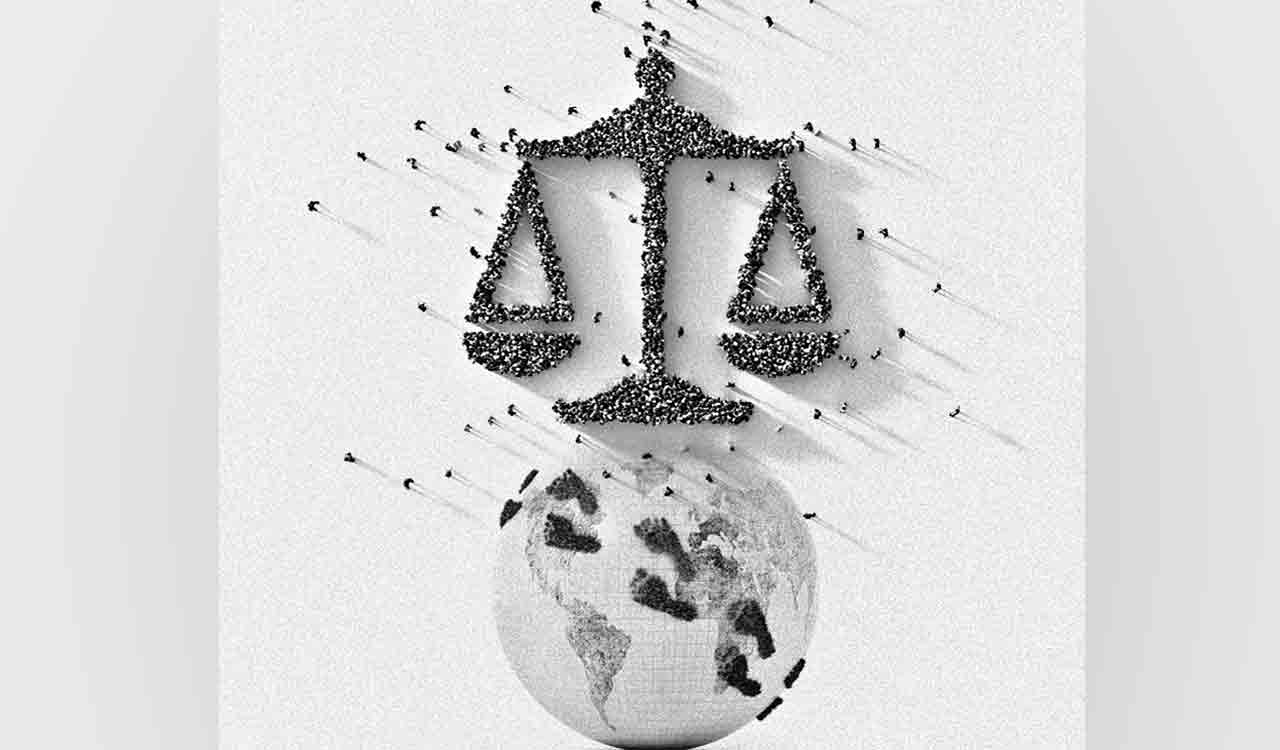
Addressing social and economic inequities will help mitigate the effects of climate change and achieve climate justice


By Dr Sonal Mobar Roy
India is one of the largest emitters of carbon dioxide in the world, ranking third behind China and the United States. The country’s high population and rapid economic growth in recent years have contributed to its significant carbon emissions. According to the Global Carbon Project, India’s carbon dioxide emissions were estimated to be around 2.6 billion tonnes in 2019, accounting for approximately 7% of global carbon emissions. Major sources of carbon emissions in India are energy production, transportation and industrial activities.
Also Read
However, energy efficiency initiatives have been hindered by the country’s continued reliance on coal and other fossil fuels, as well as challenges related to infrastructure and financing. Per capita carbon dioxide emissions in India have soared in recent decades, from 0.39 tonnes in 1970 to a high of 1.9 tonnes in 2021.
Voiceless Sections
Climate justice refers to the fair and equitable distribution of the benefits and burdens of climate change and its impacts among individuals and communities, particularly those who have contributed the least to the problem. Here, the ‘least’ would insinuate the most marginalised, deprived, underprivileged, vulnerable and voiceless sections of society who have limited or no access to resources that would actually lead to carbon emission. It acknowledges that some communities are disproportionately affected by the causes and effects of climate change.
It is well-documented that developing countries are disproportionately affected by natural disasters, both in terms of the number of people affected and the severity of the impact. Ninety-one per cent of the 7,348 disaster-related deaths that took place around the world between 2000 and 2019 occurred in developing nations, according to the United Nations Office for Disaster Risk Reduction. In addition, the majority of the people affected by natural disasters such as floods, droughts, hurricanes, tsunamis and earthquakes are from low- and middle-income countries.
It is crucial to remember that natural catastrophes can have far-reaching and protracted repercussions in addition to the immediate loss of life, such as infrastructure destruction, population displacement, loss of livelihood and economic disruption leading to significant social and economic consequences.
Direct Connection
Due to the fact that not everyone is equally impacted by climate change, there is a direct connection between climate justice and social justice. Communities that are vulnerable and marginalised are disproportionately affected by climate change and have the least ability to adapt to its effects. In addition to being more vulnerable to catastrophic weather events, disease outbreaks and displacement, these populations might not have access to resources like food, water, shelter and medical aid.
So, addressing underlying social and economic inequities is necessary to mitigate the effects of climate change and achieve climate justice. This entails addressing problems like poverty, prejudice and unequal access to opportunities and resources.
Global inequality has increased pervasively and the gap between developed and developing nations has increased incrementally. Luxembourg, with a population of 6,34,000, is the richest country in ranking with a per capita GDP of nearly $1,30,000 while Burundi is believed to have a GDP per capita of just $308 – thus explaining evidentially the discrepancy that exists across the globe. Global rating firm Moody’s Investors Services raised India’s growth projection to 5.5 per cent in 2023, from the earlier 4.8 per cent in November 2022, and to 6.5 per cent in 2024, projecting India’s growth rate in 2023 to be the highest among G20 countries. However, this does not help us evade the larger question of Justice.
Intersectionality Crucial
Intersectionality helps us look at how multiple forms of social identity can combine to shape a person’s experience. As global inequalities have increased so have the injustices that follow. Gender, social status, economic status, social class and indigeneity overlap these traits. The impacts of climate change may make certain oppressions more susceptible. Tribals, migrant labours and seasonal farmers – all have to face the brunt of climate change. From a gendered lens, women may have to bear the brunt even harder. That is why intersectionality is so crucial.
We need a climate movement that includes and incorporates the voices of the people facing the adverse effects of climate change. Given the disparities – social, economic and demographical – it is pertinent to say that reaching the SDGs for some nations may be a challenge in itself. India is particularly vulnerable to the impacts of climate change due to its high population density, accelerating poverty rates and heavy dependence on agriculture and natural resources.
One of the most significant impacts of climate change in India is on agriculture, which employs a large percentage of the population and is critical to the country’s food security. Rising temperatures, changes in rainfall patterns, more frequent extreme weather and heat waves, etc are all affecting crop yields and food production. Significant economic and social repercussions may emerge from this, particularly for small-scale farmers who are more susceptible to these changes. Changes in rainfall patterns are leading to increased water scarcity in many parts of the country, especially in areas that are already water-stressed, leading to conflicts over water resources. This in, turn, affects the shifting populations such as migrants, shepherds and the like who change bases for livelihoods and better economic opportunities.
Role of Policymakers
In response to these issues, the Indian government has put in place a number of laws and programmes that increase the use of renewable energy, boost energy efficiency and encourage sustainable agricultural and water management techniques, and promote climate resilience. This can also be achieved by bringing solidarity across diverse groups by suggesting less and controlled consumption of resources, following the Reduce-Reuse-Recycle model, leaving a smaller carbon footprint and making a map of de-growth. However, protecting and safeguarding the livelihoods of the marginalised should be a priority. Campaigning, capacity-building and crowd mobilisation are some of the ways through which both climate justice and social justice can be achieved.
Turning voices into action in a fair manner for all sections of society is the challenge facing policymakers. Critical decisions need to be made within a short span to forgo climate change consequences that could be devastating. If we aspire to raise our rank in the Happiness Index, we must take heed that Justice is equally important and related to it. For millennials and Gen Z, it is highly important that adequate measures be taken to stop climate change and seek social justice without further ado. So, the next time one gives in to the perceived obsolescence, one may reflect if they are adding to the burden of injustice. (Views are personal)

Related News