Opinion: Counting the uncounted—why India’s migration survey matters
The new migration survey must do more than count people on the move; it must become a foundation for policy reform


By Anuradha P S
The first dedicated comprehensive migration survey in India in nearly two decades is a chance to gain insight into a segment of the workforce that is key to the economy but has largely been ignored in policymaking. The migrant workforce became visible when India went under lockdown during the Covid-19 outbreak in March 2020.
Pictures of labourers walking hundreds of kilometres to reach their villages had a profound impact on policymakers. The crisis not only exposed their vulnerability; it also showed a clear opportunity to build our knowledge of those who make modern India tick.
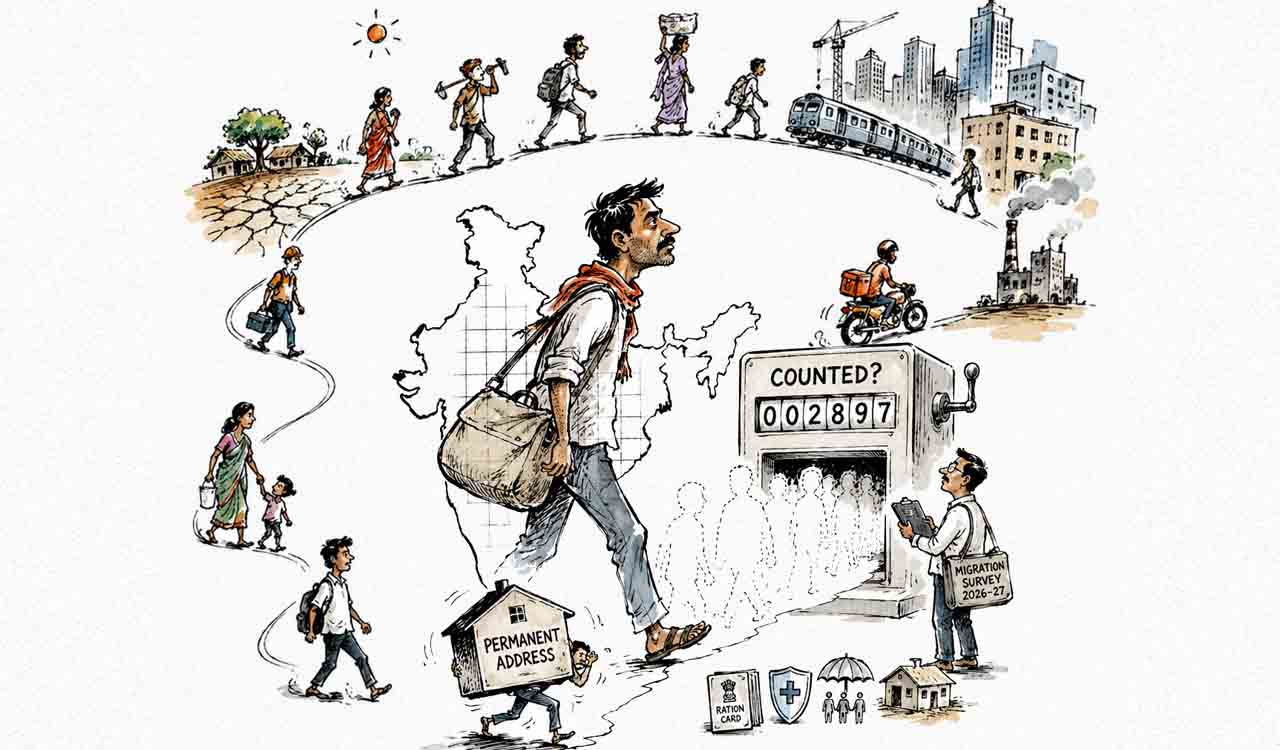
The issue is not just about migrants being uncounted. The assumption that people live, work, access welfare, and build their lives in one place continues to shape public policy today. However, more and more Indians are moving between districts, States and cities to find work, pursue education and seek opportunities. While mobility is emerging as a key part of India’s development narrative, policies based on permanence are lagging behind.
Therefore, the government’s decision to carry out a nationwide Migration Survey from July 2026 to June 2027 by the National Statistics Office (NSO) is important. It will provide the most comprehensive migration survey in almost 18 years, after the National Sample Survey’s special migration round in 2007-08. Rapidly evolving labour markets, urbanisation trends and economic aspirations make this an important time to understand one of the most critical but under-researched aspects of modern-day India.
Scale And Patterns
India’s migration is far greater than what is realised. According to Census 2011, nearly 38 per cent of India’s population consisted of migrants, with 45.6 crore counted in 2011 compared with 31.5 crore in 2001. The growth of about 45 per cent was significantly higher than the overall population growth of about 18 per cent over the decade, highlighting mobility as a key aspect of economic change.
The Economic Survey 2017 also estimated that almost nine million people move between States annually, making labour mobility one of the most significant demographic changes in India.
The Periodic Labour Force Survey (PLFS) 2020-21 showed that almost 28.9 per cent of Indians were migrants. The migration rates were 47.9 per cent among women and 10.7 per cent among men.
The survey’s success will depend not on the data collected, but on whether institutions and welfare systems become portable, inclusive and responsive to the workers who keep India’s economy moving
The main motivation for women migrants is marriage and for men, it is work, but these answers do not necessarily tell the whole story. Women who migrate after marriage are often involved in the labour force, informal labour and care work, but their economic role is rarely included in the official discourse.
Although people often think of migration as movement across State borders, the vast majority of migration takes place within States. Over 80% of migrants are estimated to move within their States, highlighting the significance of intra-State movement between villages, towns and emerging urban centres. Migration and labour force patterns are undergoing seasonal, circular and temporary shifts, which are poorly represented in existing data sources.
Counting Matters
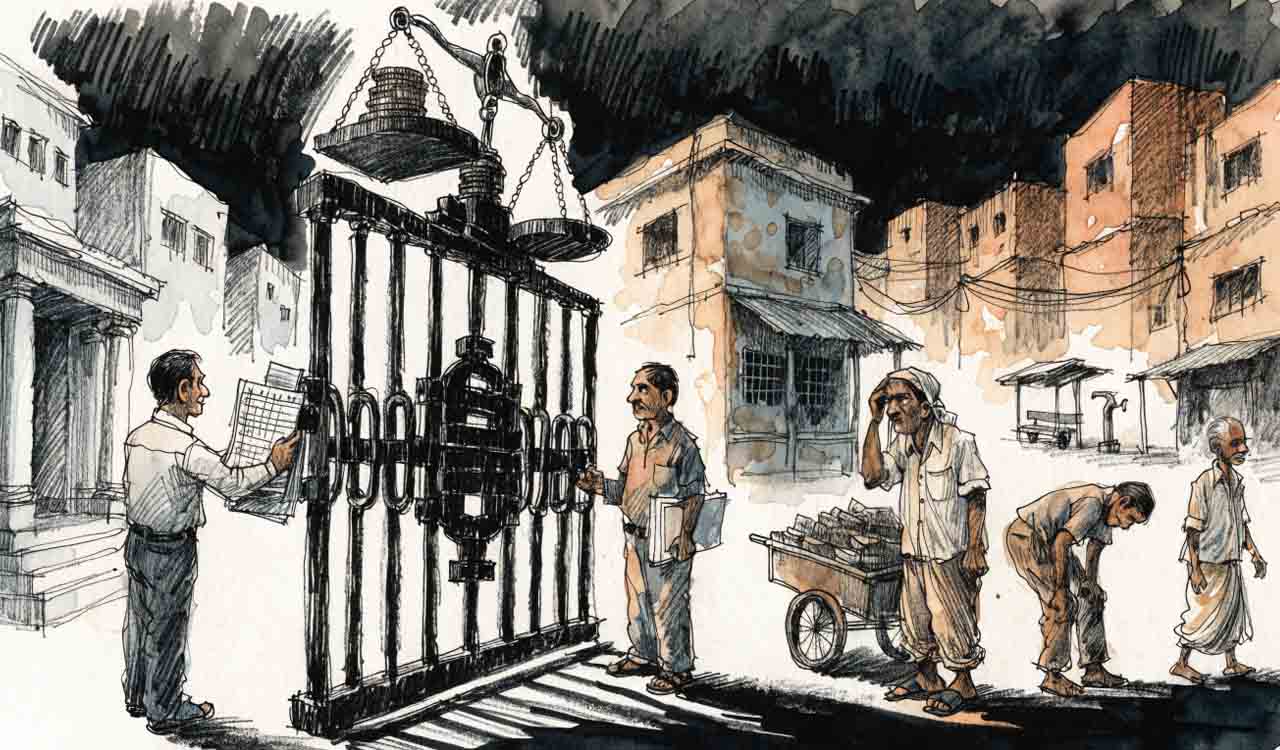
This statistical invisibility has dangerous implications. When Covid-19 struck, the lack of regular stock-taking of migrants and the absence of databases posed challenges to relief activities and highlighted the shortcomings of welfare systems based on fixed places of residence.
The cost of inadequate migration data goes beyond welfare delivery. Lack of migration data skews urban planning, workforce projections, infrastructure investments, and skill development plans. Both cities and the people who live and work within them need reliable information to plan housing, public transportation, healthcare facilities and educational services that effectively meet the needs of residents.
The Survey Should Measure
The survey has implications that go beyond demographic accounting. It is designed to record seasonal and short-term migration, return migration, employment characteristics, housing situation, income fluctuations and intentions to migrate. This information may contribute to understanding migration’s impact on labour markets and local economies.
Some key indicators include the duration and frequency of migration, reasons, job type and wages, social security enrolment (e-Shram, EPFO, ESIC), health insurance coverage, portability of ration card, housing tenure and safety, exposure to climate shocks (drought, flood, heat waves).
Household sampling frame includes specific modules for short-term, seasonal and return migrants. It will classify migrants by place-of-birth, place-of-enumeration, and length of stay and also will measure industry, occupation and earnings to differentiate economic migration from social migration. State-level results are anticipated 6–9 months after the completion of fieldwork, and microdata and dashboards will be made public.
But it is not just about counting movements; it is about understanding vulnerabilities. Do migrants have higher wages than they did previously? Are they able to secure healthcare, insurance and social security? Do migrants have access to secure work and to a decent life? How many people are still outside of urban services, but play an important role in the city economy? Data collection without investigating the outcomes will only give a partial picture.
Climate, Politics, Labour Markets
The survey also comes at a time when migration trends are beginning to change due to climate change. In many regions of India, unreliable rainfall and frequent droughts, causing groundwater depletion and reduced yield, are making rural livelihoods precarious. Migration has become a way of life for many households as a means of coping with environmental and economic uncertainty.
However, solid estimates of climate-induced migration are still absent in India, and policymakers are not well equipped to meet the future challenges of changing population patterns. The survey can bridge this important knowledge gap.
The federal aspect is also significant. To fill labour shortages in construction, manufacturing, logistics and services, States such as Karnataka, Maharashtra, Gujarat and Tamil Nadu are relying increasingly on migrant workers. Thousands of migrant workers in construction, hospitality, transportation and domestic services, as well as in the platform economy, have contributed to Bengaluru’s growth.
At the same time, regions such as Bihar, Uttar Pradesh, Jharkhand and Odisha remain significant sources of labour out-migration. Improved migration statistics can assist both origin and destination States in developing policies relating to skills, labour rights and welfare portability.
India’s migration survey should be more than an exercise in counting workers; it must become a foundation for policy reform. The Covid-19 crisis exposed how migrant workers were excluded from welfare systems because benefits, services and administrative records were tied to fixed locations.
Survey findings should, therefore, drive portable social security, healthcare and pension entitlements, effective implementation of One Nation–One Ration Card, affordable housing near workplaces, stronger labour and occupational protections, and cooperation between source and destination States.
A joint mechanism involving the Labour Ministry, NSO, States and Urban Local Bodies, supported by public dashboards, can ensure accountability. Ultimately, the survey’s success will depend not on the data collected, but on whether institutions and welfare systems become portable, inclusive and responsive to the workers who sustain India’s economy.

(The author is Professor, Department of Commerce, CHRIST [Deemed to be University], Bengaluru)

Related News