Opinion: India’s fiscal social contract at crossroads — revenue, welfare and reform
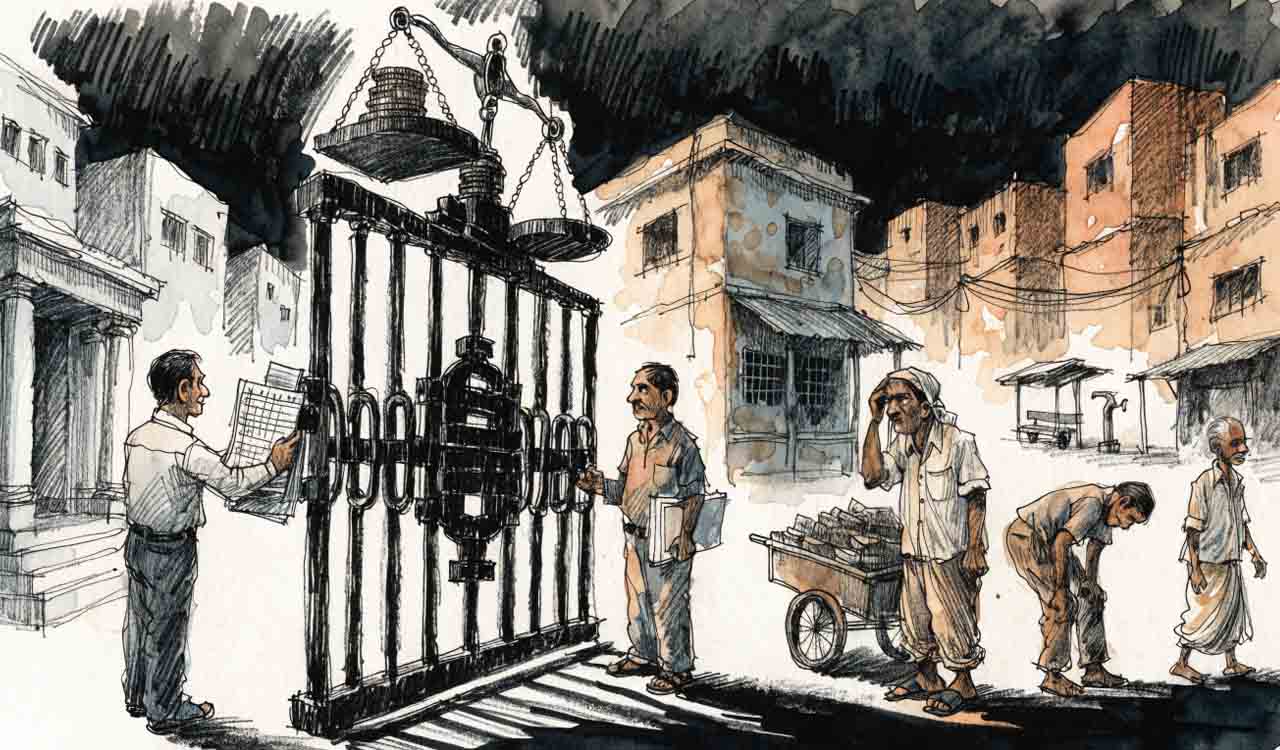
Fiscal policy must not be a ledger of receipts and expenditures alone; it must reflect fairness, resilience, and reciprocity between citizens and the state



By Prof Anuradha PS
India is at a crossroads in its economic journey. While the nation aspires to become a $5-trillion economy, the sustainability of this growth rests on a delicate arrangement: the fiscal social contract. Citizens pay tax in the hope of receiving real benefits in terms of public services, welfare and security throughout their lives.
Also Read
However, growing disparities between revenue collection and the delivery of social protection mean that many taxpayers, particularly those in the informal sector, derive only limited benefits from their contributions. The most pressing question is whether India can reform its fiscal architecture so that taxes translate into meaningful social protection, equitable results, and economic resilience or whether the social contract will disintegrate under fiscal and social pressures.
Rising Revenues, Persistent Gaps
Revenue mobilisation in India has grown over the last decade, though structural gaps remain. Recent evaluations indicate that the aggregate tax-to-GDP ratio (the sum of the central and State collections) is around 19.6%, bringing India closer to its emerging-market peers, even though it remains lower compared to advanced economies, where the ratios go beyond 30% of GDP.
At a more granular level, India’s tax-to-GDP ratio stood at 12% in 2025-26, with direct taxes amounting to 7.1% and indirect taxes to 4.9%. The effectiveness of revenue mobilisation, given the prominence of indirect taxes such as the Goods and Services Tax (GST), has also raised questions about distributional equity because indirect taxes are based on consumption rather than income.
Net tax receipts of the Centre increased to Rs 30.36 lakh crore in FY25, and the fiscal deficit stood at 4.8% of GDP. Early FY26 data indicate that the target deficit ratio is 4.4% of GDP, and net collections remain somewhat volatile.
Taxation without Benefits
Analysts observe that India collects approximately 12% of GDP in tax revenues, significantly lower than well-developed welfare states (eg, most European countries collect 30–40%). This illustrates the state’s limited capacity.
Further, the implication of a small tax base is that a small percentage of taxpayers contribute disproportionately to the direct tax burden, while only a minority of households in the upper income groups contribute to a majority of income tax receipts. This structural constraint is exacerbated when governments are forced by fiscal stress to focus on debt servicing and subsidies rather than on transformative social protection.
Social Protection: Gains and Limits
According to recent International Labour Organization (ILO) statistics, social protection coverage in India increased from 19% of the population in 2015 to more than 64.3% by 2025, covering over 940 million beneficiaries. This expansion reflects the consolidation of programmes such as Ayushman Bharat, Atal Pension Yojana and digital welfare platforms, including the e-Shram portal for informal-sector workers.
A stronger fiscal social contract — where citizens pay fair taxes and receive meaningful welfare — builds trust, legitimacy and sustainable growth
The ILO World Social Protection Report 2024–26 indicates that overall social protection coverage could be higher when in-kind benefits, such as food security and housing support, and state-level programmes are taken into account, potentially covering more than 57% or even up to two-thirds of the population. Nevertheless, these figures indicate continuing deficiencies, particularly in the area of unemployment protection and official benefits based on employment, which are key pillars of a comprehensive welfare state.
Social Protection Scorecard
The World Bank semi-annual regional prognosis, the South Asia Development Update (SADU 2025), indicates that South Asian countries, including India, are characterised by low tax collections in comparison to potential and limited fiscal space that leaves governments vulnerable to external shocks and undermines their fiscal robustness.
By assisting governments to maximise welfare spending, to target welfare services to specific groups of beneficiaries, to minimise duplication across governments and to establish shock-responsive welfare systems to provide efficient and prompt welfare support when crises strike, SADU 2025 and the Social Protection Scorecard contribute to improving citizen welfare. They allow India to go beyond safety nets and towards self-reliance. But they have no direct effect on tax inequity – tax reform must take place separately in the fiscal arena (replacing indirect with direct taxes).
The Scorecard serves as an indirect reinforcement of the fiscal social contract, as more adequate and rights-based welfare strengthens political accountability for equitable taxation and restores reciprocity between the citizens and the state.
Strengthening the Contract
To enhance fiscal equity, welfare and reform, India must:
• Expand the tax base: Promote formalisation and enhance direct tax collection to enhance progressivity and fairness.
• Rationalise indirect taxes: Maintain the efficiency of the GST system and address the regressive impact of GST, which falls disproportionately on lower-income households.
• Make welfare equal revenue: To prevent fiscal deficits from crowding out essential investments, make sure that growth in social protection is supported by predictable revenue streams.
• Enhance Fiscal Frameworks: Support the principles of the Fiscal Responsibility and Budget Management (FRBM) Act, which facilitates fiscal discipline
• Increase Transparency and Accountability: Strengthen the connection between taxpayers and the benefits they receive, including education, healthcare and retirement security
Fiscal policy must not be a ledger of receipts and expenditures alone; it must reflect fairness, resilience, and reciprocity between citizens and the state. A strengthened fiscal social contract — where taxation is equitable, social protection is meaningful, and resilience is embedded in policy — is not just sound economics. It is the foundation of trust, democratic legitimacy, and sustainable growth for a young, aspirational India poised for the future.
(The author is Professor, Department of Commerce, CHRIST [Deemed to be University])

Related News