Opinion: Scrap NEET— medical admissions should be conducted at State level
Repeated paper leaks have exposed NEET’s flaws, strengthening the case for restoring State-level medical entrance examinations


By Boianapalli Vinod Kumar
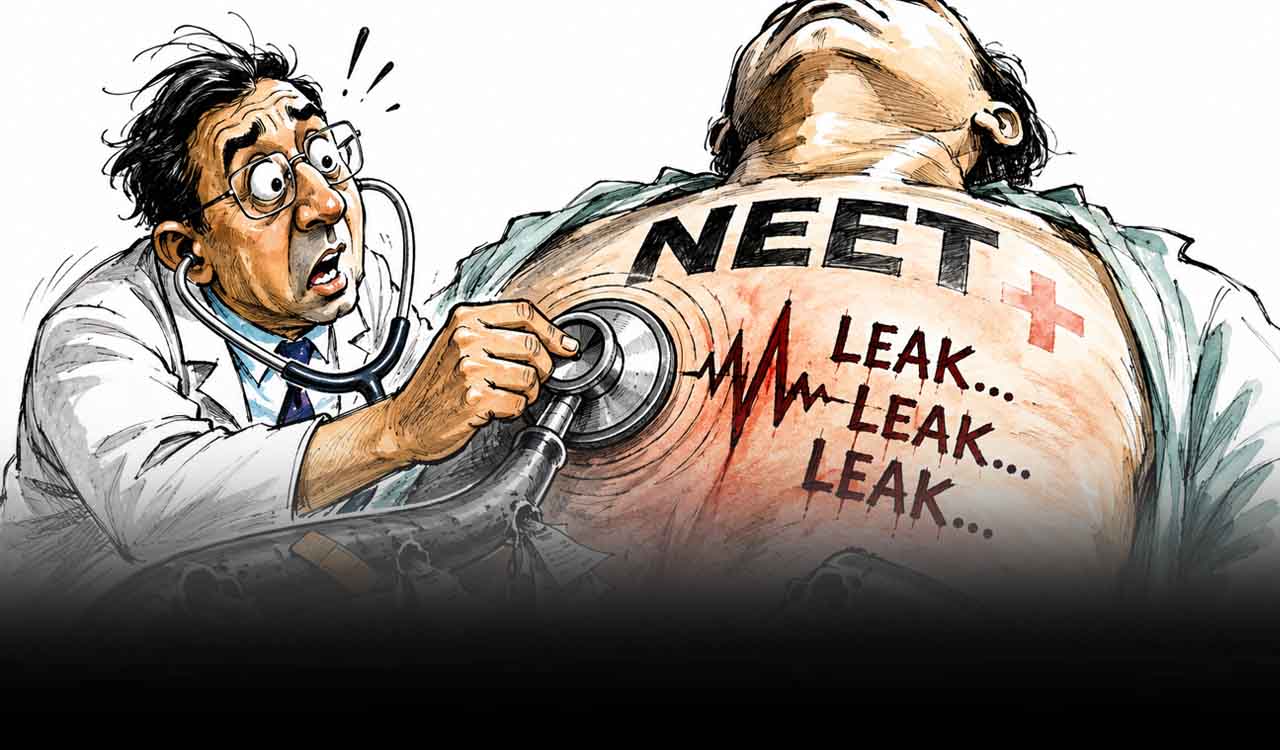
Contrary to what many believe, the NEET examination paper leak did not occur for the first time this year. It was leaked in 2021, again in 2024, and now once more in 2026. When the paper leak occurred in 2024, there was widespread criticism of the National Testing Agency (NTA) for its incompetence.
Also Read
The Supreme Court, under the leadership of then Chief Justice of India DY Chandrachud, expressed serious dissatisfaction over the NTA’s negligence and security failures in conducting the examination. The court directed the central government to constitute an expert committee to recommend reforms that would prevent such incidents in the future.
Radhakrishnan Committee
The Centre subsequently appointed an expert committee headed by former ISRO Chairman Dr K Radhakrishnan. After studying the conduct of NEET, the committee made 101 recommendations across 10 critical areas, including secure transportation of question papers, digital security, cybersecurity, examination centre selection, data protection, Aadhaar-based candidate verification, and other systemic reforms.
One of its key recommendations was to replace the pen-and-paper examination with a computer-based test. However, the government failed to implement this crucial suggestion. As a result, the examination paper was leaked again in 2026. With the issue becoming a major national concern, the latest NEET paper leak has triggered widespread student protests across the country.
The controversy surrounding NEET is not limited to its conduct; even the very concept of a national entrance examination has been contentious. Tamil Nadu, in particular, has consistently opposed NEET, arguing that it undermines India’s federal structure.
Before NEET, there was no single nationwide entrance examination for medical admissions. Students had to appear for multiple entrance tests. Every State conducted its own examination for admissions into State medical colleges—for example, EAMCET in the erstwhile Andhra Pradesh, TNCET in Tamil Nadu, and CET in Karnataka. For the 15% All India Quota, the All India Pre-Medical Test (AIPMT) was held. Prestigious institutions such as AIIMS and JIPMER, along with private medical colleges and deemed universities, also conducted their own entrance examinations.
The rationale behind introducing NEET was that students were forced to write 10–15 different examinations, pay multiple application fees, travel to different cities, and prepare for different syllabi. To reduce this burden, the concept of “One Nation, One Entrance Examination” was introduced. Another objective was to eliminate the huge capitation fees and donations collected by private medical colleges under management quotas. It was believed that NEET would ensure merit-based admissions and establish uniform standards in medical education across the country.
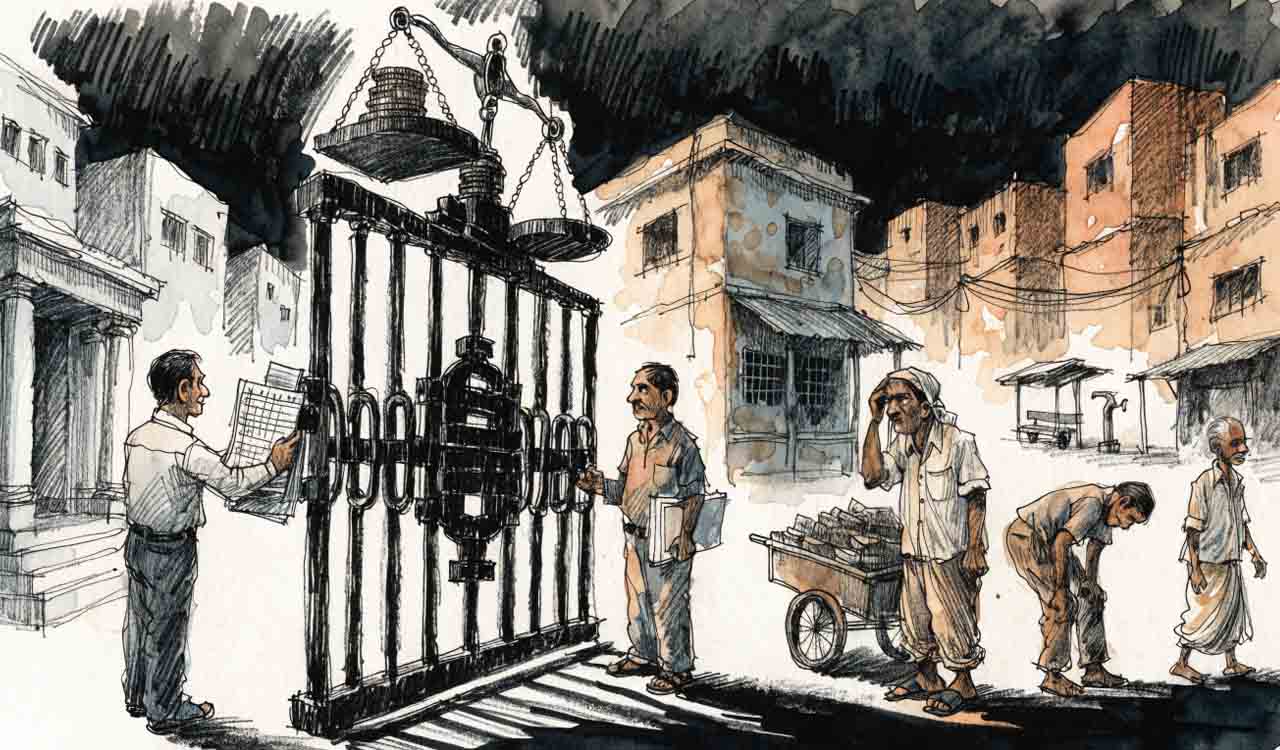
Under the Constitution of India, education falls under the Concurrent List, while public health is primarily a State subject, but NEET has effectively centralised admissions to State medical colleges under the National Testing Agency
Legal Challenges
However, NEET did not come into existence without legal challenges. In 2010, the Medical Council of India proposed a common national entrance examination. The first NEET was conducted on 5 May 2013, but it was later struck down by the Supreme Court following petitions filed by private medical colleges and several State governments. On 18 July 2013, a three-judge Bench headed by Chief Justice Altamas Kabir invalidated NEET by a 2:1 majority, holding that the Medical Council of India lacked authority to impose a single examination on private institutions and State governments.
As a result, the old admission system continued in 2014 and 2015. Ironically, the medical entrance examination paper was also leaked in 2015, forcing a re-examination. Meanwhile, the central government and the Medical Council of India filed a review petition. A five-judge Constitution Bench headed by Justice AR Dave, on 11 April 2016, recalled the earlier judgment, observing that the previous decision had not adequately examined the issue and emphasising that transparency in medical education was of paramount importance. Consequently, NEET was reinstated.
Common Platform Myth
Although NEET was expected to provide a common platform and reward merit, the reality has been quite different. Students from economically weaker and rural backgrounds have suffered the most. The primary reason is the difference in school curricula across States. NEET is almost entirely based on the NCERT/CBSE syllabus, whereas many State boards—especially in southern India—follow different syllabi and teach primarily in regional languages.
Joining CBSE schools is neither affordable nor feasible for many rural families, as such schools are expensive and not widely available. Consequently, students from State boards face a significant disadvantage. At the same time, specialised coaching has become almost essential for securing a good NEET rank. This has increased academic pressure and favoured students from urban and financially stronger backgrounds who can afford expensive coaching.
The AK Rajan Committee appointed by the Tamil Nadu government also reached similar conclusions. This is one of the primary reasons Tamil Nadu has consistently demanded the abolition of NEET.
Under the Constitution of India, education falls under the Concurrent List, while public health is primarily a State subject. However, NEET has effectively centralised admissions to State medical colleges under the National Testing Agency. Several States argue that this weakens the federal structure by transferring control over admissions to the Centre. They contend that medical colleges established with State taxpayers’ money should remain under the authority of the respective State governments.
Furthermore, concerns have been raised regarding the functioning of the All India Quota. In Telangana, questions have emerged about how some candidates from certain northern States, who reportedly struggle academically after admission, manage to secure high All India ranks. These concerns have intensified amid recurring paper leaks and allegations of malpractice.
State at Disadvantage
Telangana currently has more than 10,000 MBBS seats, including approximately 4,400 seats in government medical colleges and 5,850 seats in private institutions. In government colleges, 85% of the seats are reserved for local students, while 15% are allotted under the All India Quota. This means that nearly 660 government medical seats in Telangana go to students from other States every year. Moreover, in the PG admissions, 50 per cent of the seats are allocated to the national pool, enabling many students from other States to secure these seats, thereby reducing opportunities for students from Telangana.
The pertinent question is whether Telangana students receive a corresponding benefit by securing admissions to medical colleges outside the State through the All India Quota. The answer is that only a small number of Telangana students, apart from those joining premier national institutions, pursue medical education in other States. Even in private colleges, around 50% of the seats are reserved for local candidates. As a result, most Telangana students continue to study within the State. Therefore, NEET has not significantly benefited Telangana students.
In view of the repeated paper leaks, the objections raised by several States, and the growing concerns over fairness and federalism—especially in the wake of the latest nationwide student protests—the BJP-led central government must undertake meaningful reforms.
India is a nation united in diversity. The Centre should recognise the unique educational circumstances of different States. Parliament should restore the system under which States conduct their own entrance examinations for admissions to State medical colleges. A common national entrance examination may continue for the All India Quota and for admissions to premier national medical institutions.
National standards and State autonomy are not mutually exclusive. India needs a balanced admission system that harmonises quality medical education, equal opportunity, social justice, and the spirit of cooperative federalism.
(The author is former Member of Parliament)

Related News