Opinion: India’s road to the top three economies
Unless structural weaknesses are addressed, India risks remaining an economy of immense potential but limited outcomes


By Dr Subhashree Banerjee, A Suchetas Ram
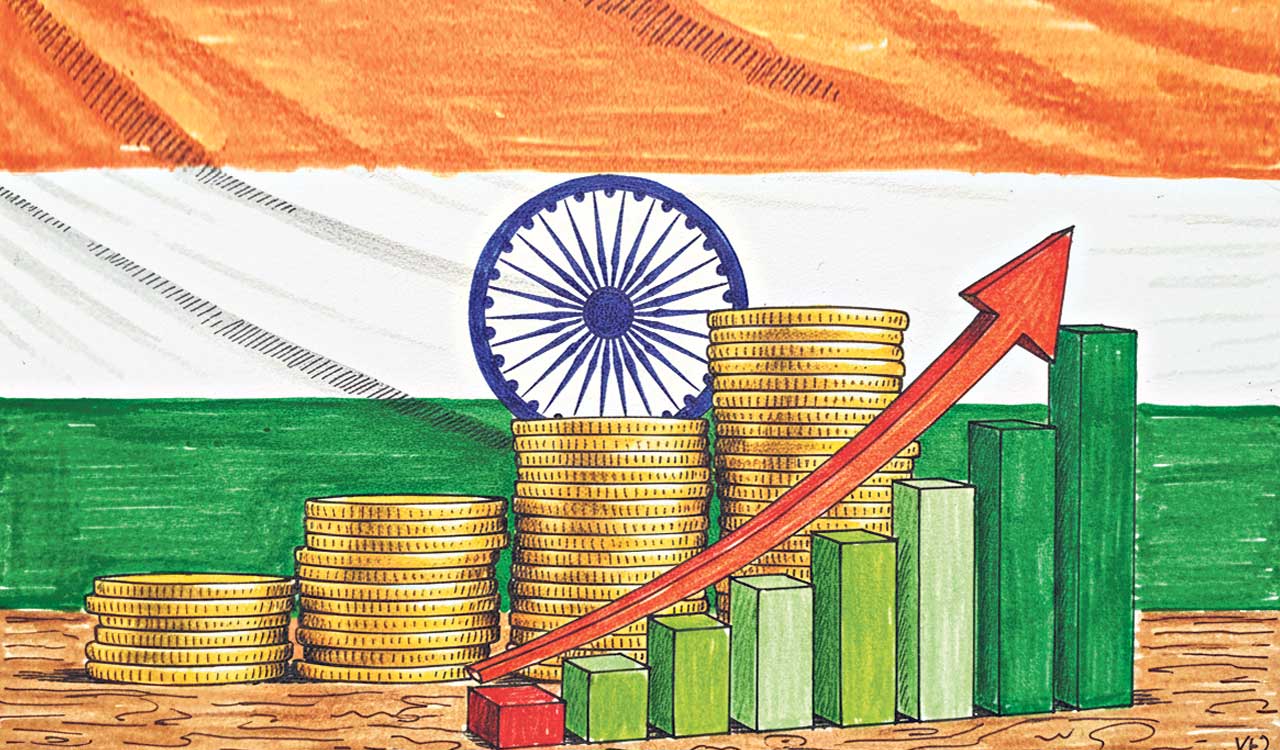
India’s position sliding from the fourth-largest economy to sixth is largely attributed to the depreciation of the Indian rupee and exchange rate movements, but it also serves as a reminder that India’s economy remains fragile, uneven and volatile.
Also Read
However, when measured using Purchasing Power Parity (PPP), India ranks third in the world. PPP allows us to compare the value of different countries’ currencies by evaluating the amount of goods and services one can purchase across countries. This reflects higher domestic consumption and lower prices, but does not show strength in global competitiveness, per capita improvements, or a better standard of living.
Structural Transformation
The problem in India lies in its structural transformation. According to the standard development economic theory, sustained growth requires the shifting of low-productive subsistence agricultural labour to higher-productive manufacturing and service sector (The Lewis Model). This sectoral transformation is not evident in India, as it has leapt forward to the service sector without establishing a robust manufacturing base for its steady growth.
The share of the manufacturing sector has remained around 17-18%, and the gross value of output has stayed at around 38%. This implies that the manufacturing sector has largely remained stagnant over the decades. This has created a problem of limited employment opportunities for the informal sector and further undermines the sustainability of economic growth.
To emerge among the world’s top three economies, India needs sustained investment, faster reforms, job-led growth and stronger social infrastructure
From the perspective of the Endogenous Growth Model theory, an economy’s growth is driven by internal factors such as human capital, innovation and investment. In this context, India’s macroeconomic management needs to be scrutinised. While fiscal prudence is always emphasised, investment in critical sectors such as health, education and social sectors remains inadequate. Both the Centre and the State together spend around 4.1% of GDP on education, which is lower than the 6% recommended, and it is even lower for health (1.8% of GDP, while the recommended is 2.5%).
According to the Human Capital Index Plus 2026, India cumulatively scored 159 out of 325, with relatively stronger performance in education (97) compared to health (39) and work or employment (23), highlighting the structural imbalance. India has made progress in education, but lags behind in health and employment.
This is also reflected in the Labour Force Participation (LFP) rate, which is at 59.3%, lower than that of other Emerging Markets and Developing Economies (EMDEs) countries, such as Vietnam, where the LFP rate is 73%. Additionally, female LFP stands at 40%, which implies that India is unable to absorb almost half of its workforce into productive employment, resulting in jobless growth. This also reflects the limited conversion of human capital into productive employment, as well as issues of informality and low female labour force participation.
Inequality Concerns
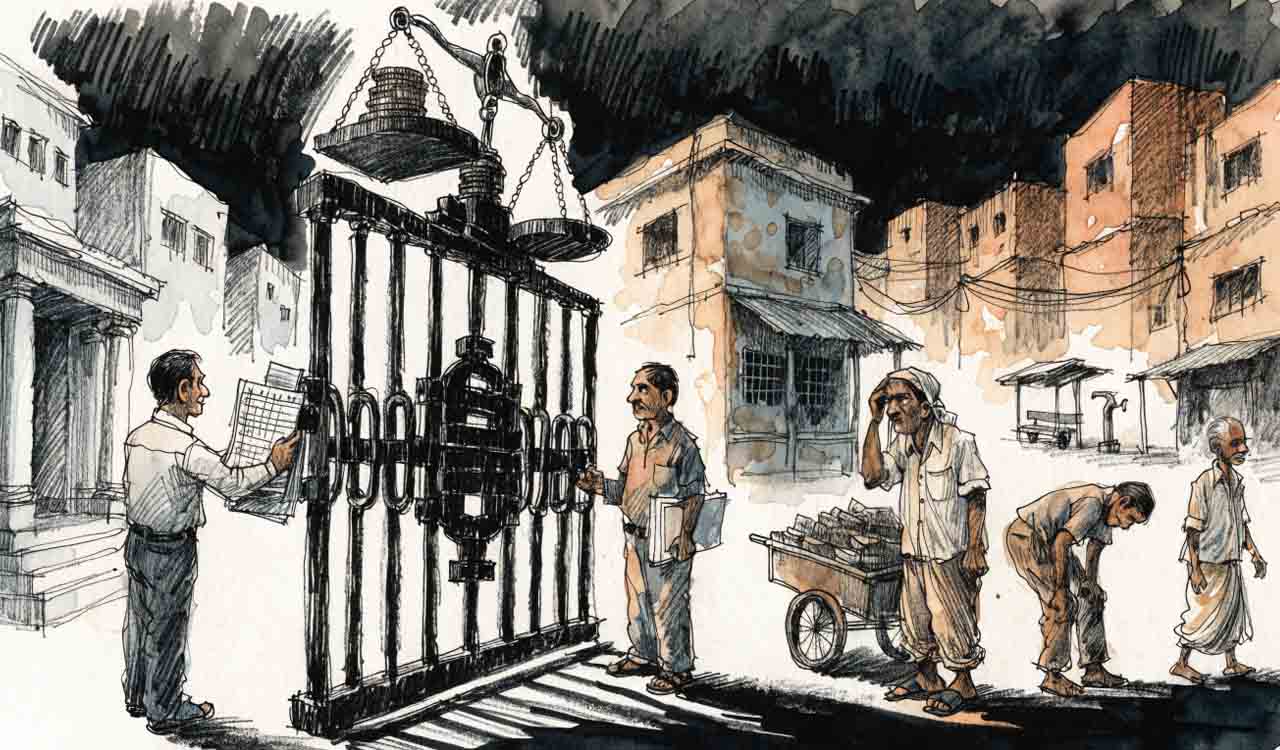
Another concerning factor is the demand side of the economy. According to the World Inequality Report 2026, income, wealth, and gender inequality have risen in India. The top 10% controls 58% of the national income, and the bottom 50% receives only 15%. The disparity is even starker in terms of wealth: the richest 1% holds 40% of the country’s wealth while the bottom 50% just 6.5%.
Further, according to the study titled Land inequality in India: Nature, History and Market (2026), land ownership in rural areas are highly unequal, with the top 10% of the households owning 44% of the land while 46% of the households remain landless.
Such inequality affects consumption-driven growth in India, where private final consumption expenditure accounts for 61.5% of GDP. This creates a vicious cycle of lower demands, reduced investment, fewer job opportunities and slower long-term growth.
Additionally, external vulnerabilities such as dependence on energy imports, volatile capital inflows, global supply chain disruption, currency depreciation and volatility compound these challenges. Despite having one of the largest coal reserves in the world, India imports about 20% of its coal and nearly 90% of its crude oil, making it susceptible to global price fluctuations. It also imported 35.34 billion cubic meters of natural gas in 2025-26 (April- March), accounting for half of its total consumption.
Breaking into Top 3
The question that arises is: what should India do to get into the top three economies? To reclaim its position, India has to take aggressive measures. Firstly, there is a need to invest heavily in labour-intensive manufacturing sectors such as garments, leather, footwear, gems and jewellery.
Second, addressing growing inequality through expanded social security, strengthening the national floor level minimum wage, regular monitoring and revision of the minimum wages and improving the rural income will support equitable distribution of income.
Thirdly, increasing investment in health and education will enhance productivity and reduce vulnerabilities in the large informal sector. There is also a need to improve and increase R&D spending. Only 47% of the allocated funds for research and innovation were utilised between 2017-18 and 2024-25, indicating underperformance in fund absorption. Strengthening university-industry linkage will support an innovation-driven growth model.
Fourth, private capital investment must be encouraged. A forward-looking survey by the National Statistical Office, 2026, indicates that corporate capital expenditure is likely to remain subdued in 2026-27, mostly due to uncertainty and demand concerns. While public capital is essential to support growth, sustaining growth over a longer period will require private investments.
Finally, diversification of trade partners, regulatory simplification and promotion of export-oriented manufacturing industries will help build better economic resilience. India’s position as the sixth-largest economy may fluctuate, but unless these structural weaknesses are addressed, it risks continuing to be seen as an economy with immense potential but limited outcomes.
(Dr Subhashree Banerjee is Assistant Professor and A Suchetas Ram is Student, Department of Economics, CHRIST [Deemed to be University] Bangalore)

Related News