Opinion: Hijab, dignity and the right to choose
The real challenge today is not whether Muslim women can succeed while wearing hijab, but whether society is willing to respect a woman’s right to define dignity on her own terms


By Malahat Jahan
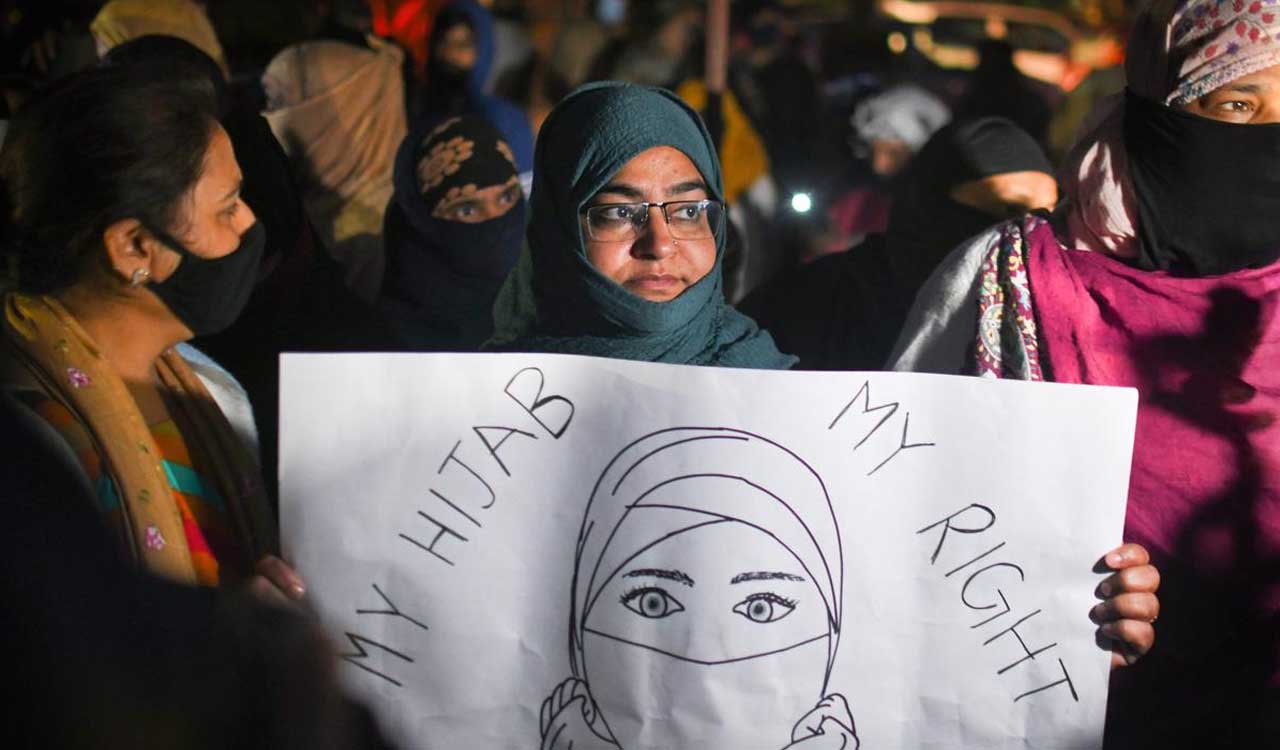
In recent years, debates around the hijab and burqa have increasingly entered classrooms, examination halls, and public institutions. Incidents such as a former Chief Minister publicly pulling a student’s scarf during a scholarship event, or reports of girls being asked to remove their hijab before examinations, have sparked widespread concern and emotional debate.
The controversy surrounding the restrictions on hijab in educational institutions in Karnataka further intensified national discussions about religious freedom, women’s dignity, and the meaning of empowerment.
These incidents raise an important question: in a world that proudly speaks of liberty and personal choice, why should a woman’s decision to dress modestly become a source of discomfort or exclusion?
For many Muslim women, hijab is neither a political statement nor a symbol of suppression. It is an expression of faith, identity, dignity, and personal conviction. Ironically, while modern societies celebrate freedom of expression in countless forms, the choice to observe hijab is often treated with suspicion or hostility. Yet Islam established the dignity and rights of women over 14 centuries ago — long before the modern world began discussing gender justice.
A Global Contradiction
The modern debate surrounding the hijab reveals a striking contradiction across the world. In Iran, the tragic death of Mahsa Amini in 2022 triggered nationwide protests after she was reportedly detained for allegedly violating the mandatory hijab regulations. Millions across the world expressed outrage, not merely because of the headscarf issue itself, but because coercion — whether in enforcing the hijab or denying it — violates human dignity and freedom of conscience.
At the same time, in parts of Europe, Muslim women have faced restrictions for choosing to wear hijab. France has repeatedly witnessed protests over policies restricting religious dress in schools and public institutions, with many Muslim women arguing that they are being excluded from public life in the name of secularism.
Similar debates have surfaced in the United Kingdom, where discussions around face veils, school uniforms, and workplace discrimination continue to generate tension and concern among Muslim communities.
Thus, Muslim women in different parts of the world often find themselves trapped between two extremes: in one place, being compelled to wear hijab; in another, being pressured to remove it.
Across the world, Muslim women often find themselves caught between two extremes — compelled to wear the hijab and pressured to remove it in others — raising deeper questions about freedom, dignity, and personal choice
Islam, however, does not stand for compulsion. Faith loses its meaning when imposed by force. The essence of hijab lies in sincere belief, personal conviction, and voluntary modesty — not state coercion or social pressure. True freedom means allowing women the dignity to choose their faith and expression without fear, humiliation, or exclusion.
Islam and Women’s Rights
The world took centuries to recognise that women’s rights are human rights. The Enlightenment, feminist movements, and modern legal reforms are relatively recent developments. Islam, however, laid down these principles at its very inception. The Holy Qur’an established:
- Equality of creation: “He has created you from a single being; then of the same kind made its mate.” (Ch.39: v.7)
- Equality in spirituality: “Whosoever does good works, whether male or female, and is a believer, shall enter Heaven.” (Ch.4: v.125)
- Economic independence: “Men shall have the share of what they have earned, and women shall have the share of what they have earned.” (Ch.4: v.33)
Within this revolutionary framework emerged the principles of hijab and modesty — not as tools of oppression, but as safeguards of dignity and moral freedom.
True Meaning of Hijab
Hijab is far more than a piece of cloth. It is a reflection of modesty, self-respect, and spiritual consciousness. The Prophet Muhammad (peace and blessings be upon him) said: “Modesty is a branch of faith.” The purpose of the hijab is not to confine women or remove them from public life. Rather, it seeks to cultivate respect in social interaction and encourage people to value character above appearance.
The Founder of the Ahmadiyya Muslim Community, Hazrat Mirza Ghulam Ahmad, explained that observing the veil does not mean women must remain hidden or inactive. A woman may pursue education, employment, leadership, and public service while observing hijab. In fact, modest dress protects her from objectification and allows her to participate in society with confidence and dignity.
Education, Work, Economic Freedom
The irony of preventing girls in hijab from entering classrooms or examination halls is especially striking because Islam strongly emphasises female education. The Holy Prophet (peace and blessings be upon him) declared: “The pursuit of knowledge is a duty for every Muslim.”
Education is not merely permitted in Islam — it is an obligation. A woman has the right to learn, think, contribute, and excel in every field of society. Islam also granted women economic rights centuries before many modern legal systems did:
- A woman may own and inherit property independently.
- Her haq mahr (marital settlement) belongs entirely to her.
- She may work, conduct business, and retain her own earnings.
The veil does not diminish these freedoms. A woman can be a doctor, teacher, scientist, lawyer, entrepreneur, or public servant while observing hijab. Her contribution to society is measured by her intellect, integrity, and capability — not by conformity to fashion or public expectations.
Freedom to Wear Hijab
The Karnataka hijab controversy and similar incidents reveal a deeper contradiction in modern discourse. Societies often speak of inclusion and diversity, yet visibly religious women are sometimes pressured to compromise their beliefs to access education or public opportunities.
True empowerment cannot exist without genuine choice. If one woman is free to dress according to modern trends, another must also be free to dress according to her faith. Hijab is not forced silence; for many women, it is a conscious declaration: “I choose to be valued for my character rather than my appearance.” In an age increasingly driven by external image and public display, modesty itself becomes a form of strength and independence.
Beyond Stereotypes
Hijab and burqa— A hijab is a headscarf worn to cover the head while a burqa covers the entire body — should not be viewed through the narrow lens of stereotypes or political controversy. For millions of women, they are symbols of identity, honour, freedom, and devotion.
The challenge today is not whether Muslim women can succeed while wearing hijab — they already do, in every profession and every part of the world. The real challenge is whether society is willing to respect a woman’s right to define dignity on her own terms.
(The author is an academician)

Related News