Opinion: NEET — the crisis of educational centralisation
NEET’s promise of transparency has been overshadowed by paper leaks, security failures and growing distrust. A return to federal decentralisation is the only cure for India’s medical admissions malaise


By Dr Arroju Srinivas
The scathing remarks made by the Supreme Court of India regarding the National Eligibility cum Entrance Test (NEET-UG) process underscore the deep administrative and moral crisis plaguing the country’s educational apparatus.
Also Read
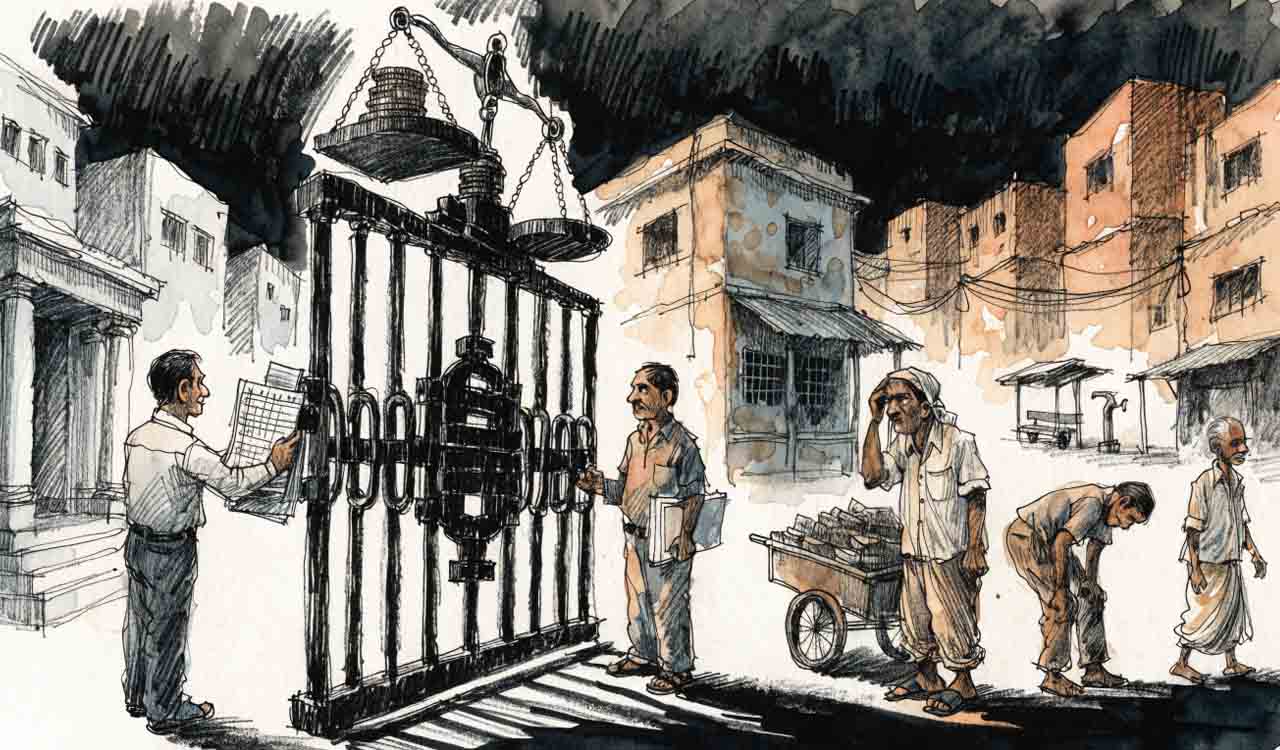
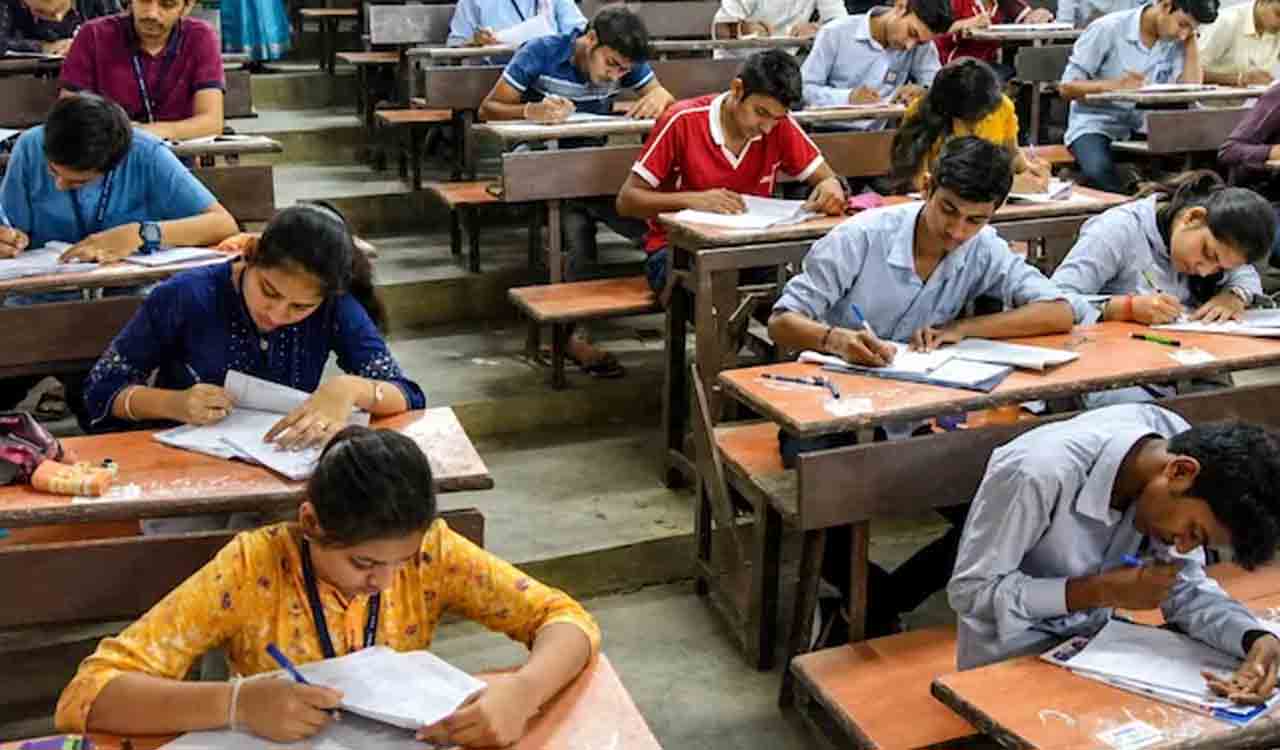
Once envisioned by policymakers as a robust shield to protect merit and enhance transparency in medical admissions, the NEET framework has instead mutated into a dysfunctional mechanism, routinely plunging the futures of millions of students into darkness. These recurring systemic breakdowns stand as living testimony to the structural vulnerabilities that inevitably arise when absolute administrative centralisation aligns with an arbitrary, top-down approach.
No sudden anomaly
As the nation grapples with the fallout of yet another disrupted academic calendar, restoring true federalism in the education sector emerges not just as a viable policy alternative, but as an absolute imperative to safeguard the lives of 2.2 million students. The crisis currently gripping medical aspirants is no sudden anomaly; rather, it is the predictable zenith of a decade-long failed experiment that systematically eroded state autonomy and dismantled local oversight.
When the central government introduced NEET with the slogan ‘One Nation, One Test,’ it effectively abolished diverse State Common Entrance Tests (CETs). It was widely anticipated that a single, unified examination across all medical colleges would curb commercialisation, reduce the financial and mental burden on students, and elevate educational standards. However, in practice, those lofty ideals have been completely upended. While the rhetoric remains politically attractive, the ground reality has yielded nothing but profound public disappointment.
Crumbling foundation
In retrospect, NEET has fundamentally failed on all three of its foundational objectives. First, instead of curbing the commercialization of medical seats, the system has inadvertently channeled billions of rupees into the hands of a predatory, corporate coaching mafia.
Second, a singular national standard based primarily on the CBSE curriculum has disproportionately favoured urban elites, systematically alienating rural and economically marginalised students who study under regional boards. Finally, the promise of alleviating multi-exam stress has been shattered by rampant paper leaks and systemic institutional loopholes, subjecting students to even greater psychological and financial distress.
While paper leaks and grading discrepancies within the National Testing Agency (NTA) structure sparked massive outrage, subsequent high-level committees offered mere band-aid solutions rather than structural overhauls. Consequently, yet another paper leak has compounded the agony of the student community, pushing the highest court to launch a scathing attack on the NTA, reprimanding the agency for failing to learn from past disasters.
When a single administrative security lapse in one corner of the country forces the cancellation of an entire national exam, it inflicts severe psychological trauma on students, eroding their self-confidence and replacing it with cynicism. Policymakers must realise that such repeated anomalies breed a permanent public distrust in national institutions.
Flawed policy
Compounding the crisis of this hyper-centralised exam is a deeply flawed administrative procurement policy known as the L1 (Lowest Bidder) system. Under the guise of transparency and cost-effectiveness, the NTA chose to bypass premium, highly secure testing agencies in favor of contractors who quoted the lowest prices. In doing so, the security of question papers was utterly compromised.
Rejecting top-tier secure infrastructure providers under this policy was a catastrophic blunder. While the L1 model may be perfectly logical for procuring office stationery, applying it to high-stakes national examinations that shape millions of lives is the pinnacle of administrative shortsightedness. Sacrificing cutting-edge cybersecurity and bulletproof logistics on the altar of cost-reduction is precisely why these leaks continue to shake the nation.
Although the Constitution of India places Education on the Concurrent List, the current NEET framework completely undermines State autonomy and the executive capacity of States to tailor admission criteria to local socio-economic realities. Furthermore, with the proliferation of sophisticated digital hacking tools, national exams have turned into technological battlefields; it is virtually impossible for a centralised agency in New Delhi to keep pace with the agility of pan-India cybercriminals.
India must urgently pivot back to a robust, two-tier hybrid examination model. We already have a successful historical precedent for this: prior to the current regime, the All India Pre-Medical Test (AIPMT) successfully filled national quota seats, while individual States efficiently filled local medical seats through their own CETs.
Under a reformed decentralised model, a national tier exam should be restricted to filling the 15 per cent All India Quota (AIQ) seats and admissions into prestigious central government institutions like AIIMS and JIPMER. The remaining 85 per cent of local, State-funded medical seats must be handed back entirely to the respective State governments. These State-level exams, aligned with local 12th-grade regional syllabi, would immediately lower the artificial barriers currently facing rural youth.
Crucially, this decentralised architecture functions effectively as an administrative circuit breaker. If a paper leak occurs in one State, the crisis remains localised to that specific region. Instead of disrupting the entire nation or putting millions of students on tenterhooks, a re-examination can be swiftly conducted solely for that particular State. After all, the vast majority of medical seats are fundamentally meant to serve the healthcare needs of the local regional populace.
The central government must shed the illusion that its centralised machinery is “too big to fail.” It is time to dismantle this dysfunctional, monolithic system and immediately restore full authority to the States, ushering in a resilient, decentralised educational framework that prioritises equity, security, and federal trust.
(The author is President of the Telangana Center for Study and Reflection [TASK])

Related News